The King of Hearts and the sword behind his head
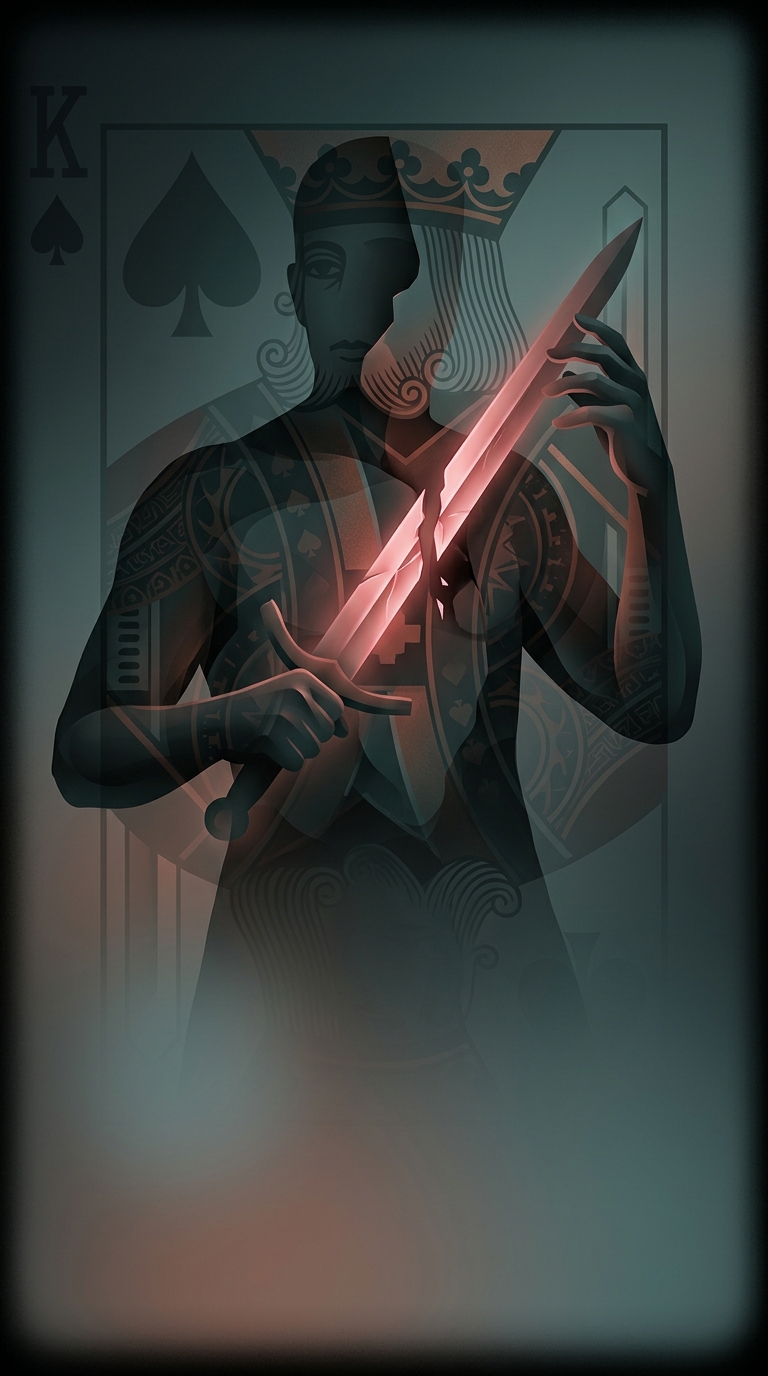
In the familiar design, the King of Hearts holds a sword up beside his head. Its blade seems to disappear behind—or even into—his skull, making him look as if he is stabbing himself. That visual oddity is why the card is often nicknamed the “suicide king.”
The image is unsettling, but it is not a scene unfolding in the card’s story. A playing-card king is a decorative emblem, not a character shown in a specific moment. The sword is part of the king’s traditional royal costume; the apparent wound comes from how the small, stylized figure is drawn.
How a printing shortcut became a striking image
Playing cards are designed to be read from either end, so the court figures are usually mirrored: turn the card around and the king still appears upright. In that compact, symmetrical layout, the King of Hearts’ raised sword sits close to his head. Simplified lines and repeated copying of older card designs helped preserve the awkward-looking arrangement.
The result is a tiny image that invites a much darker interpretation than the card’s practical design requires. Once you notice the blade, it is hard to see the king as merely holding a weapon: the face seems to be in its path.