Why a Six-Inch Net Changes the Rally
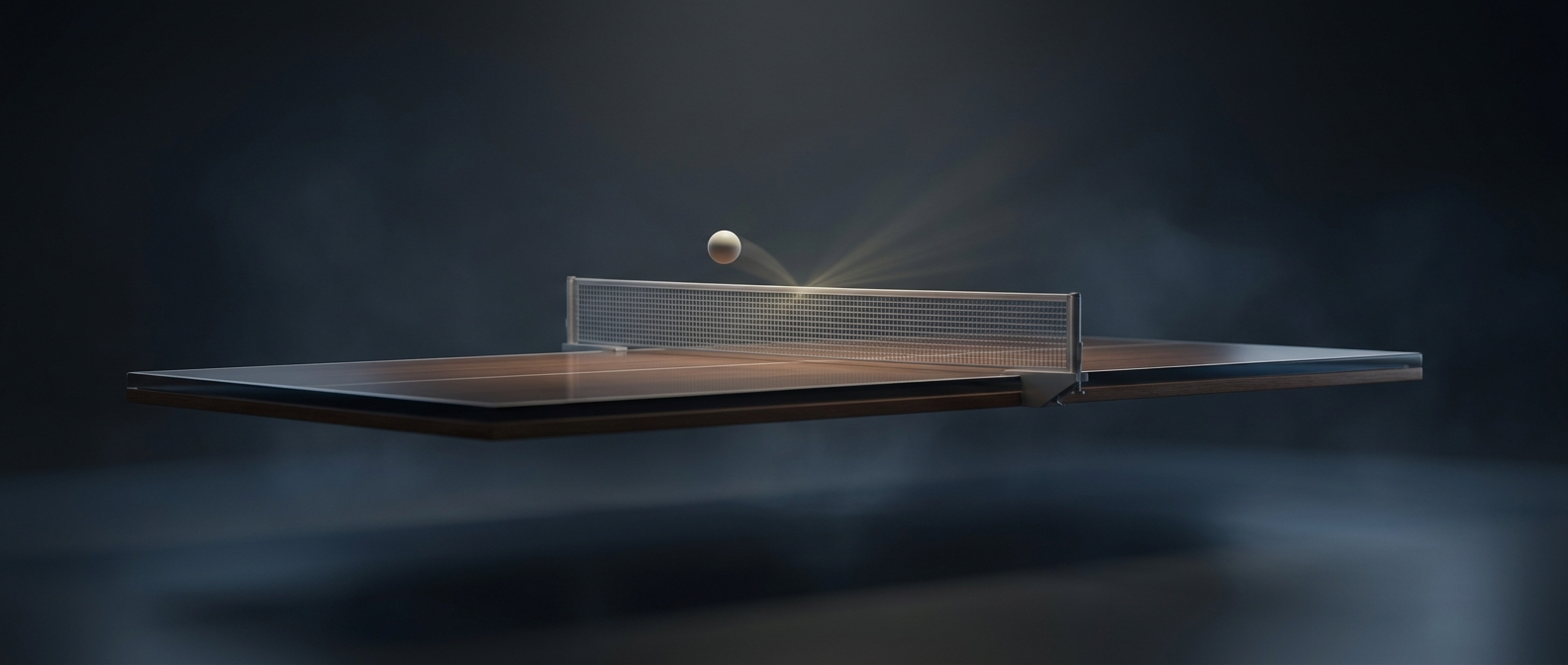
The net’s top edge is 15.25 centimeters—six inches—above the table. That low barrier lets players drive the ball quickly and close to the surface rather than having to loft every shot. But a shot aimed just over the net leaves little room for error: a small change in its path can turn a clean winner into a ball that fails to clear.
A ball that brushes the net during an ordinary rally is still in play. It must continue over and land on the opponent’s side; if it drops back on the hitter’s side, the opponent wins the point. Contact can also alter the ball’s speed or direction, making a near-net shot hard to predict even when it appears to have enough clearance.
The Serve Has a Different Rule
Net contact matters differently on a serve. If a serve touches the net but otherwise lands legally in the receiver’s court, it is a let—the point is replayed. During a rally, by contrast, a net touch does not automatically stop play. The ball’s path and where it lands decide what happens next.
That distinction makes the net more than a fixed obstacle: it is part of the game’s risk calculation. Players can aim low to keep an attack fast, but the closer the ball travels to the six-inch edge, the more a slight clip can decide the point.