How the penhold grip changes the stroke
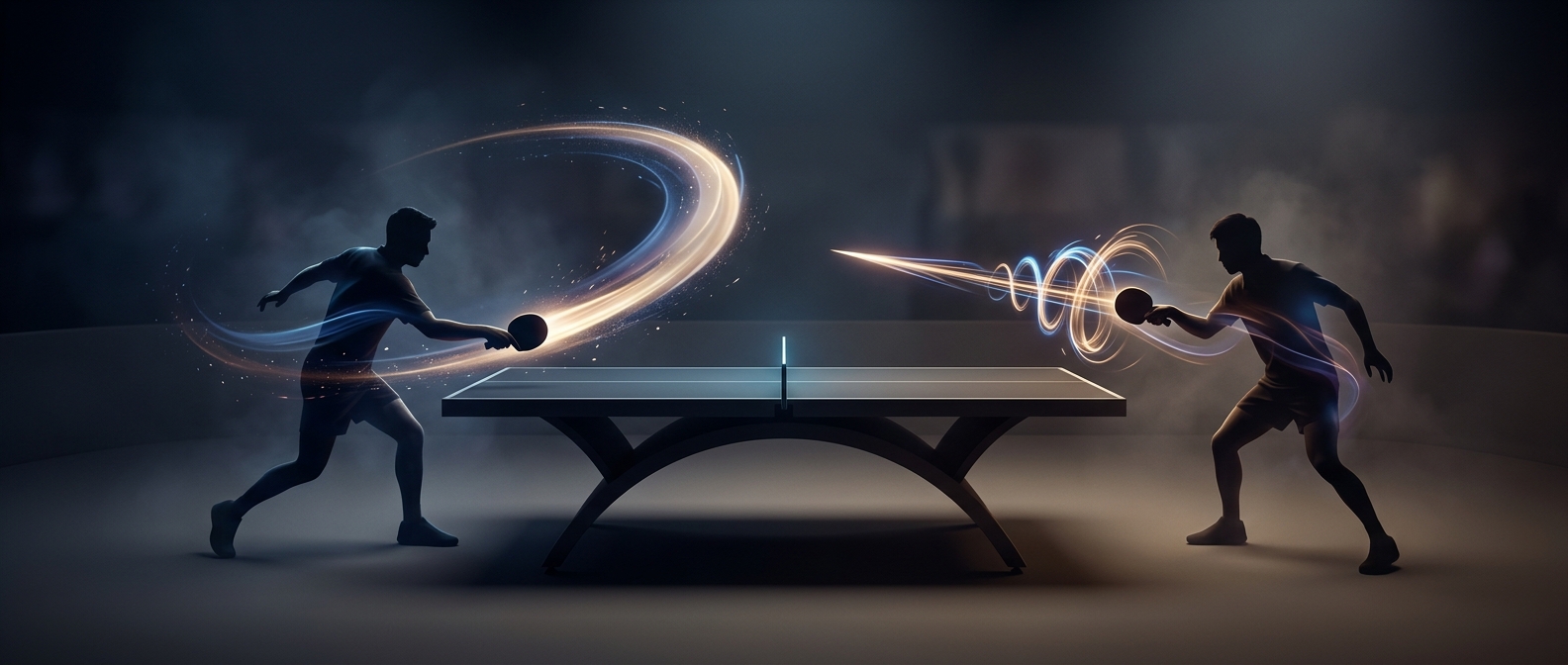
A penhold player holds the racket much like a pen, pinching the handle between thumb and forefinger while curling the other fingers around the back of the blade. That hand position leaves the wrist free to turn the racket quickly. On a forehand, a small rotation can change the racket’s angle and help the player brush across the ball, producing a fast, sharply angled shot.
The same grip changes what happens on the other side of the body. With a conventional penhold backhand, the curled fingers lie behind the blade, so the player has less room to swing comfortably across the body. The challenge is not simply generating power: it is reaching balls that arrive wide to the backhand and making contact at a useful angle.
A second face for the backhand
Many modern penhold rackets have rubber on both sides. That allows a player to use a reverse penhold backhand: instead of hitting with the familiar front face, the player turns the blade and strikes with the opposite face. The motion opens up a fuller backhand swing and makes it easier to attack balls that would otherwise force a defensive return.
But the extra option takes practice. The player must coordinate the wrist and fingers to turn the racket while judging the ball’s speed and placement. Footwork still matters, too: a grip can make certain angles easier, but it cannot put the player within reach of a ball. Penhold’s tradeoff is therefore visible in the rally itself—quick, wrist-led forehands on one side, and a backhand whose possibilities depend heavily on how the player uses the blade’s two faces.