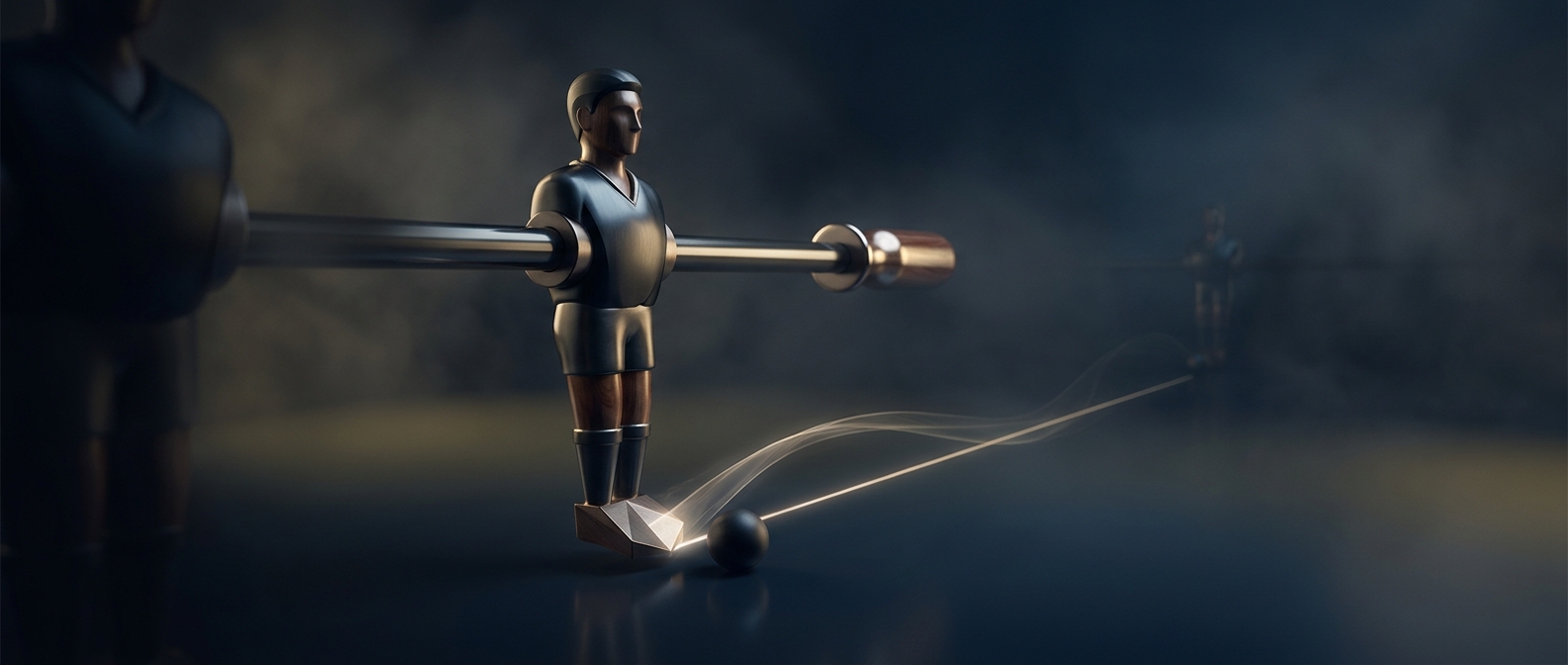
A small angle creates more control
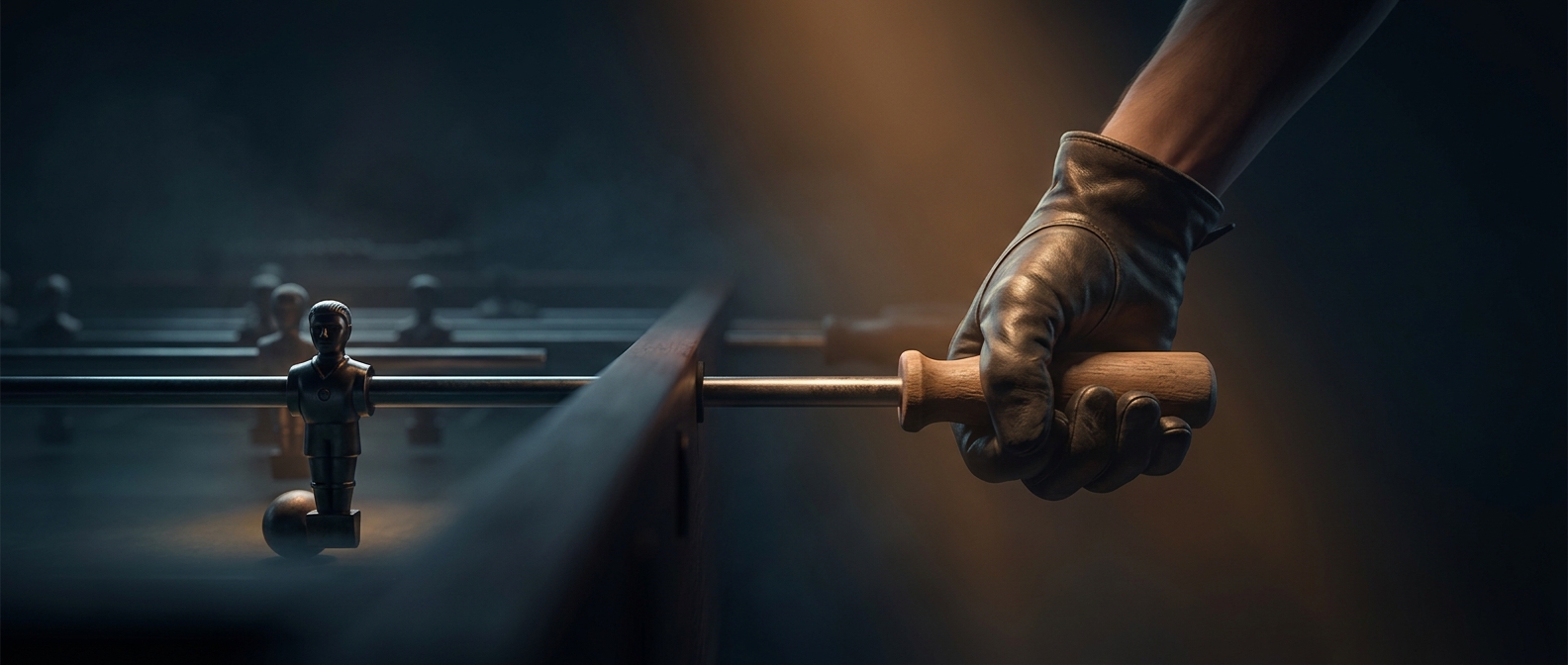
A foosball figure’s foot is not just a paddle for hitting the ball. Its sloped, textured underside gives the player a way to trap the ball briefly against the playing surface. That pause turns a fast, loose ball into one the player can direct.
With the ball held under a foot, a player can roll it sideways along the row of figures, then release it into a pass or shot. The texture helps keep the ball from slipping away during that movement, while the angle gives the foot a useful edge for pinning and guiding it.
Why not simply spin the rods?
A spinning figure can strike the ball hard, but a strike is difficult to aim: the ball may ricochet unpredictably, and the player has little control over where it goes next. Pinning and sliding add a deliberate step between receiving the ball and sending it onward. That makes passing and positioning possible, rather than reducing play to repeated swings.
The design changes what a skilled player can do with a single touch. Instead of merely knocking the ball down the table, the player can hold it, move it laterally, and choose when to release it—turning the figure’s foot into a simple ball-control tool.