A cap solved a tiny-sprite problem
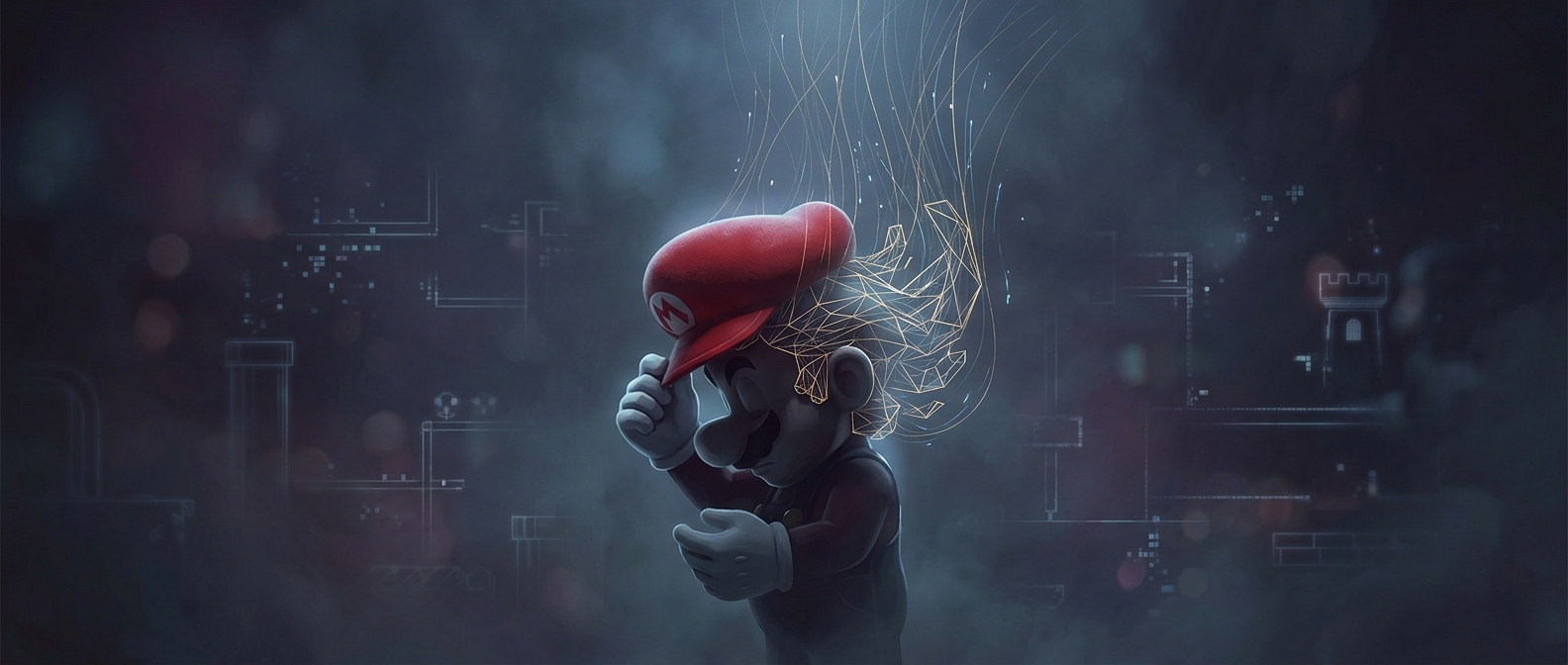
In Mario’s earliest appearances, the challenge was making a small, blocky sprite readable while it moved. Hair would need to change shape as the character turned or bounced, adding detail that was difficult to show clearly in a handful of pixels. A cap gave the top of his head a simple, consistent outline instead.
That mattered because every movement had to be built from separate drawings, or frames. Fewer finicky details meant less work to redraw and less chance that Mario’s appearance would become muddled from one frame to the next.
The rest of the design did similar work
Mario’s look uses other bold shapes to make motion legible. His mustache marks his face without requiring a clearly rendered mouth, while his overalls help distinguish his arms from his torso. These features were not just decoration: they helped players recognize what they were seeing on a small screen.
The cap’s practical value outlasted the technical limits that made it useful. Once established, it became part of Mario’s instantly recognizable silhouette—a design shortcut that turned into a character signature.