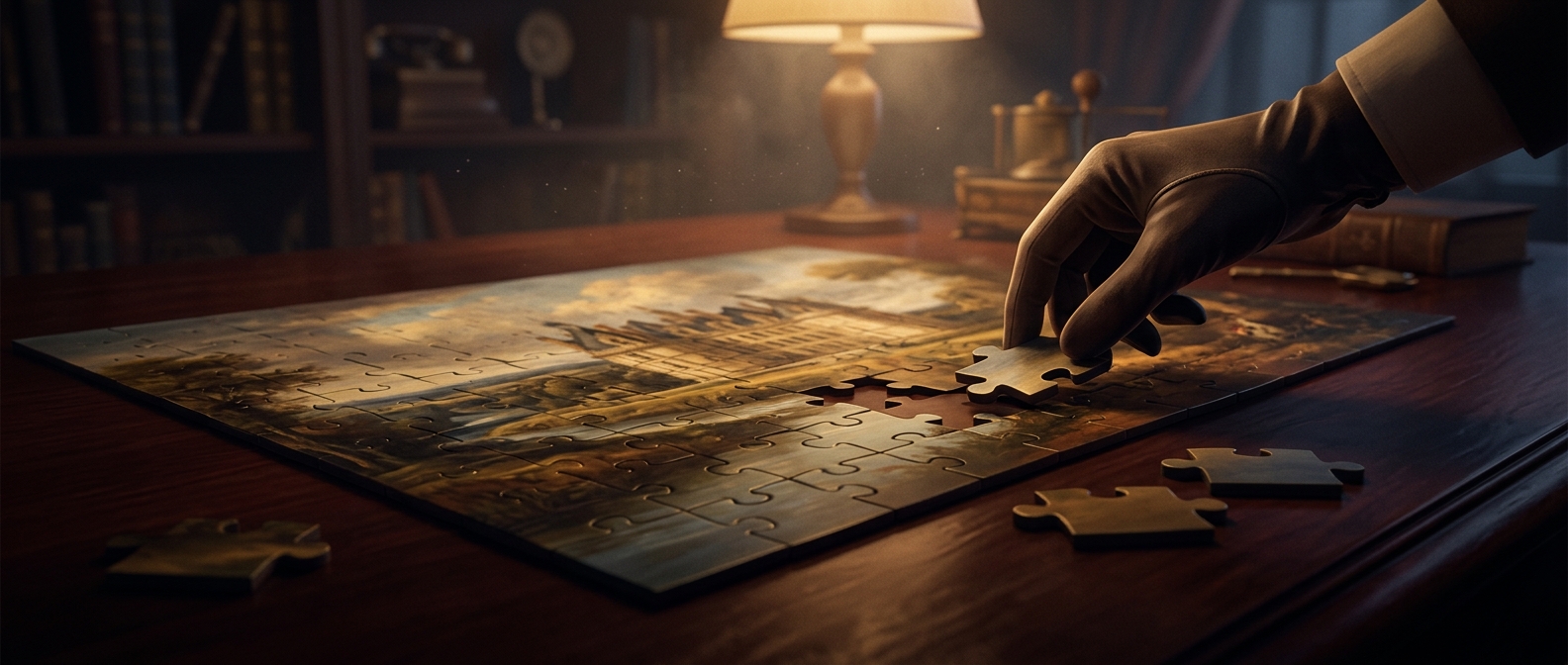
Why early wooden puzzles needed a steady table
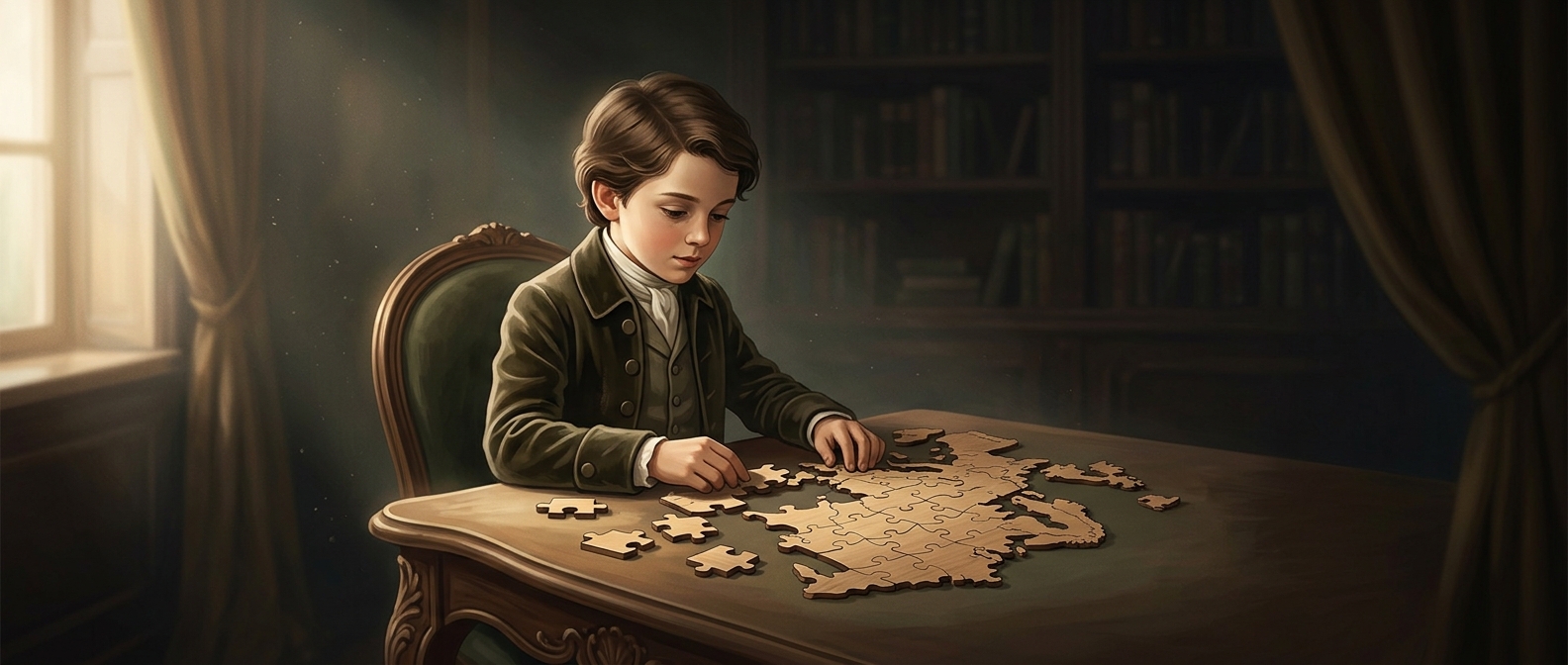
A jigsaw puzzle is easier to handle when its pieces lock together. In early wooden puzzles, the cuts often followed simple lines, leaving pieces with straight sides rather than the inward and outward shapes familiar today. A piece could sit beside its neighbor, but the pair had little physical hold on each other.
That difference changed what “putting the puzzle together” meant. The picture might look complete, yet the pieces remained separate wooden shapes resting on a surface. A nudge could shift one piece without carrying its neighbors along; once gaps opened, other pieces could slide out of place too.
What interlocking tabs changed
Interlocking tabs make neighboring pieces act more like a connected sheet. The projections and matching notches resist sideways movement, so a completed area is easier to lift or move as a group. They do not make a puzzle immune to disturbance, but they give the assembled picture a stability that straight-edged pieces lack.
Without that connection, players had to treat the table itself as part of the puzzle: keep the work flat, avoid disturbing it, and be prepared to reconstruct sections if the surface was bumped. The practical difference was not just a more secure finished picture. Interlocking shapes made the in-progress puzzle easier to handle, turning a fragile arrangement into something that could hold together as it grew.