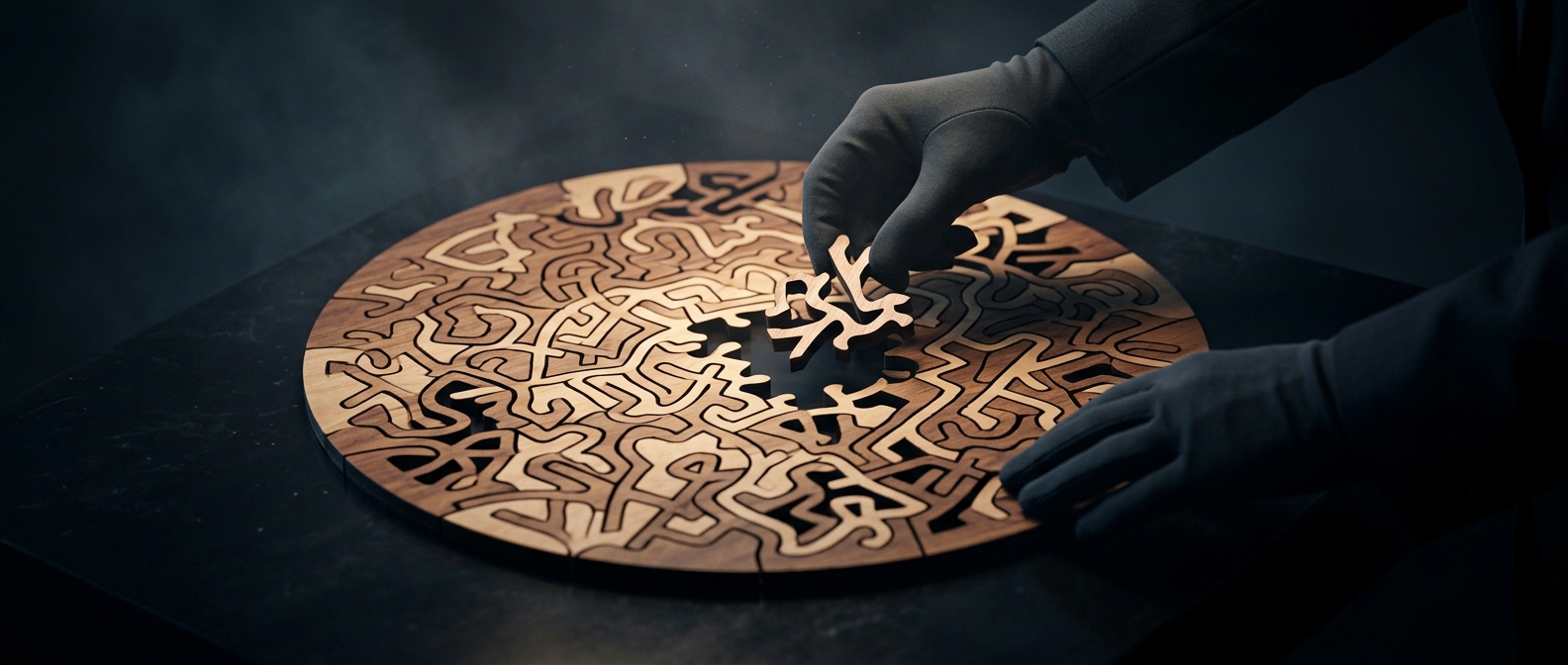
Why a Crescent Can Belong Somewhere Unexpected
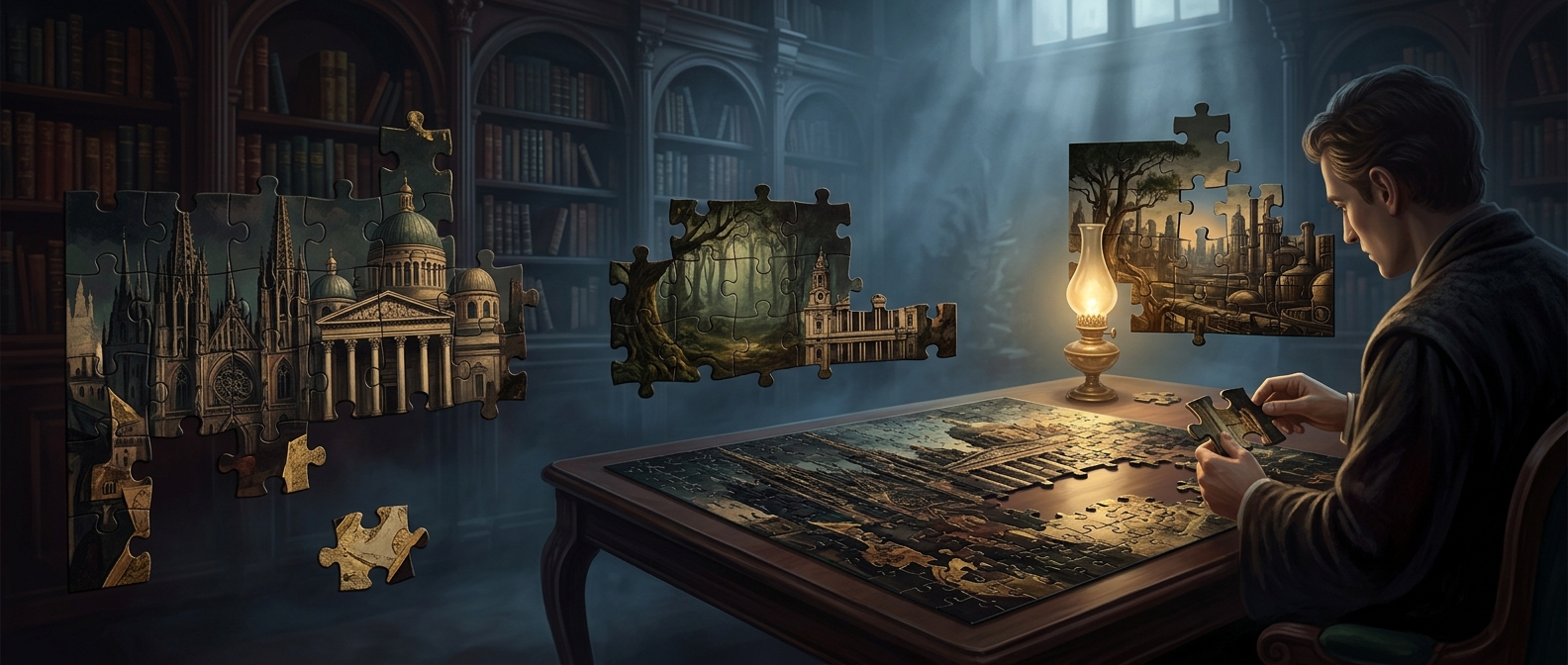
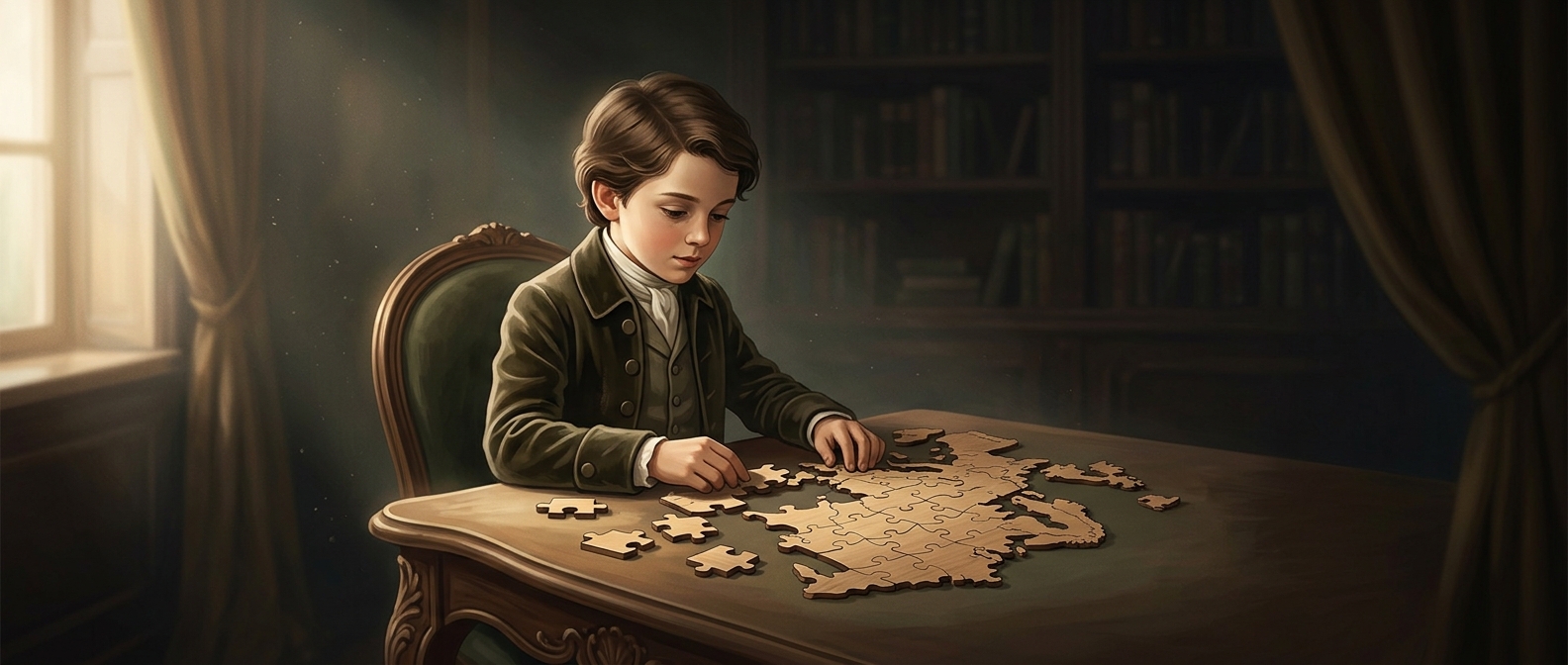
In a conventional jigsaw, rows and columns create a hidden map: pieces generally occupy neighboring positions in a tidy grid, and tabs and sockets help identify local matches. Laser-cut wooden puzzles can abandon that map. Their cut lines sweep through the picture in broad curves, tight bends, and unusual shapes, so a piece’s outline offers fewer clues about where it belongs.
The Cut, Not the Picture, Defines the Fit
A laser follows a designed path through the wood, dividing the board into pieces. Each cut creates two complementary edges: the curve on one piece matches the curve on its neighbor, regardless of what either edge crosses in the printed image. A crescent-shaped piece might therefore sit beside a patch of sky on one side and a patterned object on the other. Its shape can look as though it ought to match another crescent elsewhere, but only its actual cut-line partner will fit along the full edge.
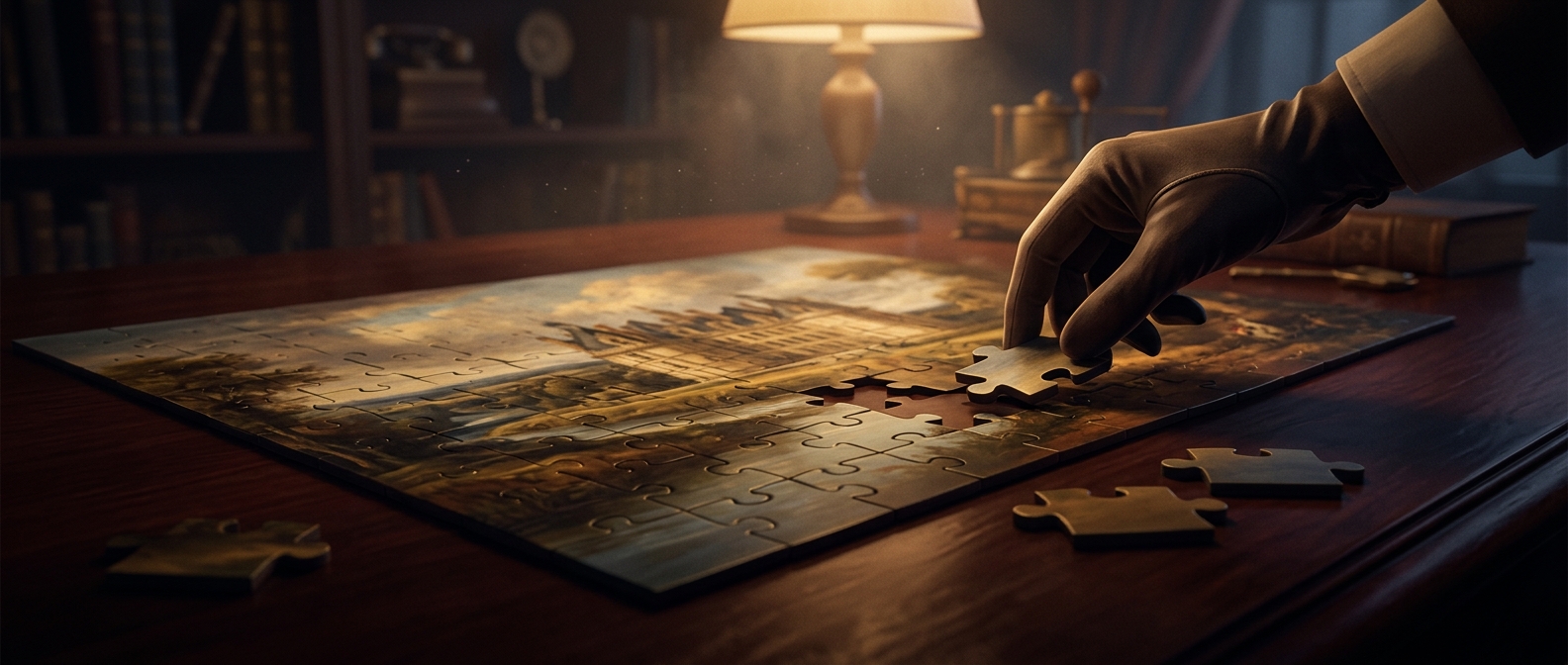
That changes the solving strategy. Instead of sorting pieces by familiar tabs, sockets, or neat rows, puzzlers have to compare the entire contour and use color, texture, and the larger image together. A small bend that seems insignificant may be the clue that distinguishes one possible placement from another.
A Different Kind of Difficulty
The irregular cuts make the puzzle less predictable, not necessarily impossible: every piece still belongs to a specific place, and the picture remains a guide. But the image can be misleading at the edges, where a cut may pass through unrelated visual patterns. The result is a puzzle in which a piece’s silhouette is not a shortcut to its neighborhood—it is part of the mystery.