Why One Empty Space Can Ruin the Finish
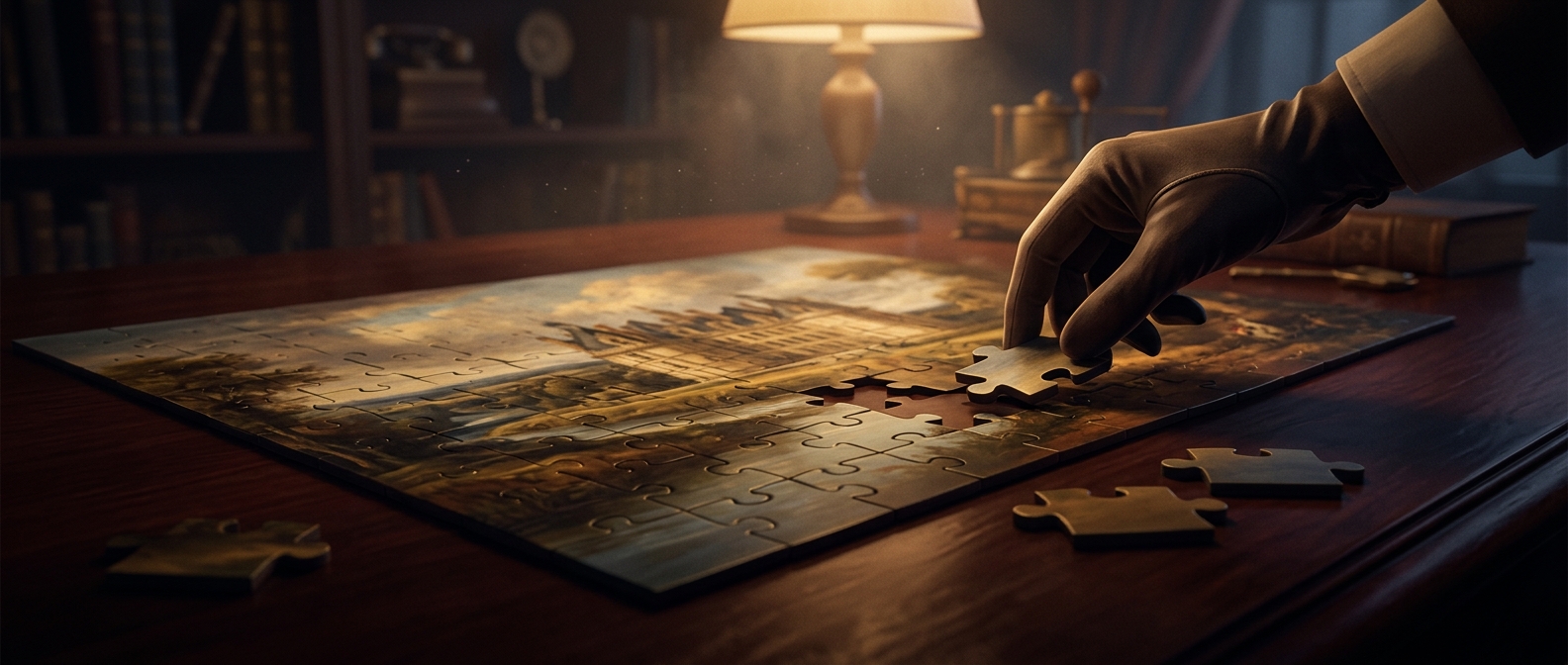
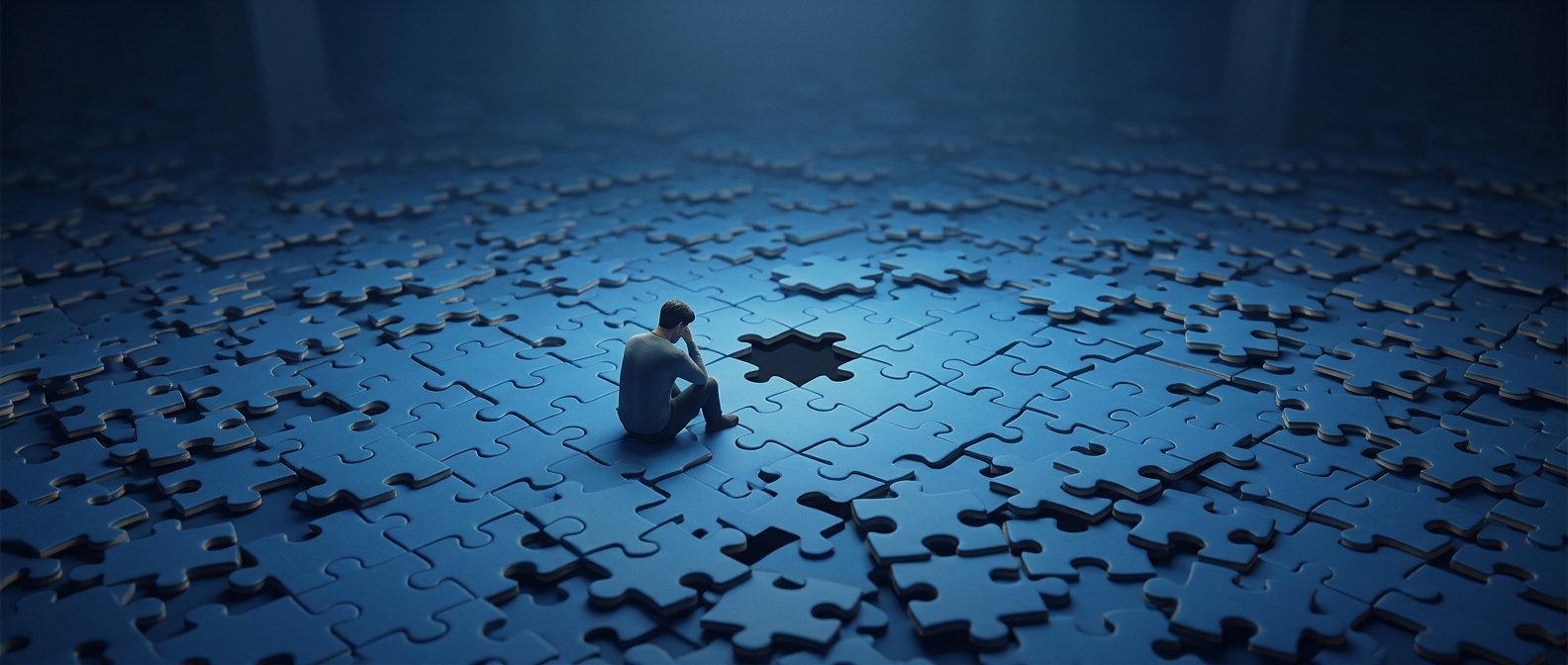
A nearly complete jigsaw puzzle changes how the remaining work feels. Early on, every placed piece adds visible progress. Near the end, the whole picture is already there—except for one conspicuous interruption. The missing piece becomes the only unfinished part, so attention keeps snapping back to it.
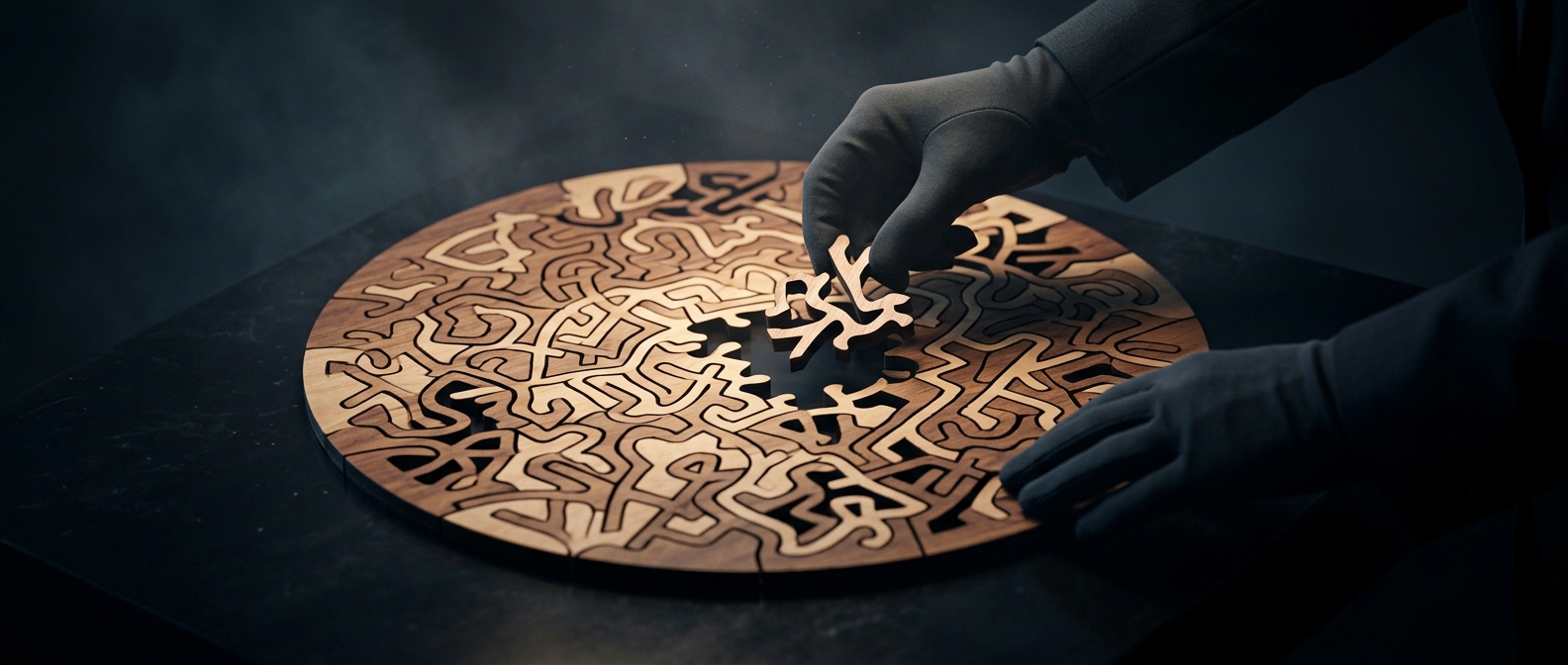
That gap can also be harder to solve than it looks. A piece showing a distinctive face, building, or flower is easier to locate by its image. A patch of blue sky or plain water offers few clues: many pieces may share similar colors, and the right one still has to fit the gap’s exact shape. The simplest-looking area can become the most difficult search.
The Puzzle Is Almost Complete—but Not Closed
Jigsaw solving relies on two kinds of matching: the picture on a piece and the way its tabs and spaces connect to its neighbors. A single missing piece breaks both kinds of continuity. The scene looks finished enough to recognize, but the broken outline makes the board feel unfinished.
That contrast explains why the last gap can feel more irritating than a dozen empty spaces at the start. Earlier, the empty areas are part of the task; at the end, one small absence stands between a completed image and an incomplete one. The puzzle may be solved in every practical sense, yet the eye still finds the hole first.