Why a Piece of Sky Can Fit Beside a Horse
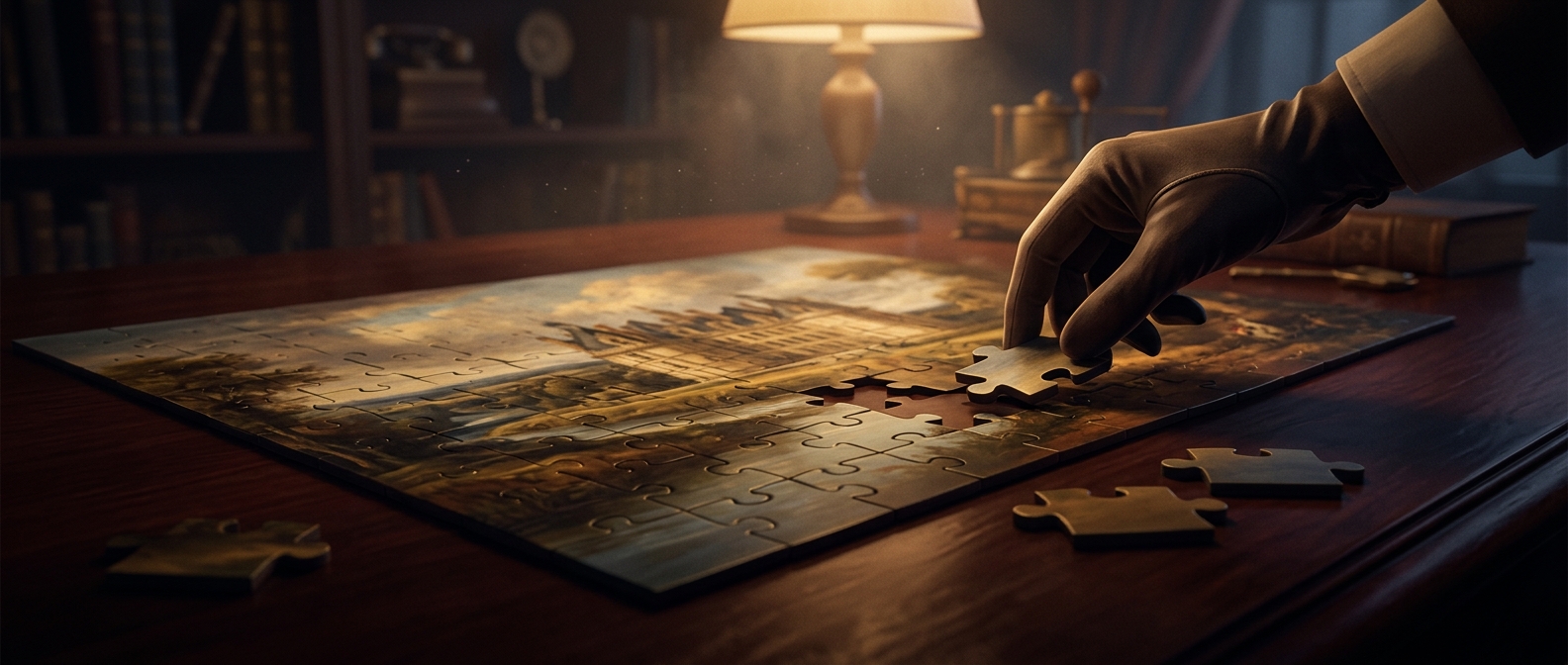
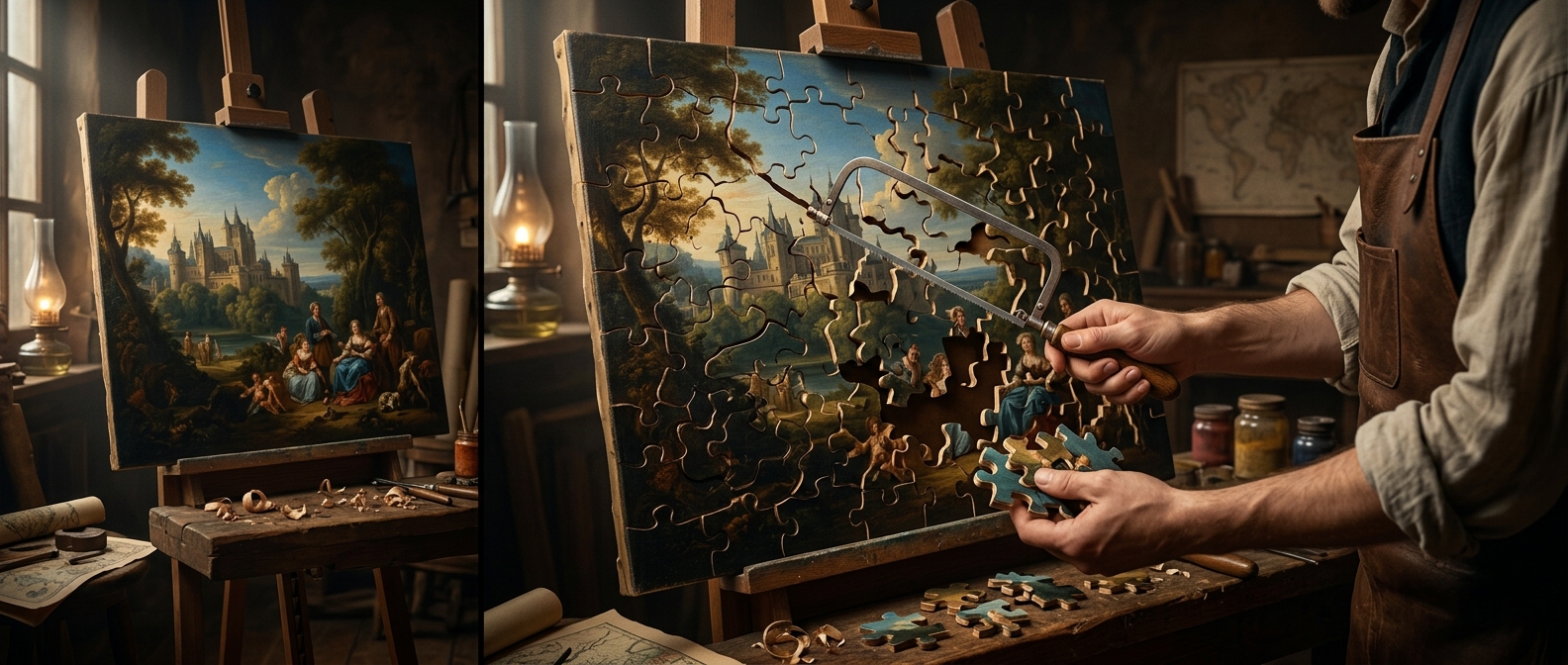
A puzzle’s picture and its cut pattern are made in separate steps. The image is printed on a sheet of cardboard, then a cutting die—a shaped tool that presses through the sheet—divides it into pieces. The die determines each piece’s outline; it does not know whether that piece shows sky, mane, or grass.
When manufacturers reuse a die, the same arrangement of outlines can appear on puzzles with entirely different pictures. A piece’s tabs and sockets may therefore match the shape of another piece from elsewhere in the image, even though the printed scenes make the pairing look absurd.
The Picture Is the Real Check
The interlocking edges provide a useful clue, but they are not always a unique address. If two pieces share a cut shape, matching their contours alone may not reveal where either belongs. The artwork supplies the missing information: colors, lines, and recognizable details should continue across the join.
That is why a sky piece may seem to fit beside a horse’s rear. The cardboard outlines can agree while the picture does not. A genuine placement must satisfy both—the physical cut and the image.
For puzzlers, this changes what a suspiciously easy fit means. If the scene breaks at the seam, the pieces may share a repeated shape rather than belong together; the picture is the final test.