A picture became a lesson when it was cut apart
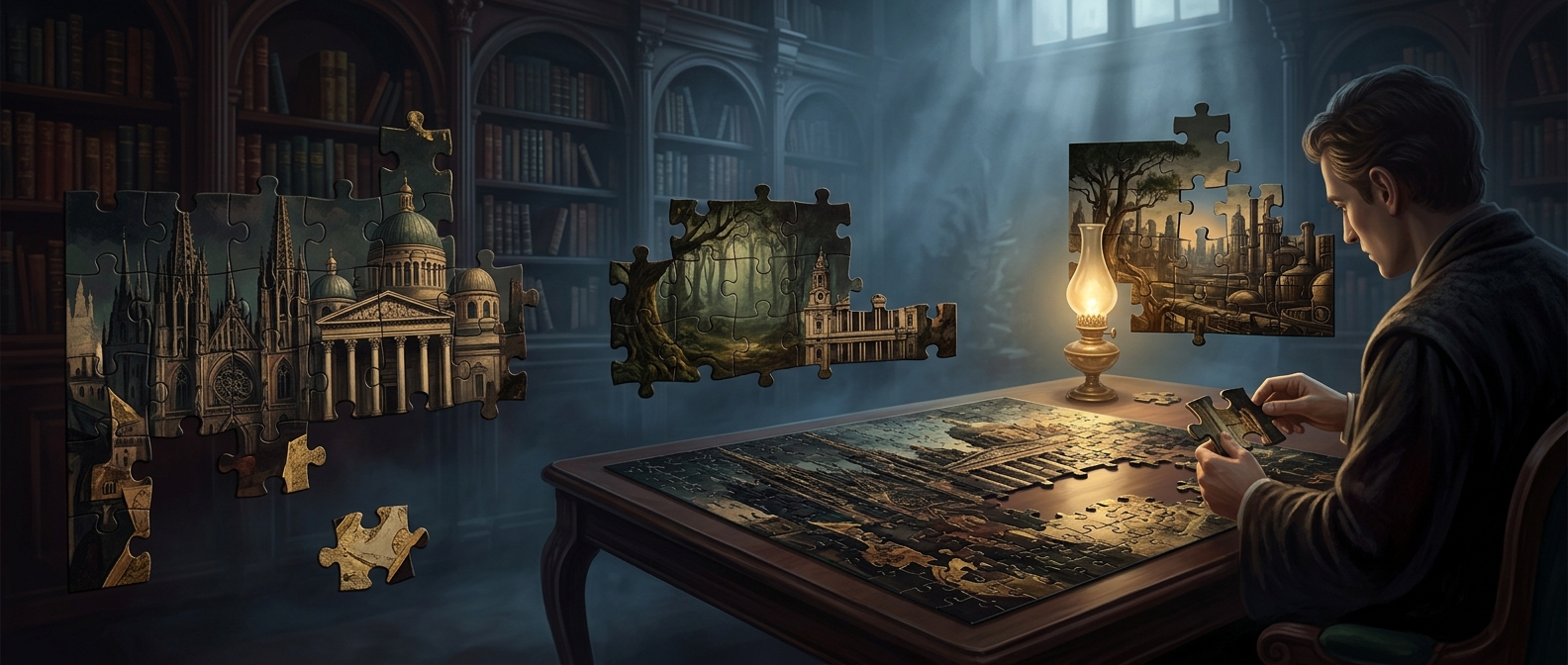
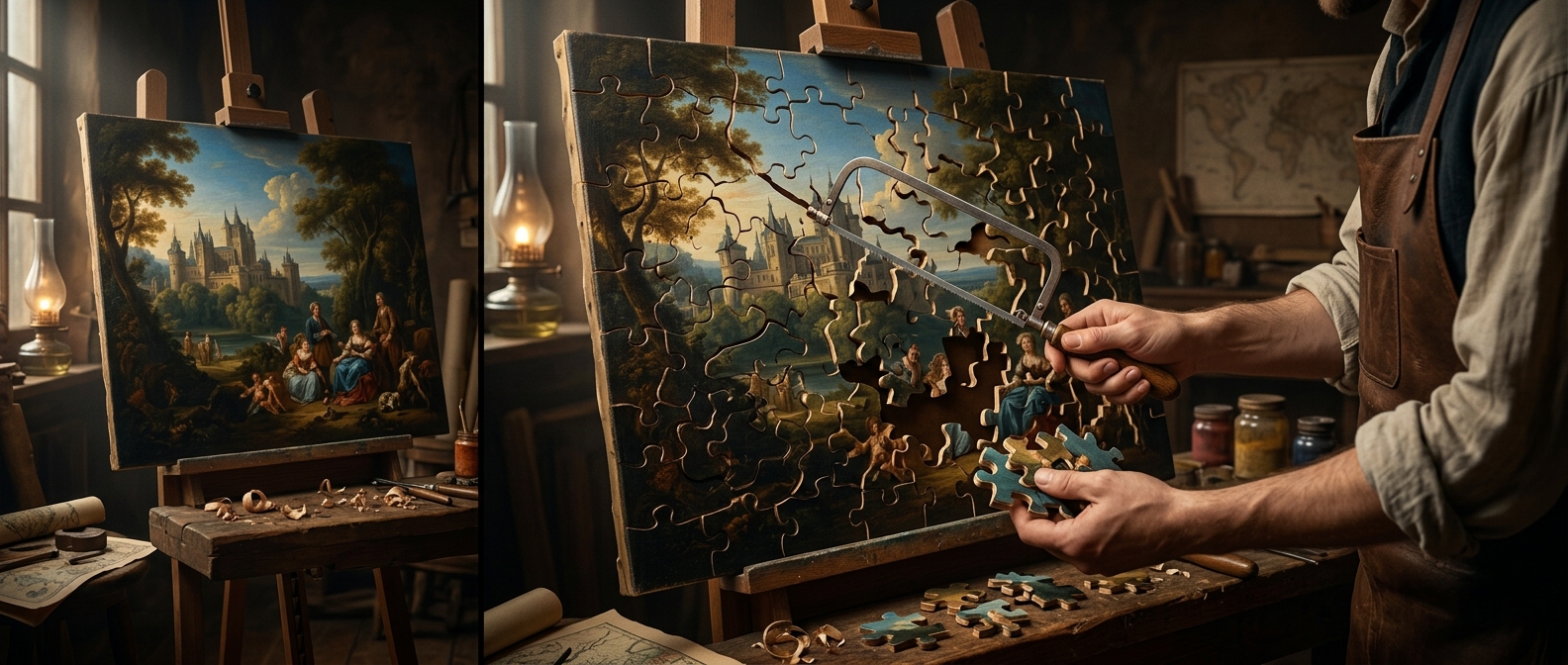
An early jigsaw puzzle was not designed first as a pastime. It turned a finished image into a teaching tool: a portrait or other picture could be mounted on a thin wooden board, then sawn into separate pieces. The learner’s task was to put the image back together, using its visible details to work out where each piece belonged.
For lessons about royal families, the image could make a lineage—the relationships connecting generations—easier to grasp than a list of names. A student had to recognize individual faces and notice how they fit into the larger family picture. Taking the portrait apart made the relationships something to reconstruct, not merely memorize.
The saw shaped the puzzle
Because the pieces were cut from wood, their edges came from the path of a saw. That made the earliest puzzles different from many familiar modern ones: they did not depend on standardized, interlocking knobs and sockets. Instead, the artwork itself offered clues. A face, a patch of clothing, or a change in color could help identify a piece’s place, while the outline of the cut constrained where it could go.
That construction also made the activity naturally reusable. The picture could be dismantled and assembled again, letting a lesson become a hands-on challenge. The lasting idea was simple: a whole image could teach by being temporarily broken into parts.