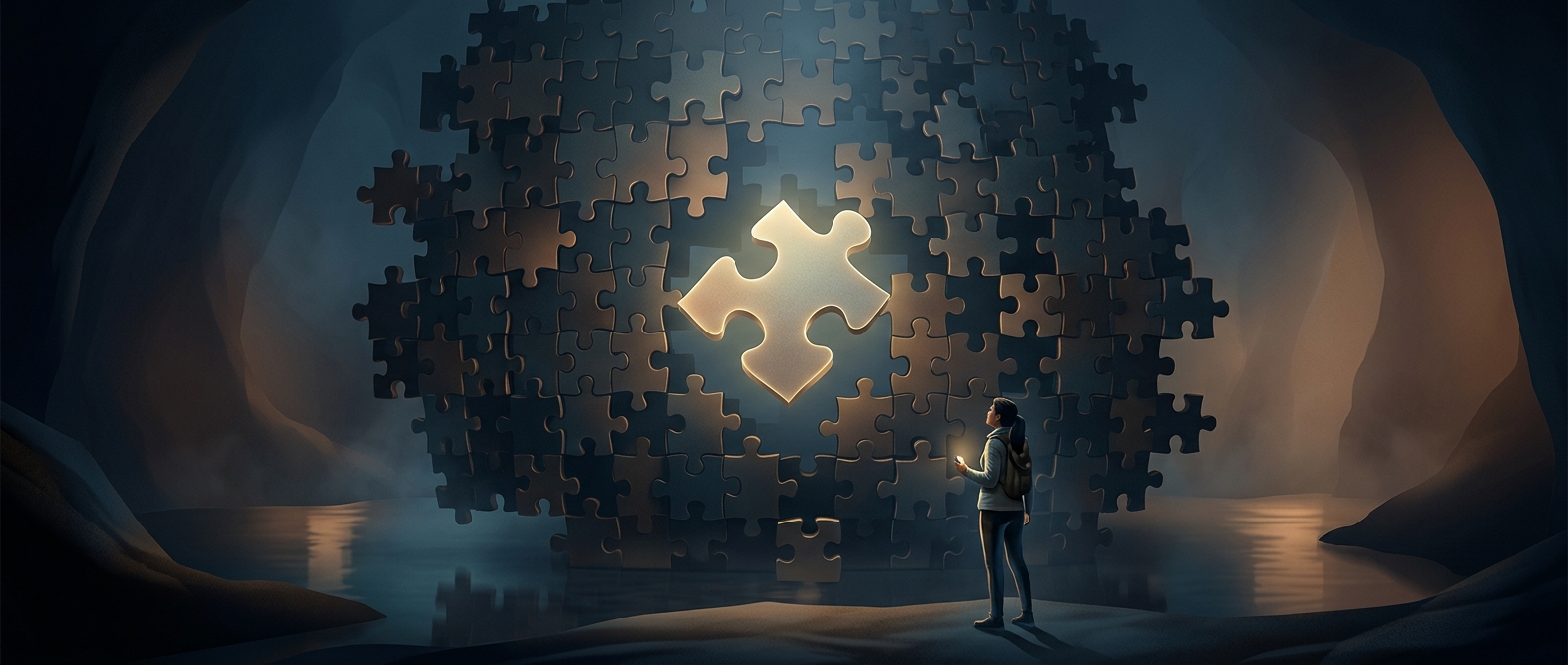
Why puzzle-piece shapes lack a standard vocabulary
A jigsaw piece’s edge is usually described by what it does: a tab sticks out, while a blank or indentation curves inward to receive a neighboring tab. Beyond those broad descriptions, there is no single official naming system for every bump and hollow. Puzzlers instead use informal words such as “knob” and “socket,” or simply call them tabs and holes.
That looseness fits the way pieces are made. A cut divides an image into shapes that must interlock, but the curves can vary widely: one piece might have a round, broad tab, while another has a narrow neck or an unusually shallow hollow. A small set of everyday terms is handy for pointing out a feature, but it does not neatly classify every possible shape.
Informal names help at the table
When solvers talk through a puzzle, a shared description can be more useful than a technical label. “Find a piece with two knobs” quickly narrows the search; “the socket near the red roof” connects shape to the picture. Different groups may use different words, and the surrounding clue usually makes the meaning clear.
The vocabulary is therefore part of puzzle culture rather than a fixed specification. The piece’s shape has to fit its neighbor; what solvers call that shape can change from one table to the next.