The Cube’s Centers Fix Its Color Map
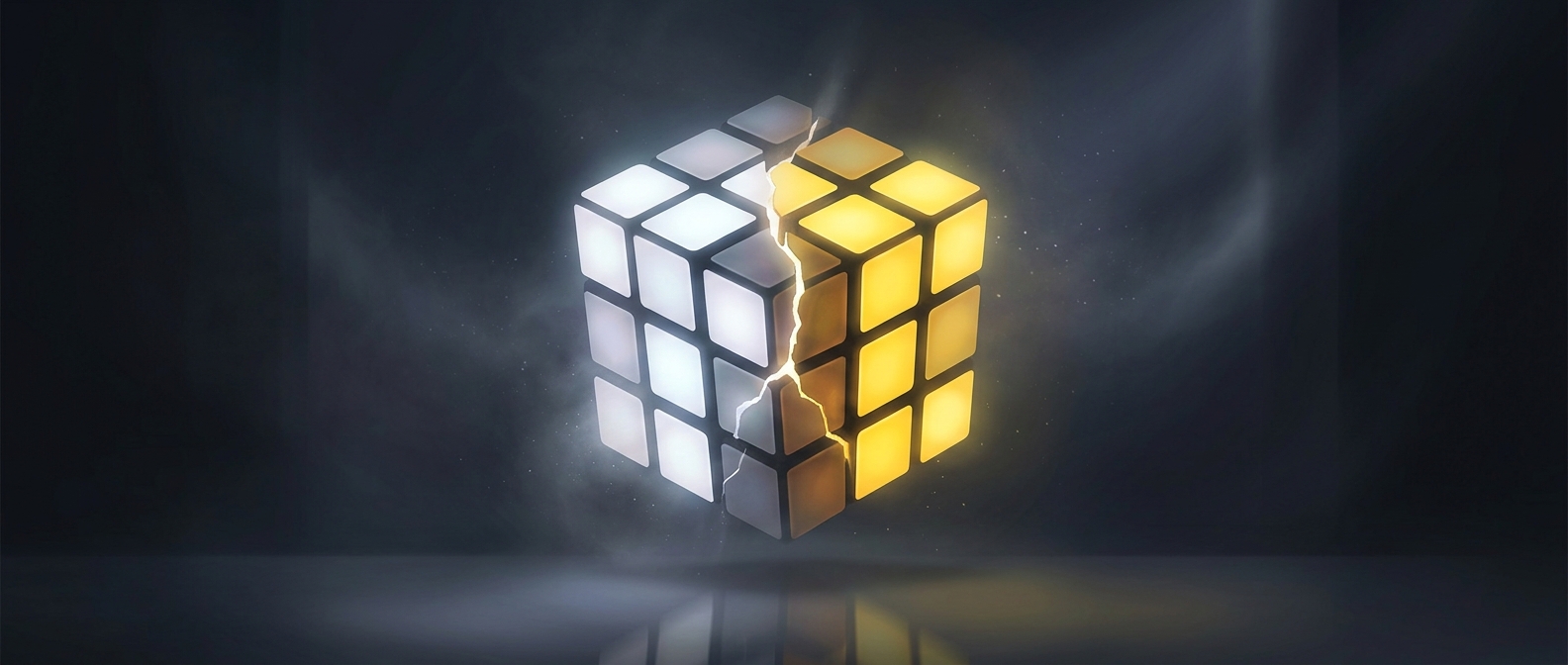
On a standard 3×3 Rubik’s Cube, the white and yellow centers occupy opposite sides. Those center pieces are the cube’s reference points: when you turn a face, its center stays in the middle while the surrounding edge and corner pieces move around it. Scrambling can scatter the white stickers, but it cannot change which color is opposite which.
That makes the white–yellow pairing part of the cube’s fixed color scheme, not a pattern that appears only when the puzzle is solved. A different brand or specialty cube may use another scheme, but on the standard arrangement, white and yellow are a matched opposite pair.
Why Opposite Colors Matter When Solving
A solver can use the centers to identify where each face belongs. If the white center is on top, for example, the face opposite it is yellow—even if yellow stickers are currently spread across several sides. Edges and corners must then be placed in positions that agree with the centers around them.
This is why a scrambled cube can look chaotic while its basic layout remains intact. The pieces change position; the center-to-center relationships provide a stable map. Turn the cube in your hands and the colors’ apparent directions change, but white and yellow remain opposite.