A picture piece with two jobs
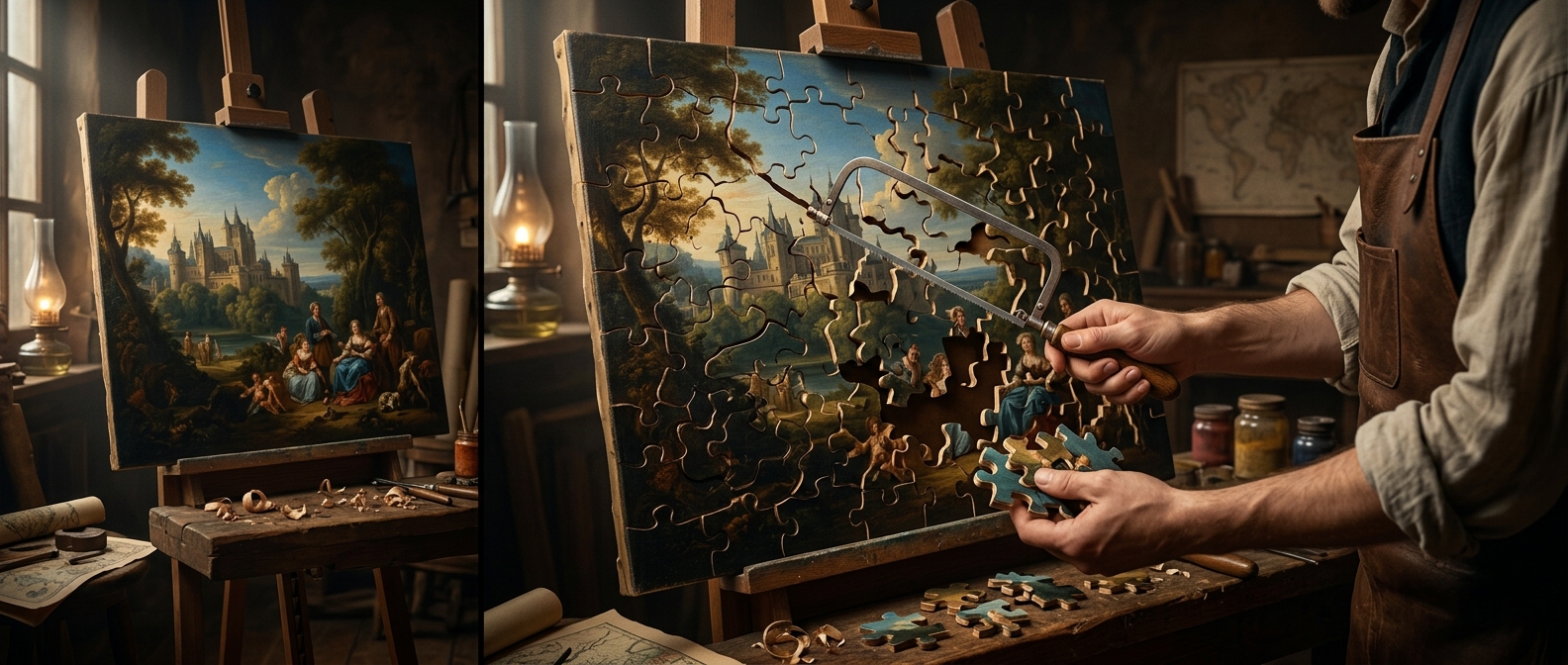
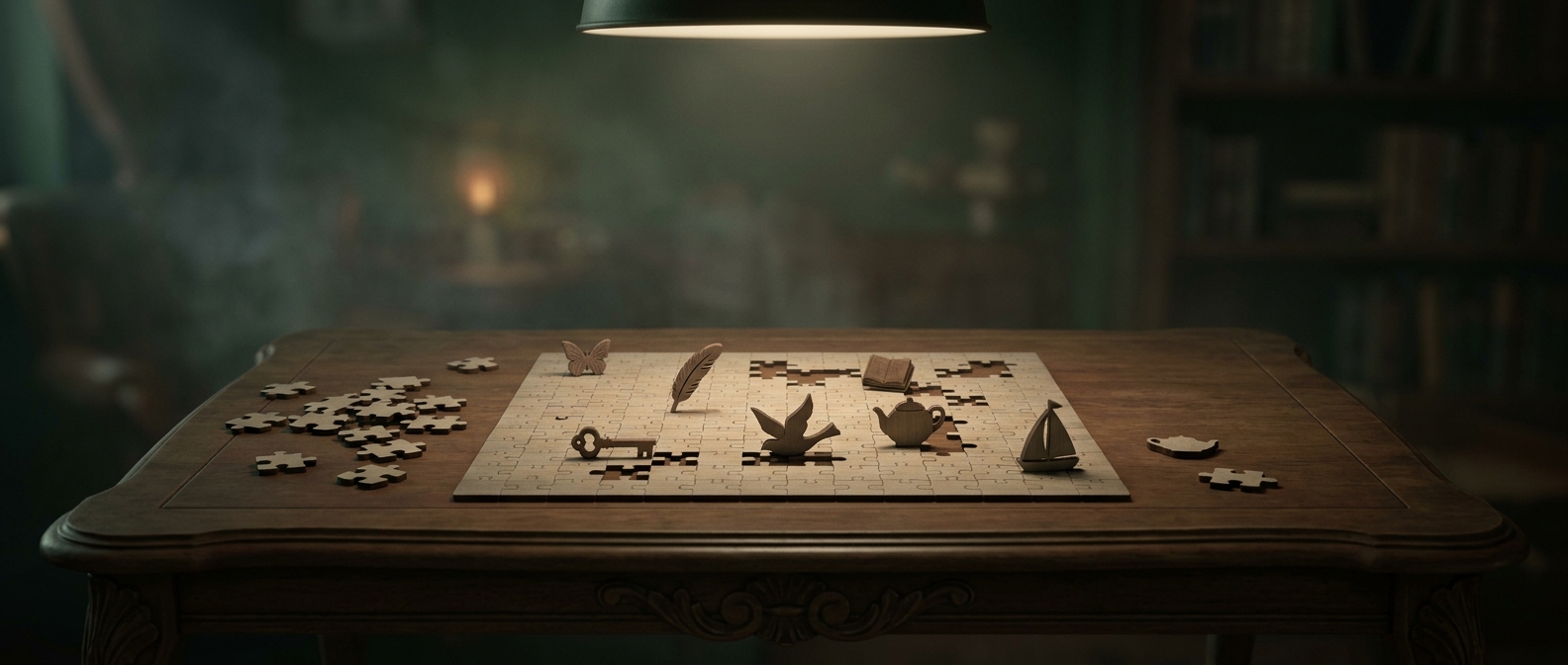
A whimsie is designed to read as an object in its own right—a dog, for example—while still fitting into the puzzle’s larger image. That gives the piece two kinds of information: its outline suggests what it represents, and its edges show where it can connect to neighboring pieces.
Ordinary puzzle pieces mostly ask you to compare colors, printed details, and tabs and blanks. A whimsie adds a recognizable silhouette, so a solver may spot the object before knowing where it belongs. But recognition is only a clue: the piece still has to match the surrounding picture and interlock with the correct neighbors.
Why the shape changes the challenge
The silhouette can make one piece easier to notice, yet it does not necessarily make the puzzle easier overall. A dog-shaped piece may be obvious in a pile, but its location depends on the scene. Meanwhile, the surrounding pieces must accommodate an outline that follows the dog rather than a regular grid of repeated shapes.
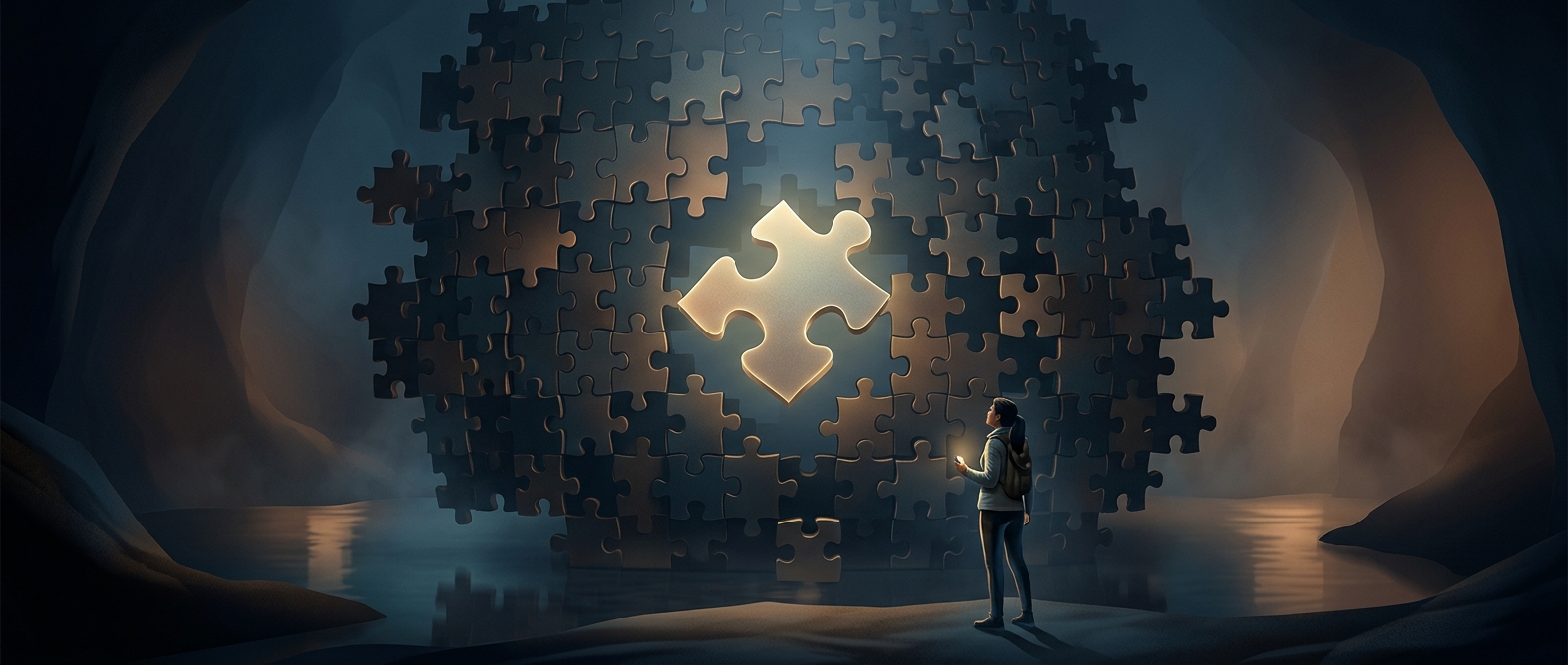
That is the design trick: the cut turns part of the picture into a small visual riddle. Solvers move between two questions—“What does this shape depict?” and “Where does it belong?”—until the object and the image resolve together.