Why the Border Matters in a Jigsaw Puzzle
A normal puzzle gives solvers an unusually easy first sorting task: pieces with one straight side belong on the perimeter, and pieces with two straight sides can usually be placed in a corner. Those pieces do more than make a neat frame. They establish the puzzle’s dimensions and give each border piece a limited set of possible positions.
Without that clue, a piece’s shape is less informative. A pair of tabs and notches may fit many other pieces, and a patch of blue or green may appear in several parts of the image. Solvers must use color, texture, and the way the picture continues across piece boundaries to work out where anything belongs.
Building Islands Instead of a Frame
The practical shift is from assembling the outside inward to building small, recognizable sections wherever the clues are strongest. A distinctive face, sign, or patch of patterned fabric can become a little “island” of connected pieces. Sorting by image features—rather than by straight edges—helps create those clusters; later, the clusters can be joined by matching their shapes and visual details.
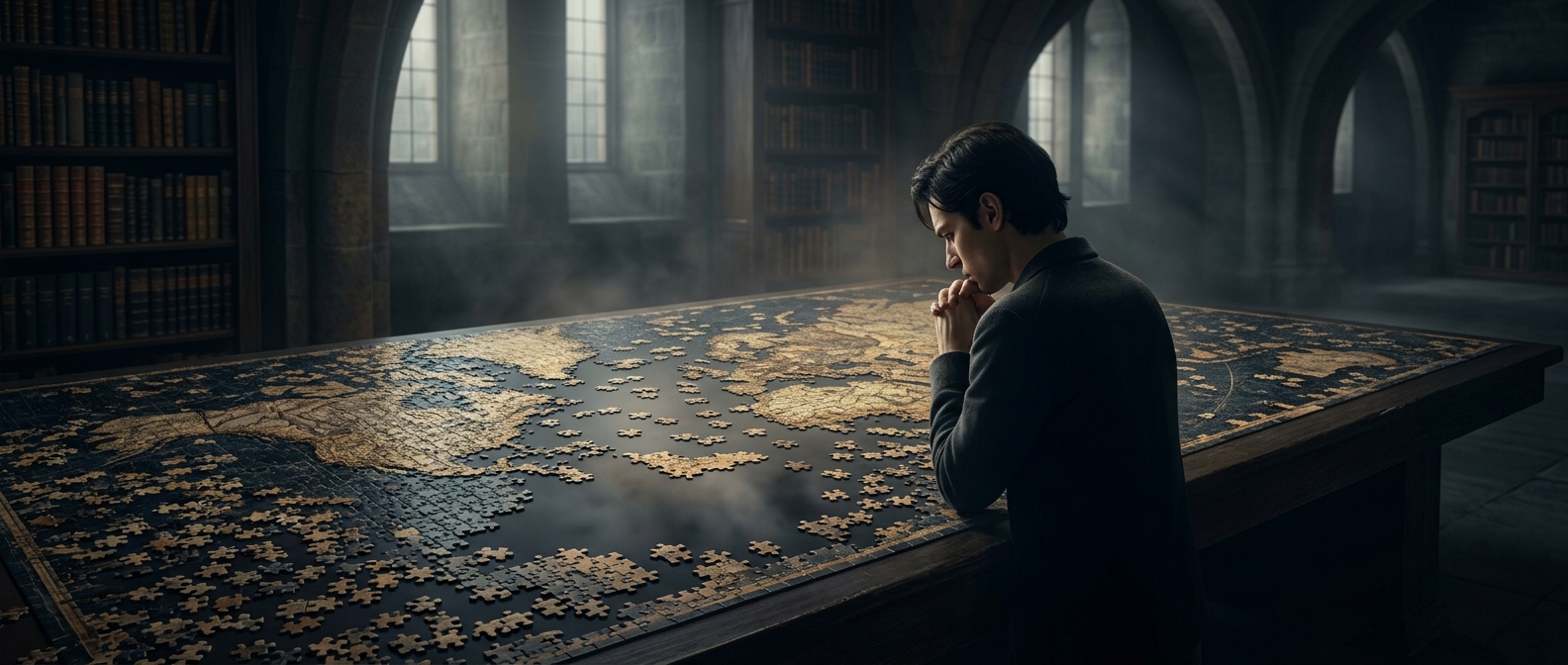
That method leaves more uncertainty for longer. A correctly placed interior piece may not connect to anything for a while, and several plausible-looking sections can compete for the same space. The missing border removes the puzzle’s easiest structural scaffold, so progress depends more on recognizing fragments of the image and patiently testing how they fit together.