Why the outline is not a unique address
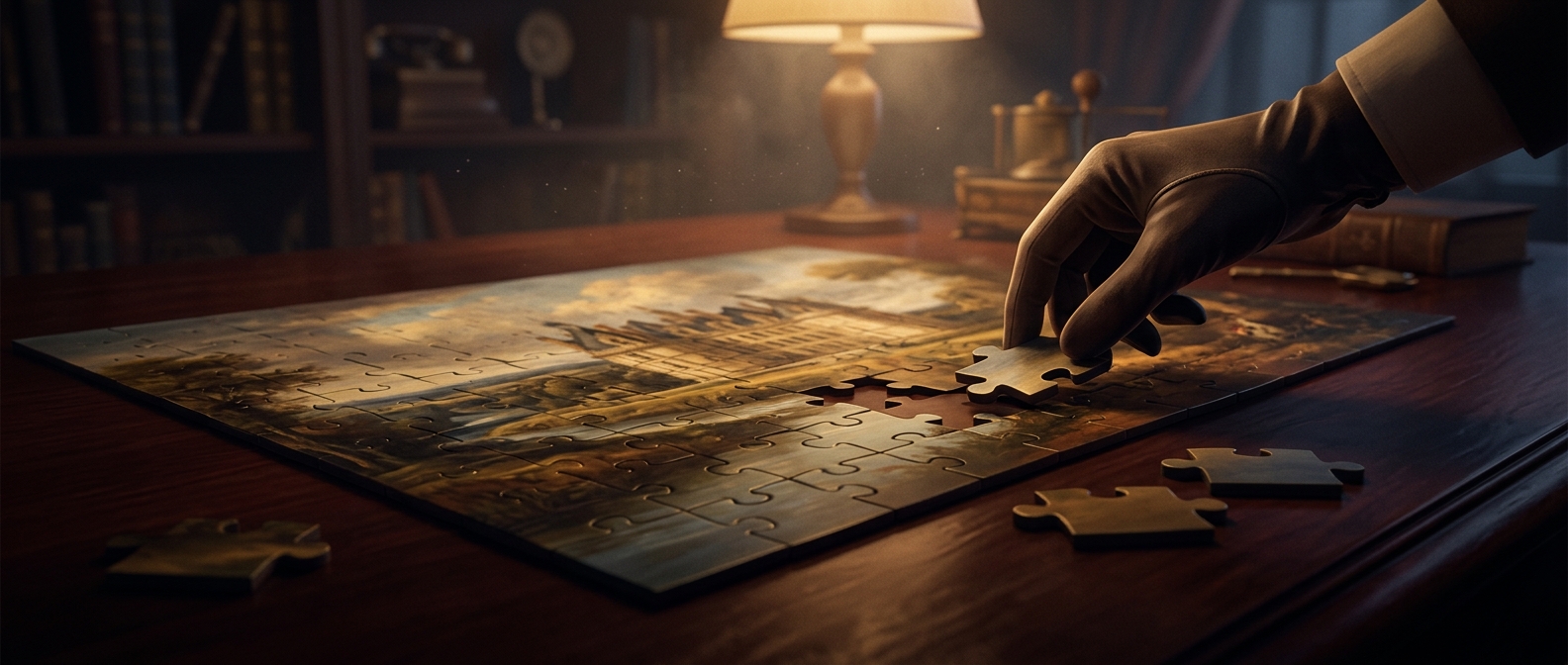
A jigsaw piece’s tabs and sockets are clues to its neighbors, not a code that identifies one exact location. Many puzzles use a limited set of recurring shapes: a rounded tab may meet a similarly sized socket in several places. If two pieces share a compatible outline, one can sometimes be pressed into a slot intended for another—especially when the cut is loose enough to allow a little play.
The picture supplies the missing information
A piece can pass the shape test and still fail the image test. A patch of blue sky, for example, may have nearly the same color and texture in several parts of a landscape. The fit feels convincing until a cloud edge, horizon, or other line refuses to continue across the seam. Image details act like a second set of coordinates, narrowing down where the piece belongs.
Why the mistake can survive a quick check
The false fit is easiest to miss when the surrounding area is visually uniform and the piece sits nearly flush. Instead of relying on the click, check whether the printed lines and color transitions flow naturally across each edge. The outline tells you which pieces might meet; the picture tells you whether they should.