The longer route changed the arithmetic
When the Suez Canal was unavailable, oil traveling between the Middle East and Europe had to go around southern Africa. That added distance—and therefore time, fuel, and operating costs—to a voyage. Shipping companies faced a simple problem: how could they move each ton of oil more cheaply over a much longer journey?
One answer was to carry more oil on each trip. A tanker has major costs whether it carries a moderate cargo or a huge one: it needs a crew, engines, maintenance, and a voyage. Make the ship larger, and those costs can be spread across more cargo. The ship may burn more fuel overall, but its cost per ton can fall. This advantage is known as economies of scale.
Why tankers could grow so large
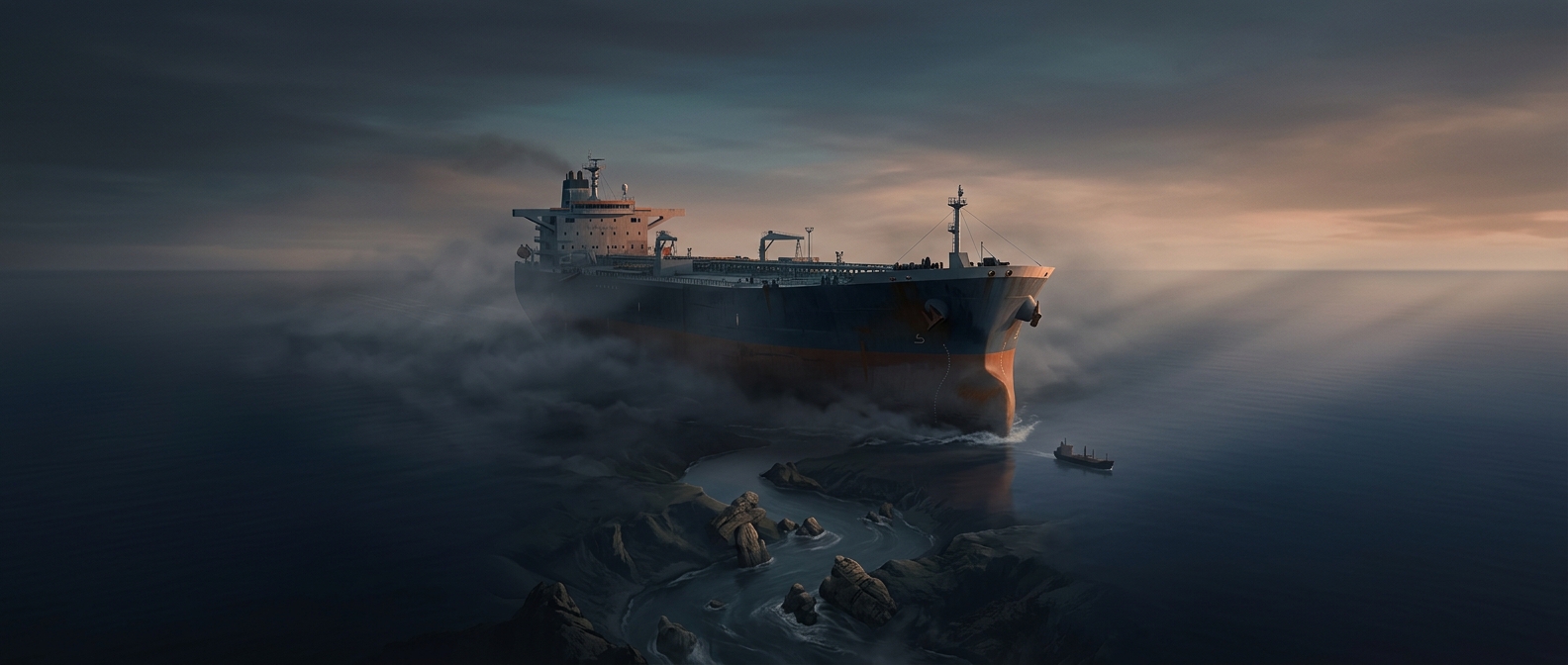
Oil tankers were especially suited to this strategy. Unlike many cargo ships, they could load a single bulk product at an export terminal and unload it at a destination built to handle oil. They did not need to stop at many ports to distribute different kinds of goods. That made it practical to design ships around enormous, direct shipments.
The canal’s blockage did not by itself invent the large tanker, but the Cape detour made the savings from bigger ships more valuable. Shipowners and oil companies had reason to invest in vessels that could carry enough extra cargo to offset the added miles. As those vessels grew, the industry’s idea of an economical tanker grew with them.
Bigger ships brought new constraints
A larger tanker could not simply fit everywhere. Deep drafts—the distance from the waterline to the bottom of the hull—limited access to shallow ports and channels. Operators therefore needed suitable terminals, and ships had to be matched to the routes they could actually sail. The lasting change was not merely a bigger hull: it was a shift toward planning oil transport around very large loads, long voyages, and ports capable of receiving them.