From Leaf to Standardized Sweetener
A stevia leaf is not a ready-made packet of sugar substitute. Its sweetness comes from steviol glycosides, a family of compounds concentrated in the leaves. Different glycosides taste different: some deliver cleaner sweetness, while others can leave bitter, herbal, or licorice-like notes. The balance varies with the plant material, so simply drying and grinding leaves would produce a less uniform ingredient.
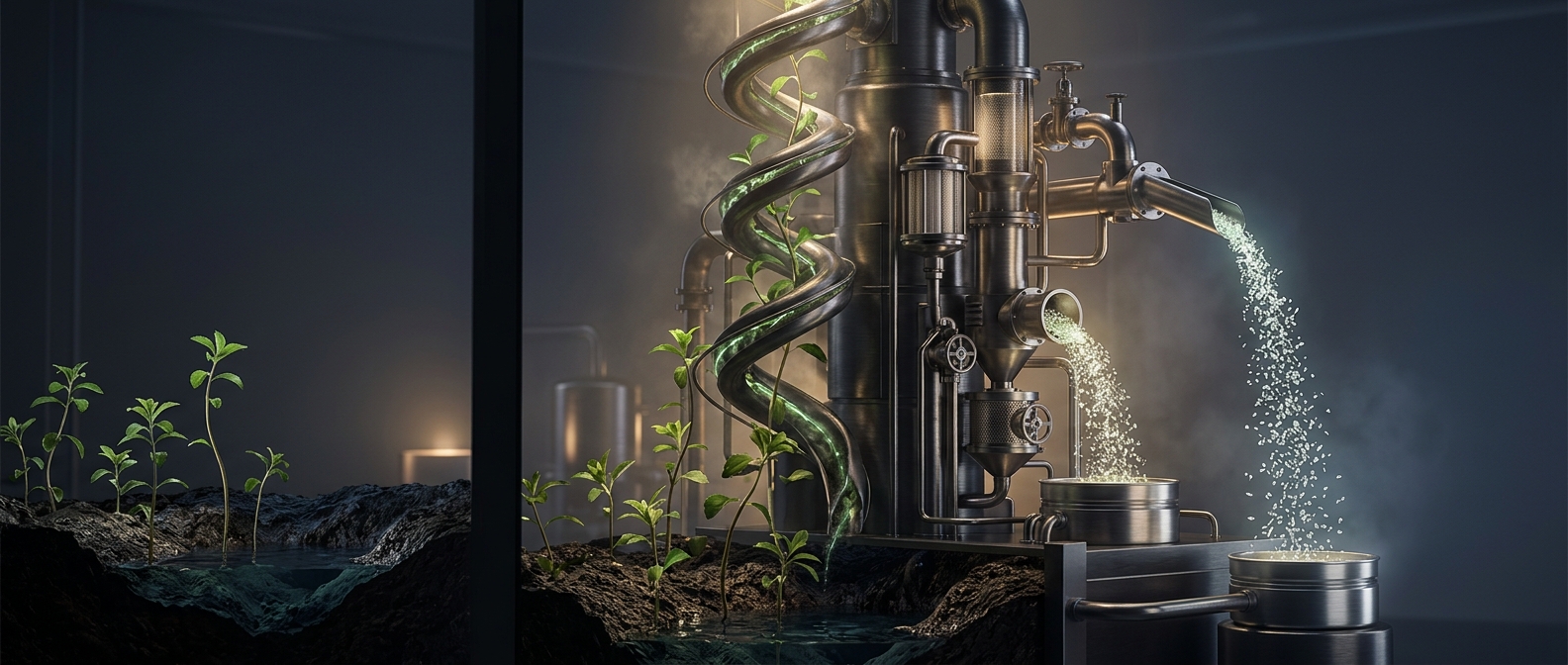
Processors use water to draw the sweet compounds out of the leaves, then separate them from much of the plant material. Filtration and further purification concentrate selected glycosides; drying turns the resulting ingredient into a powder. The goal is not just to make it white, but to make its sweetness and flavor predictable from one batch to the next.
Why Processing Changes the Economics
That extra work adds cost between farm and food manufacturer. Producers must handle the leaves, recover the desired compounds, remove unwanted material, and meet specifications for a consistent ingredient. This makes the sweetener’s price depend on more than how much stevia grows: the yield of useful compounds and the efficiency of extraction and purification matter, too.
For manufacturers, the tradeoff is control. A standardized purified extract is easier to formulate into drinks and other products than ground leaves with a variable flavor. But purification cannot erase every taste difference, and stevia ingredients may be blended or paired with other sweeteners to achieve a more familiar profile. The white powder in a packet is therefore better understood as a processed food ingredient made from a plant—not as powdered leaves.