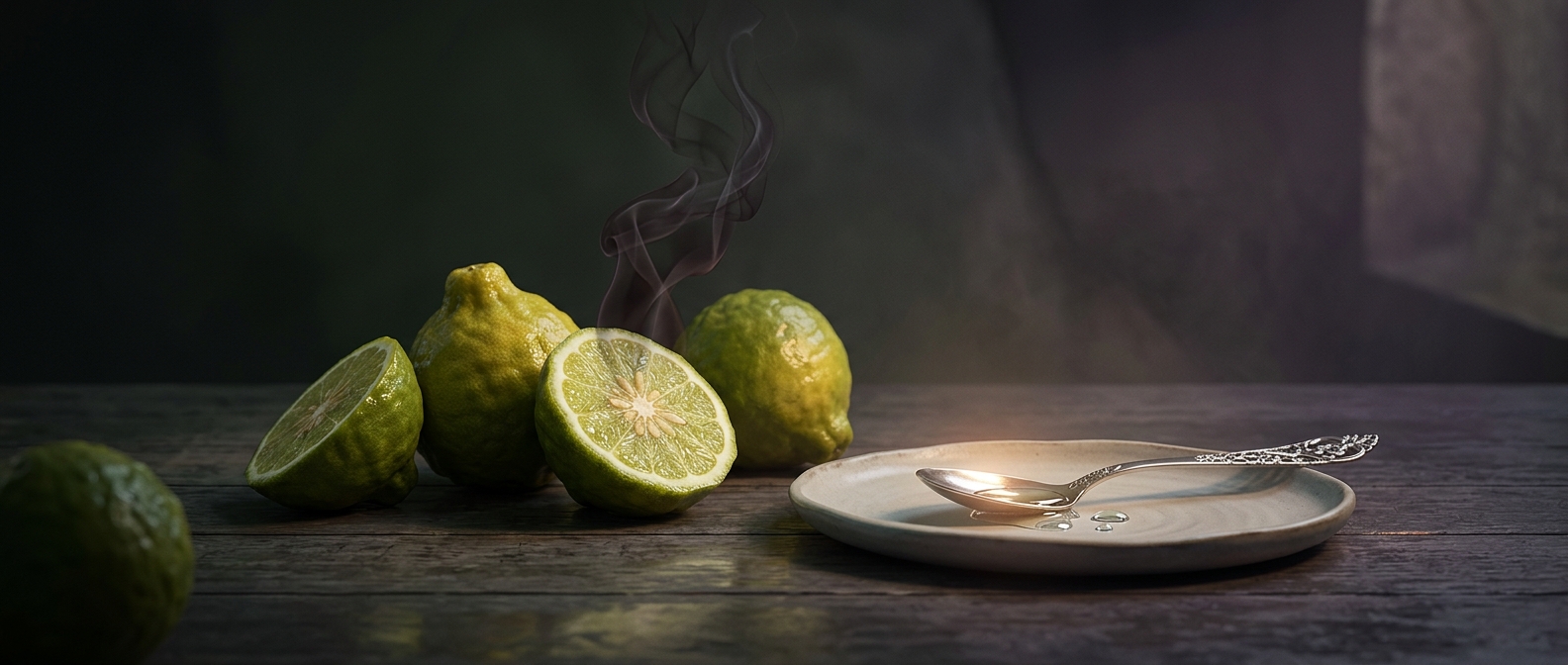
Why the rind matters more than the juice
Bergamot’s culinary value is concentrated in its peel. Just beneath the colored skin are tiny oil glands packed with volatile compounds—the molecules that readily evaporate and reach the nose. When the rind is pressed, those compounds emerge as fragrant oil. The juice, by contrast, is sharply sour and bitter, with little of the perfume that makes the fruit useful to tea makers.
That difference shapes how the crop is handled: the peel is the prized part, while the pulp is secondary. The oil can be used in small amounts because its aroma is potent; it does not take a large volume of fruit to scent a batch of tea.
From peel oil to a recognizable cup
To make Earl Grey, producers blend bergamot oil or bergamot flavoring with tea leaves. The tea supplies the brewed drink’s body, while the oil supplies a bright citrus fragrance that can be noticed before the first sip. Its aroma is more complex than a simple lemon scent, which is why bergamot gives the blend a character of its own.
The oil’s concentration also makes consistency important. A small change in the amount added can shift the balance from a delicate citrus note to an overpowering one. The commercial value lies not in the fruit’s size or sweetness, but in a small, aromatic portion of its peel. That is why a fruit that is unpleasant to eat can still leave a lasting signature in a cup of tea.