The podiums are part of the production system
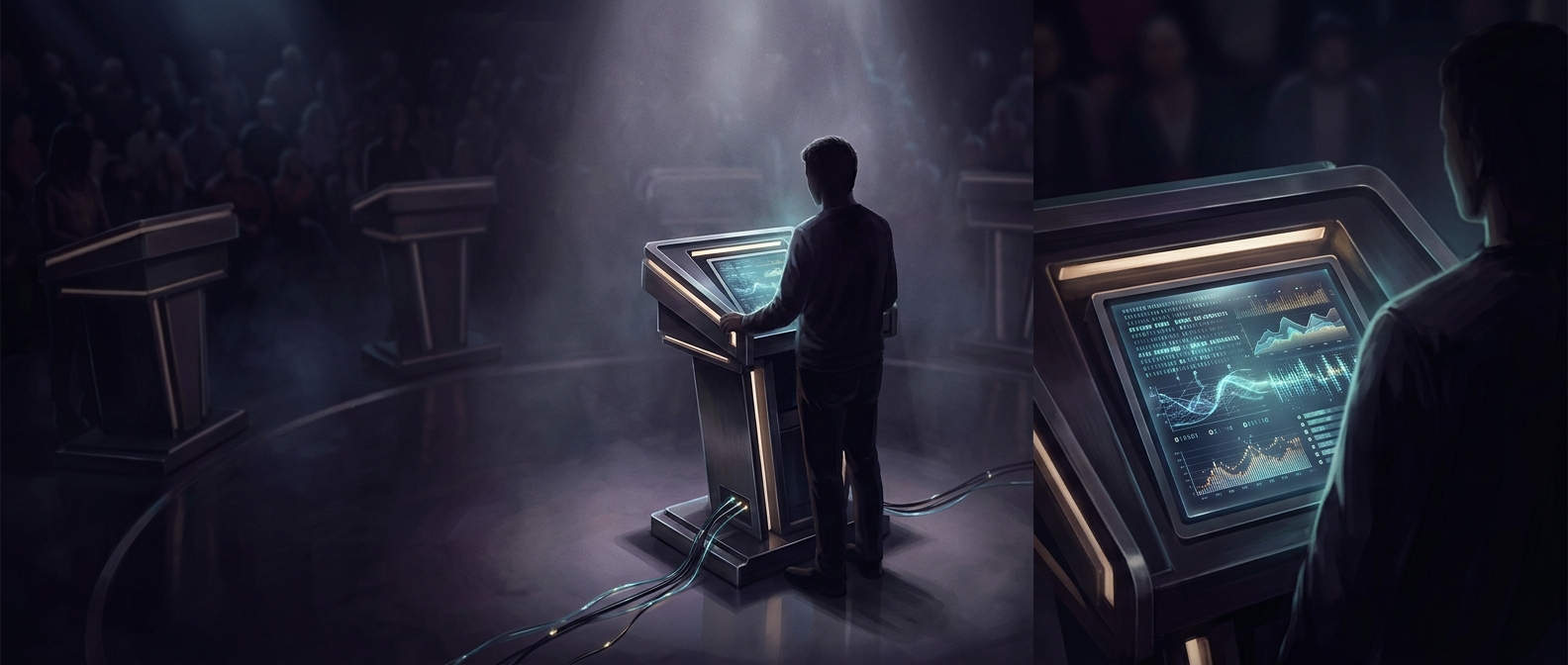
A quiz show has to keep two things moving at once: contestants must make decisions, while the program must communicate those decisions clearly to viewers. Hidden podium screens help connect those tasks. A prompt can cue a contestant about what to do or say next, and displayed statistics can keep the game’s running information close at hand.
That matters especially in a format built around rapid turns and a shared score. If contestants and the host are working from the same current information, the action is less likely to stall while someone asks for a reminder or waits for an off-camera instruction. The screens make guidance available without turning every production cue into an interruption viewers can see.
A quiet way to shape the rhythm
The prompts also give producers a discreet way to help the program move through its beats. They can guide what happens next while leaving the visible exchange—the question, answer, and reaction—to the contestants and host. The statistics serve a different purpose: they help keep the state of play legible as the game changes.
The result is a small piece of backstage technology with an on-screen effect. Viewers see a brisk contest; behind each podium, the production can keep participants oriented and the game flowing.