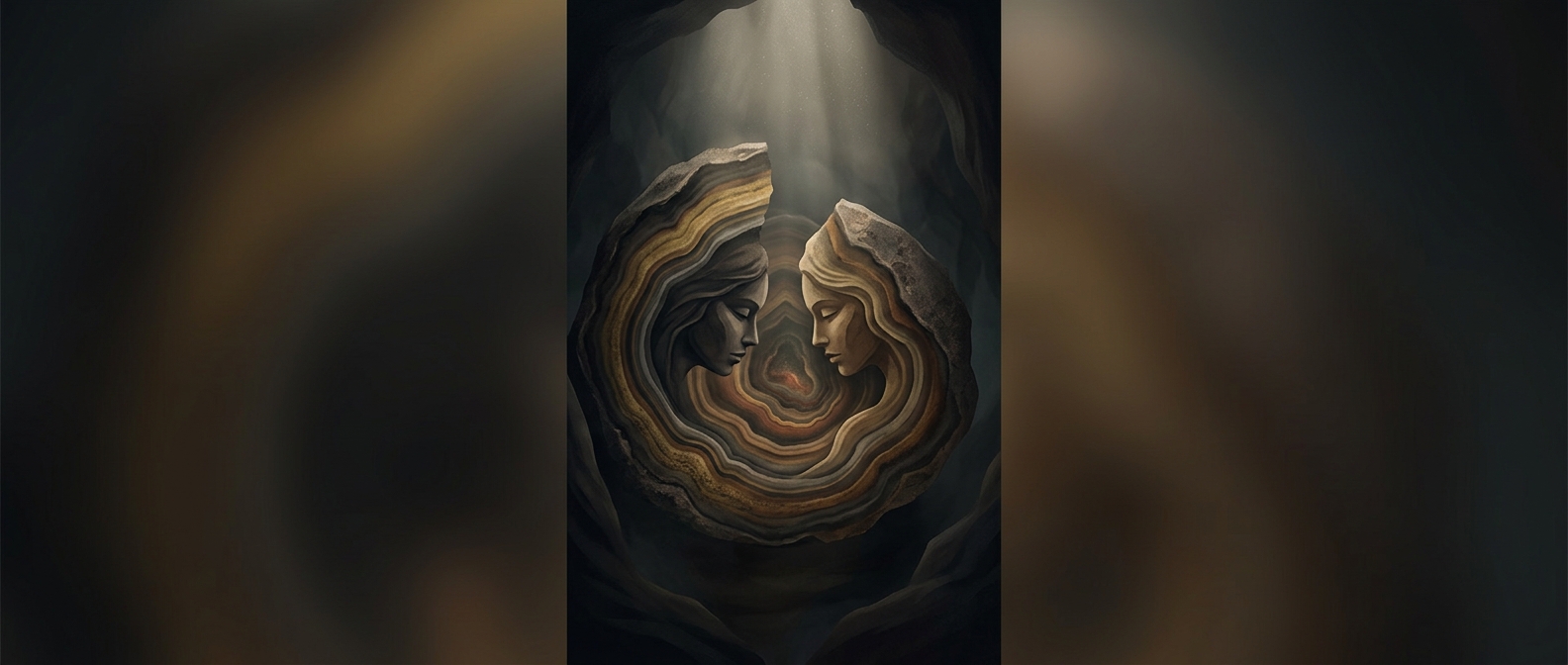
A layered mineral, not ordinary dirt
Agate may look like a stack of painted stripes, but its bands are mineral growth: mostly tiny crystals of quartz packed so closely that the stone can appear smooth and waxy. The material begins as silica carried in water moving through a crack or cavity in rock. When conditions shift, some of that silica comes out of the water and settles on the cavity’s inner surface.
The change can happen repeatedly. A new deposit forms over an older one, building bands inward like rings in a tree—though each band records a change in mineral deposition, not a year. The cavity may be left by gas bubbles in volcanic rock, or by other openings in stone.
Why the stripes vary
Small changes in the water can alter how quickly silica accumulates and what traces of other minerals are included. Those differences affect a band’s thickness, texture, and color. Iron-bearing material, for example, can contribute reddish or brown tones; other impurities can produce different hues. The familiar stripes are therefore a record of changing conditions as the stone grew, not layers of colored soil.
Agate’s patterns can follow the shape of the space where it formed, making bands that curve, ripple, or circle a center. Cut and polish the stone, and those hidden layers become visible—an old cavity’s slow mineral buildup turned into a vivid cross-section.