A pause built into the journey
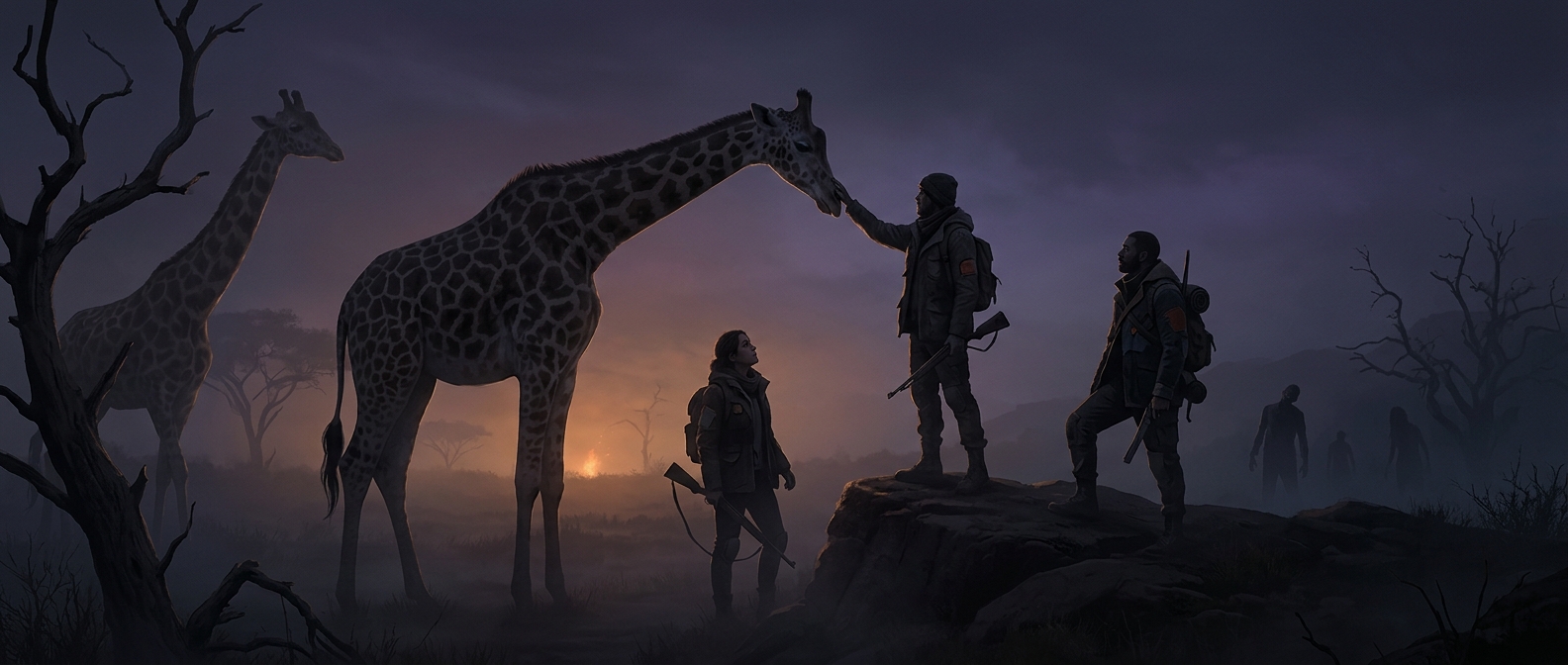
The giraffe scene works because The Last of Us briefly changes what the player is being asked to do. Much of the game trains you to scan rooms for threats, supplies, and routes forward. Here, the path still leads onward, but there is no immediate danger to solve. You can approach the animals and watch Ellie respond to them instead of rushing toward the next obstacle.
That small shift makes the encounter feel like more than a scenic reward. The player’s attention, usually spent on survival, can settle on an ordinary act of curiosity. The scene gives Ellie room to show a gentler side without interrupting the story for an explanation of how she feels.
Why the detour matters
The setting does part of the storytelling. Giraffes moving through a city overtaken by nature make the apocalypse visible as a changed environment, not just a series of ruined rooms. Their calm presence also contrasts with the violence that has shaped Joel and Ellie’s route. For a moment, survival is not about defeating or avoiding something; it is about getting close to a living thing without harming it.
Because the player participates rather than simply watching a cutscene, the quiet has a physical rhythm: leave the route, approach, pause, and then continue. The detour’s consequence is emotional rather than practical. It lets the journey breathe—and makes the return to danger feel like leaving a fragile pocket of normal life behind.