Why a Soldier’s Wine Could Be Acceptable While Beer Wasn’t
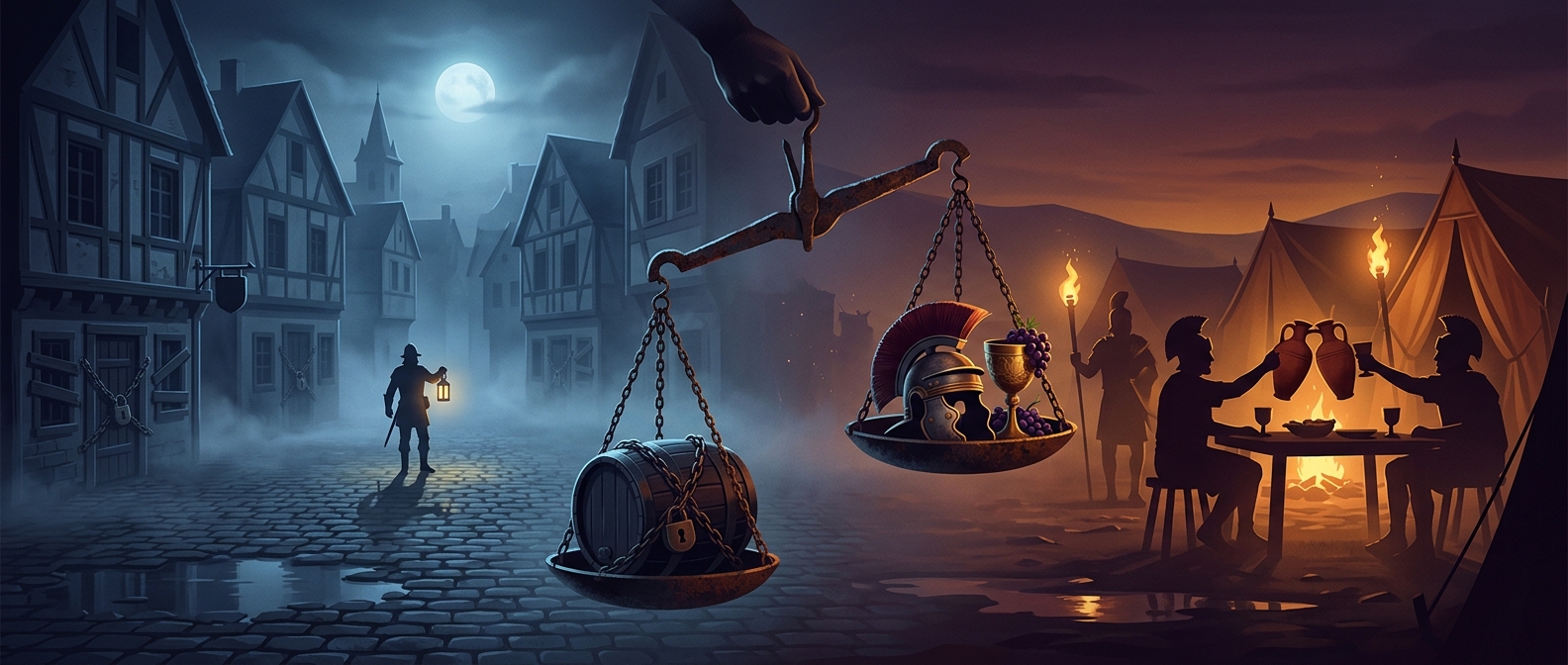
The apparent contradiction makes more sense when alcohol is treated not simply as a drink, but as something an institution wanted to regulate. A ration was issued on the authorities’ schedule and in a controlled amount. Brewing, by contrast, could happen outside that system: it used time and supplies, and it gave soldiers a way to make and consume alcohol without the same oversight.
That difference mattered to institutions concerned with discipline. A commander could set when a ration was distributed and make it part of the daily routine. Uncontrolled brewing was harder to monitor and could compete with work or obedience. The concern, in other words, was not necessarily that every alcoholic drink was forbidden; it was that drinking beyond the institution’s terms could become a problem.
Permission Was Also a Form of Control
An authorized ration could serve practical purposes as well as symbolic ones. It let officials decide what was provided, to whom, and when, while keeping the supply within an established chain of distribution. That did not make alcohol harmless or ensure that every authority applied the same rules. It did make sanctioned drinking easier to manage than private production.
So the policy could look inconsistent by focusing on the beverage—wine allowed, beer prohibited—while its underlying distinction was about who controlled access. The same logic appears whenever institutions permit a behavior in a supervised setting but restrict it when people organize it for themselves: approval depends not only on what is happening, but on whether it remains governable.