From a film director’s idea to a world map
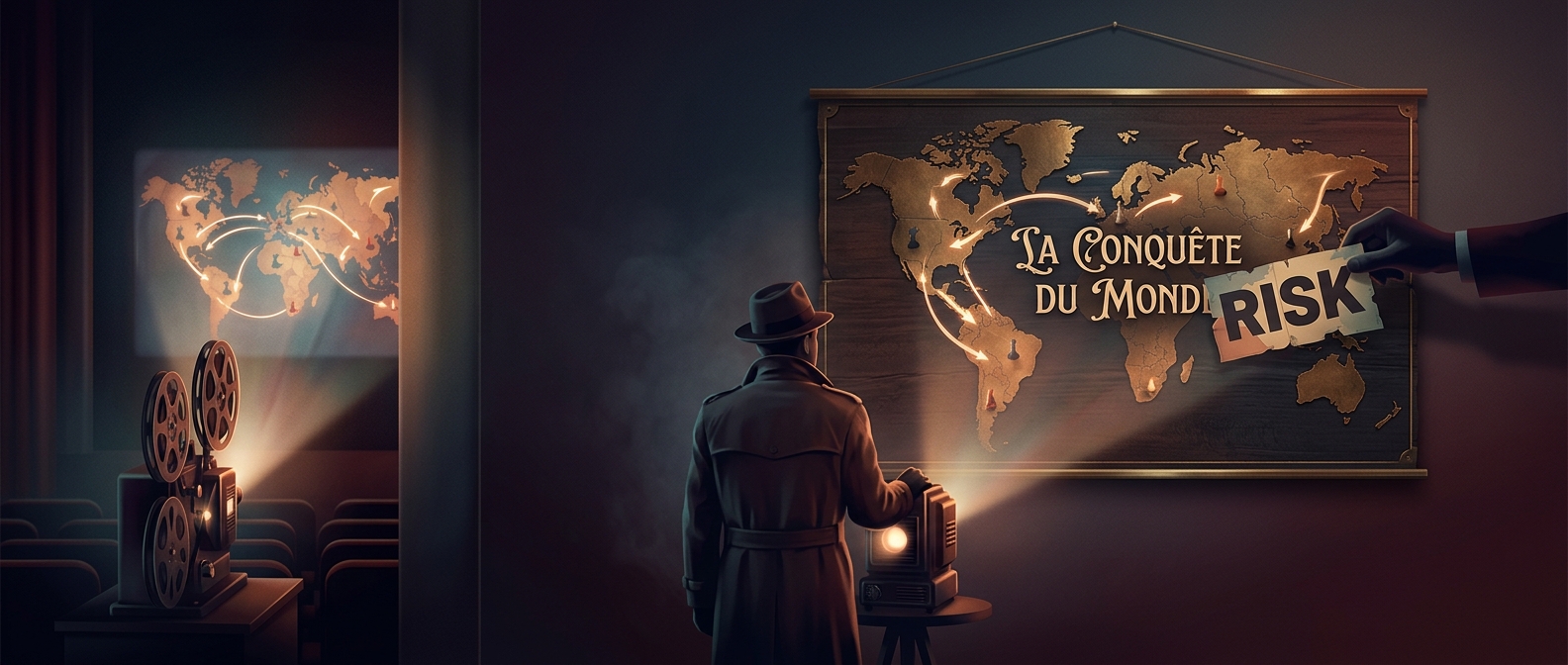
Albert Lamorisse is best known as the filmmaker behind The Red Balloon, but his 1957 board game began with a different kind of storytelling: players would compete to reshape a map of the world. Its French title, La Conquête du Monde, means “The Conquest of the World.” When Parker Brothers later brought the game out under the name Risk, the shorter title put the central tension in a single word: every advance could also expose a player to danger.
Why the map makes the game work
In the game that became Risk, the world is divided into territories. Players move armies, attack neighboring territories, and try to hold ground against opponents. The map makes distant strategy tangible: a territory is not just a place to capture, but a position that can open a route forward or leave a border vulnerable.
Combat is decided with dice, so control is never purely a matter of planning. A player may choose where to attack, but cannot dictate every result. That mixture of choice and uncertainty gives the game its characteristic tradeoff: expand too cautiously and rivals may gain the advantage; spread too far and the armies needed to defend your holdings may be stretched thin.
The title change did not erase the original premise. It sharpened it. The board asks players to pursue conquest while constantly weighing the risk of losing what they have already taken.