A word puzzle with a visible countdown
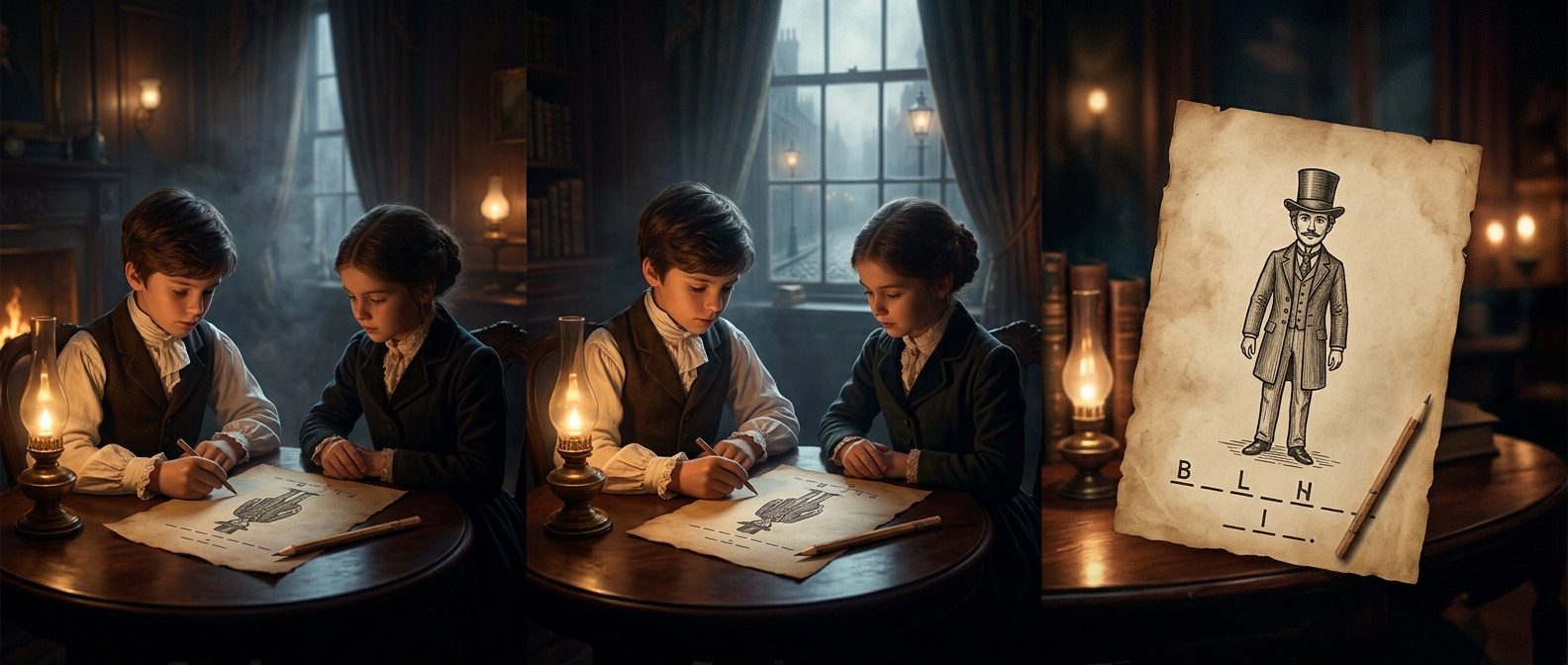
Hangman turns spelling into a sequence of narrowing choices. One player thinks of a word and marks its length with blank spaces; the other guesses letters. Each correct guess fills in every matching space, while each miss adds another part to a drawing of a person on the gallows. The puzzle ends when the word is solved—or when the drawing is finished.
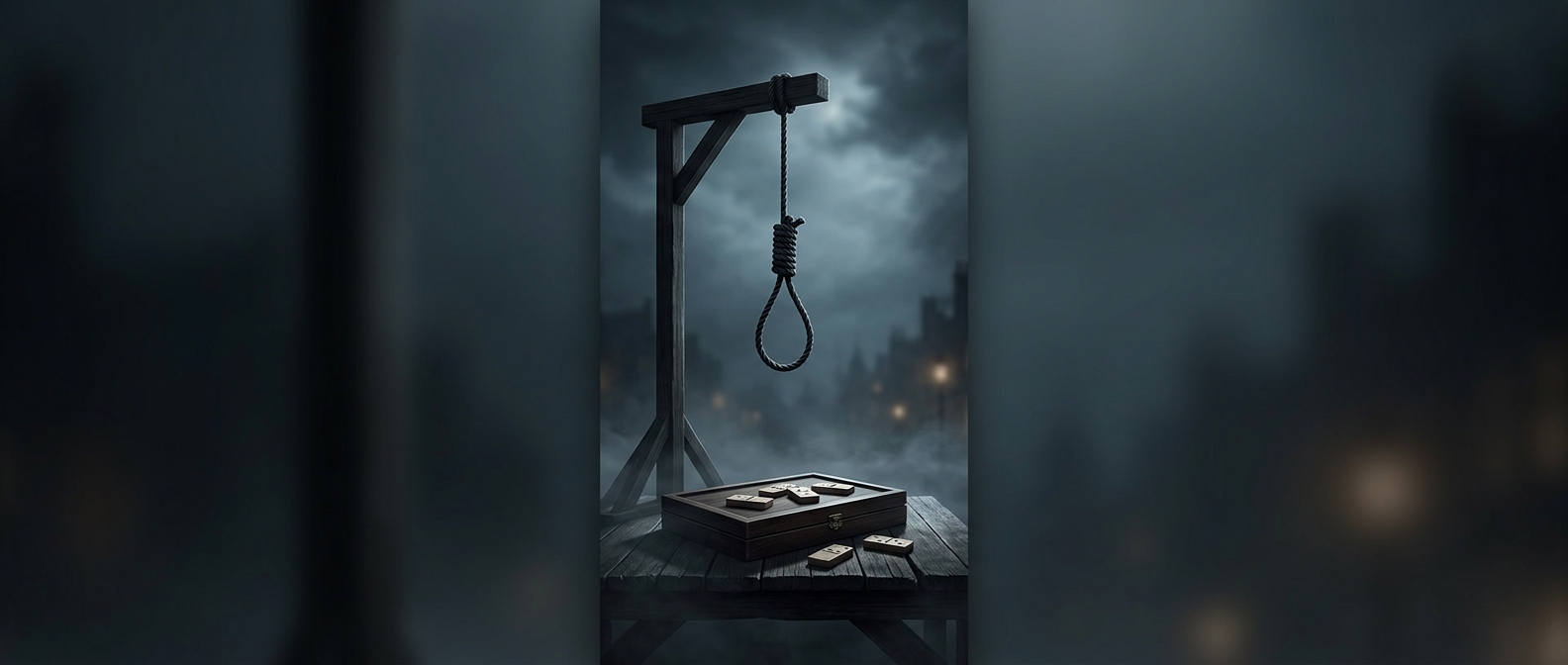
That structure makes the old execution imagery more than decoration. It gives mistakes a visible cost and puts a deadline around the guessing. A player is not simply asking, “What letters might fit?” but weighing how much uncertainty remains against how few misses are left.
From public spectacle to private play
The game’s 19th-century setting matters because public executions were then events that drew spectators. Early versions recast that familiar spectacle as a small contest played with words: the crowd’s attention became a player’s attention, and the condemned figure became a marker of progress toward defeat. The grim image supplied the puzzle with immediate stakes without changing its basic materials—paper, letters, and guesses.
The result is a compact design in which the drawing explains the rules as play unfolds. Even someone who has never played can see that each wrong answer brings the ending closer. Hangman makes the cost of a guess visible, which is why its central tension can be understood at a glance. The same feature also explains why the game’s image can feel unsettling: its simple progress meter is a miniature scene of execution. It turns a public spectacle into something a player can complete, one letter at a time.