How a word puzzle acquired a dramatic fail-state
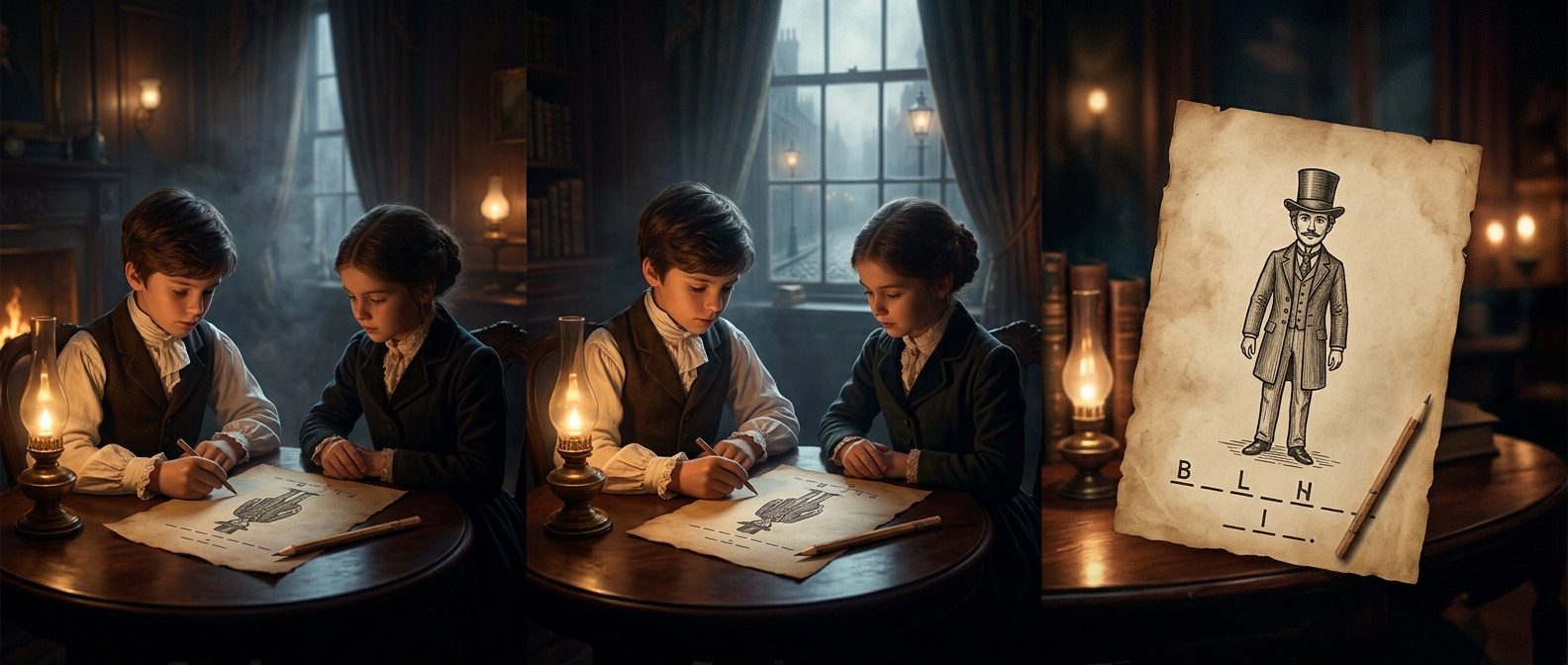
The game’s basic engine is simple: one player chooses a word, and the other guesses letters. Each correct guess reveals where that letter appears; each wrong one brings the player closer to losing. Early play could stay close to a vocabulary exercise, with categories such as animals giving the guesser a useful clue.
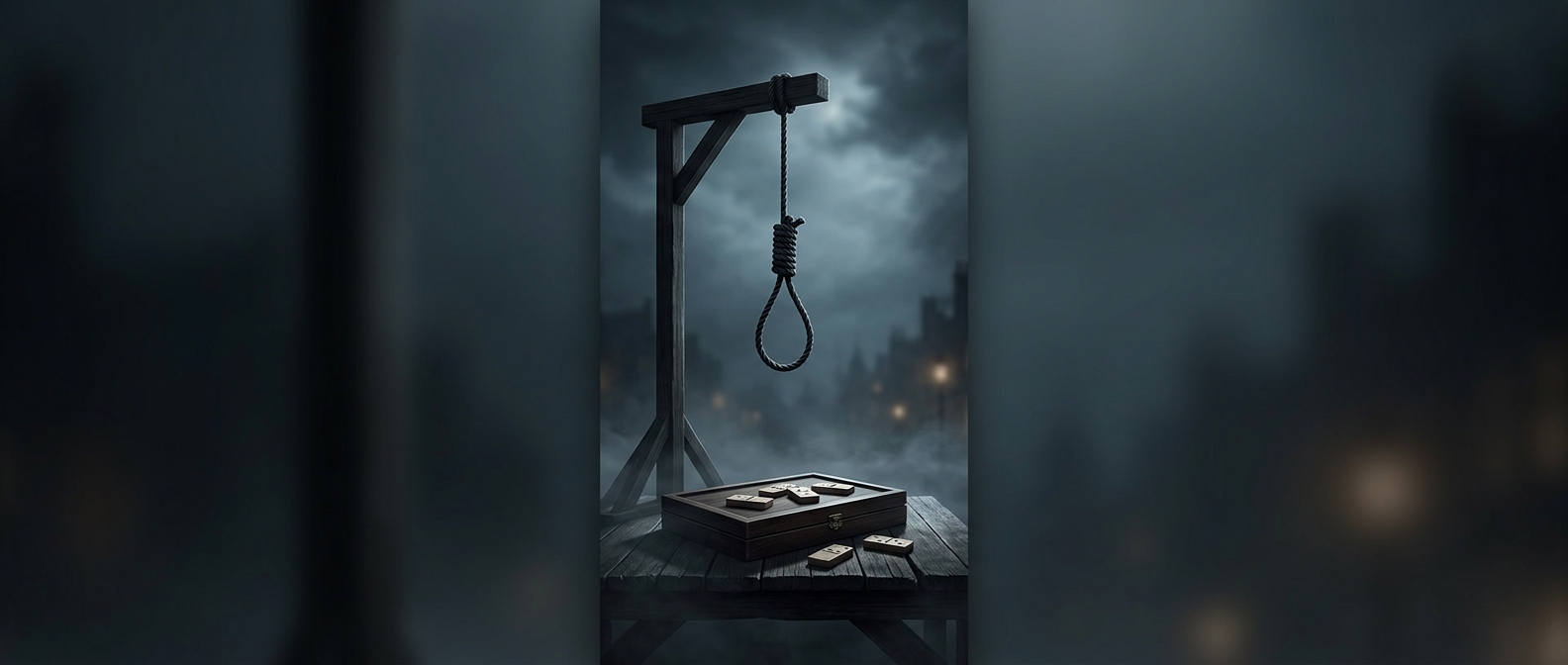
Adding a gallows and a gradually drawn figure changed what a wrong answer meant. Instead of merely marking a mistake, the drawing made failure visible and cumulative: every missed letter advanced the game toward a pictured ending. The word puzzle became a contest against a limited number of errors.
Why the picture mattered
The drawing also solved a practical design problem. A player needed a quick, shared way to track how many incorrect guesses remained, and a sketch could do that without counters or written scoring. Because each stage was visible to both players, the tension built on the page as well as in the word.
The result is a small but striking shift in tone. The same letter-by-letter guessing can feel like a classroom exercise or a race against a looming image; the gallows turns an abstract score into a story unfolding one wrong guess at a time.