Why a remembered room can grow
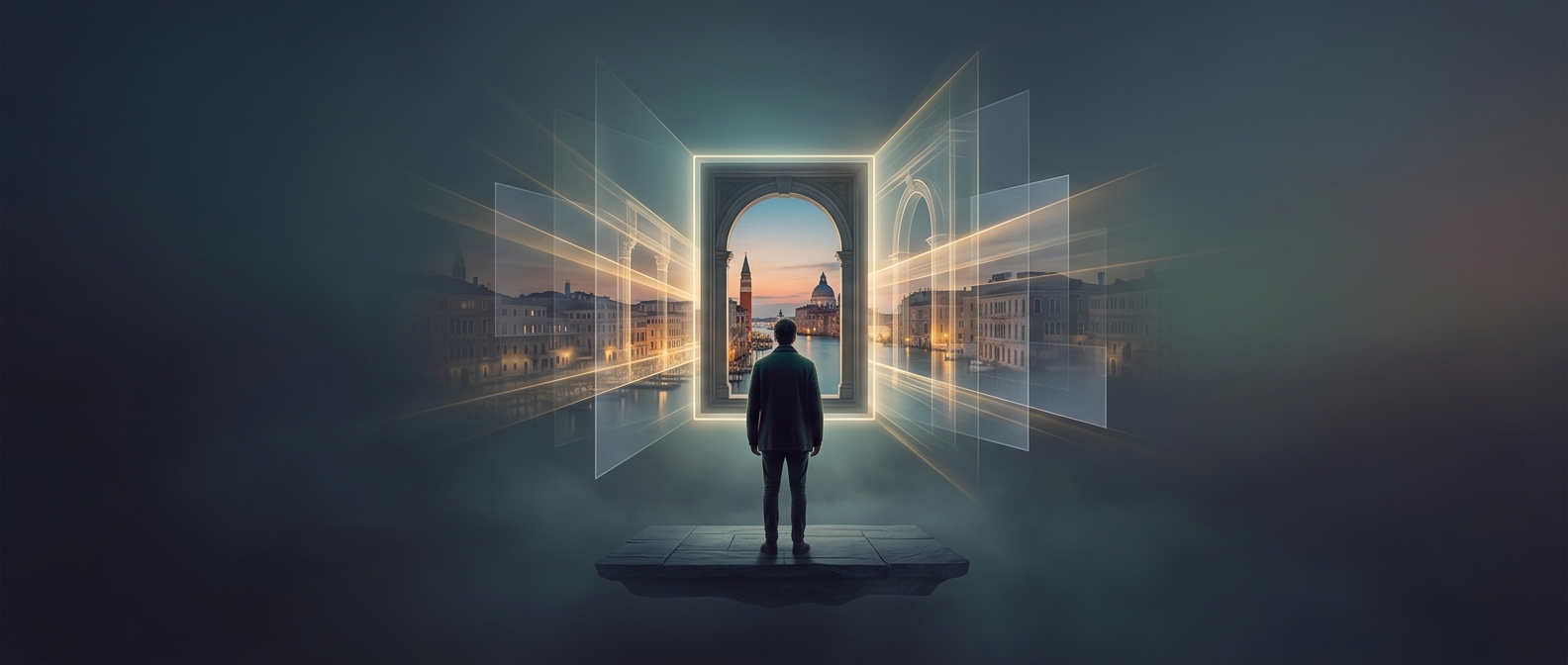
A doorway gives you a narrow view: perhaps part of a desk, a chair, and a strip of wall. Later, when you picture the room, the scene may seem to include a little more than that view allowed. Psychologists call this boundary extension—remembering a scene as if its edges reached slightly farther than they did.
The effect reflects how visual memory differs from a photograph. Your eyes take in details from a limited angle, but your brain organizes them into a coherent scene. A desk implies floor around it; a wall continues beyond the patch you saw. When the original view is no longer available, memory can blend what was visible with what would plausibly surround it.
A useful reconstruction, not a stored panorama
That added space need not be a deliberate guess. The mind can preserve the scene’s overall layout and meaning while losing the precise boundary of the view. When you later recall it, the plausible continuation may feel like part of what you actually saw. The result is not necessarily a dramatic invention: the remembered frame can shift only a little.
This helps explain why a confident mental picture is not always an exact record of where the original view ended. Memory is useful partly because it builds a workable model of a place, but that same continuity can blur the line between the visible scene and its imagined surroundings. A doorway, then, may survive in memory less as a hard border than as an opening onto the room beyond.