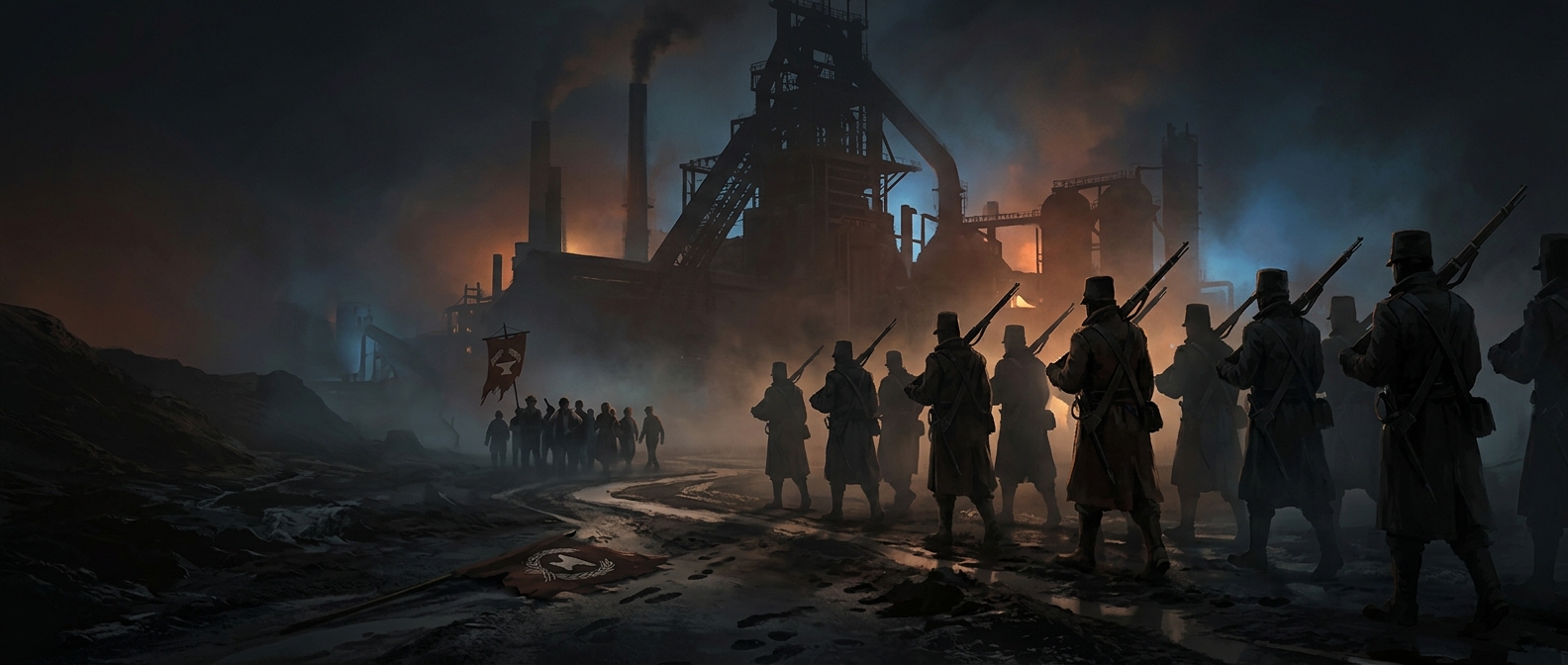
How a labor dispute became a security operation
A strike works by making labor unavailable: workers act together to pressure an employer to change wages, hours, or conditions. Employers could respond by negotiating, waiting out the stoppage, or trying to keep operations running. Hiring a private detective agency added another strategy: monitor and weaken the workers’ organization while protecting the company’s ability to operate.
These agencies were not simply detectives investigating individual crimes. Hired by an employer, their agents could enter labor groups undercover, learn who was organizing and how a strike was planned, and report that information back to the company. Armed guards could also accompany strikebreakers or stand watch over facilities. Surveillance made organizing harder; a show of force made returning to work—or trying to keep a replacement worker out—more dangerous.
Why private force changed the stakes
The arrangement gave an employer access to a coordinated force without making the labor conflict an ordinary police operation. The agency was paid by one side of the dispute, not appointed to settle it. That did not make every encounter violent, but it meant workers could face both the loss of wages and an armed presence hired to protect company interests.
Once weapons appeared, a disagreement over control of work could become a physical confrontation. Violence or the threat of it could fracture solidarity, deter picket-line participation, and draw public attention away from workers’ demands toward disorder and security. The consequential shift was from bargaining over the terms of a job to contesting who could safely assemble, organize, and enter the workplace.