Why eye contact becomes the exercise
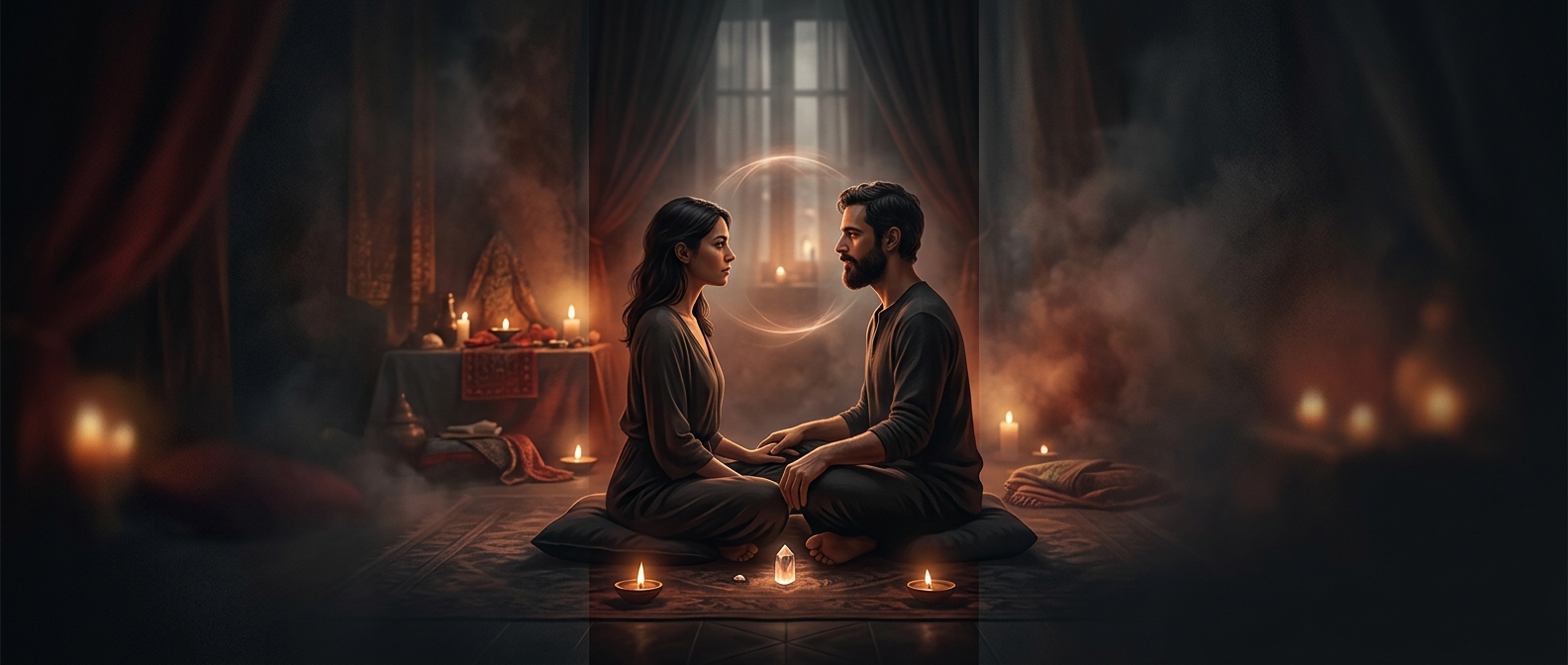
In some contemporary tantric workshops, participants sit facing a stranger and maintain eye contact for an extended period. The exercise makes attention itself the focus: rather than talking, touching, or trying to impress one another, participants notice what happens when they remain present with another person.
A steady gaze can feel unusually intimate because everyday conversation rarely asks people to look at one another continuously. Without words to steer the encounter, small reactions—an urge to look away, nervous laughter, warmth, or self-consciousness—become harder to ignore. The point is not that eye contact produces a special state in everyone, but that it can make ordinary social defenses more visible.
Intimacy without touch
The absence of physical contact is part of the structure. Participants can explore closeness while keeping a clear boundary around their bodies, which may make the encounter feel safer or more manageable than touch. At the same time, prolonged eye contact can be uncomfortable; the practice works best when people can pause, look away, or decline without pressure.
“Tantra” covers varied religious traditions and modern practices, so a workshop exercise should not be treated as representative of all tantra. In this setting, the gaze is a simple, deliberately demanding way to test how much connection can arise from attention alone—and how important consent is even when nobody touches.