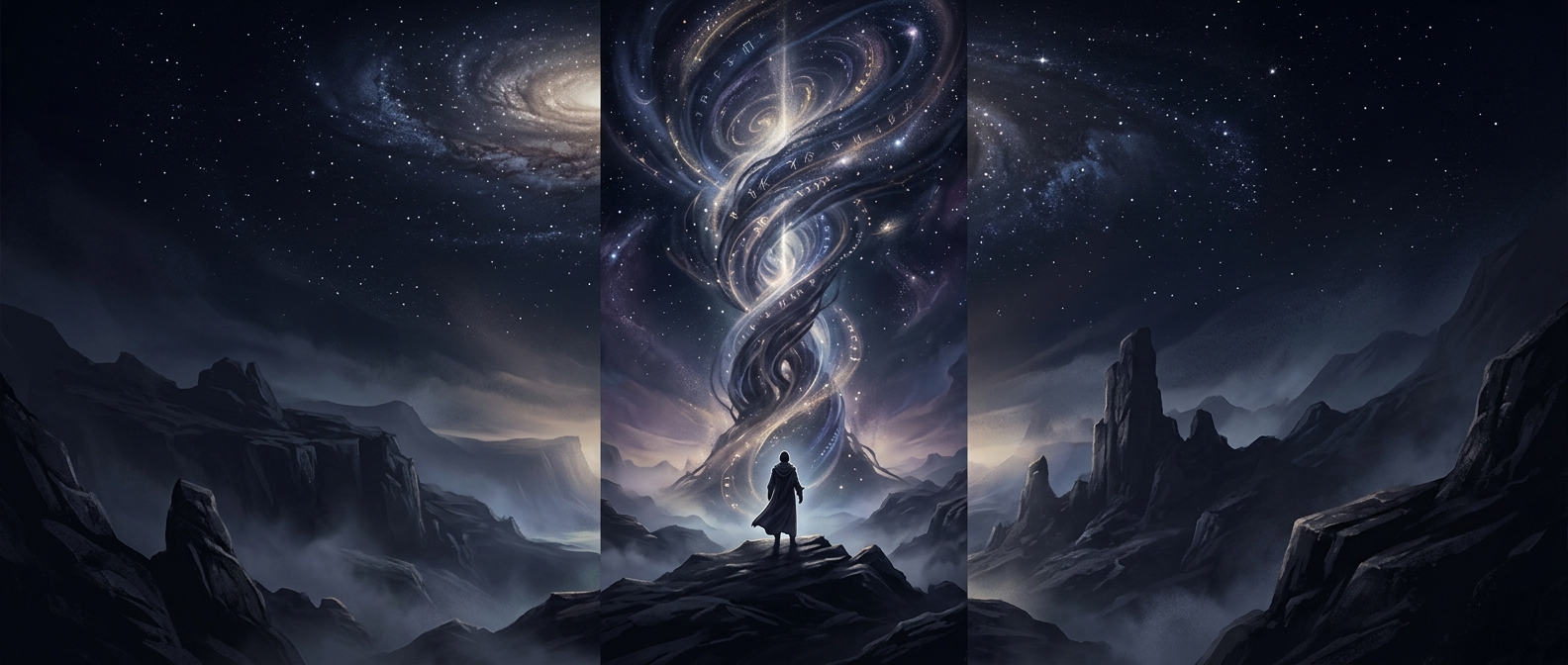
A center that makes the cosmos legible
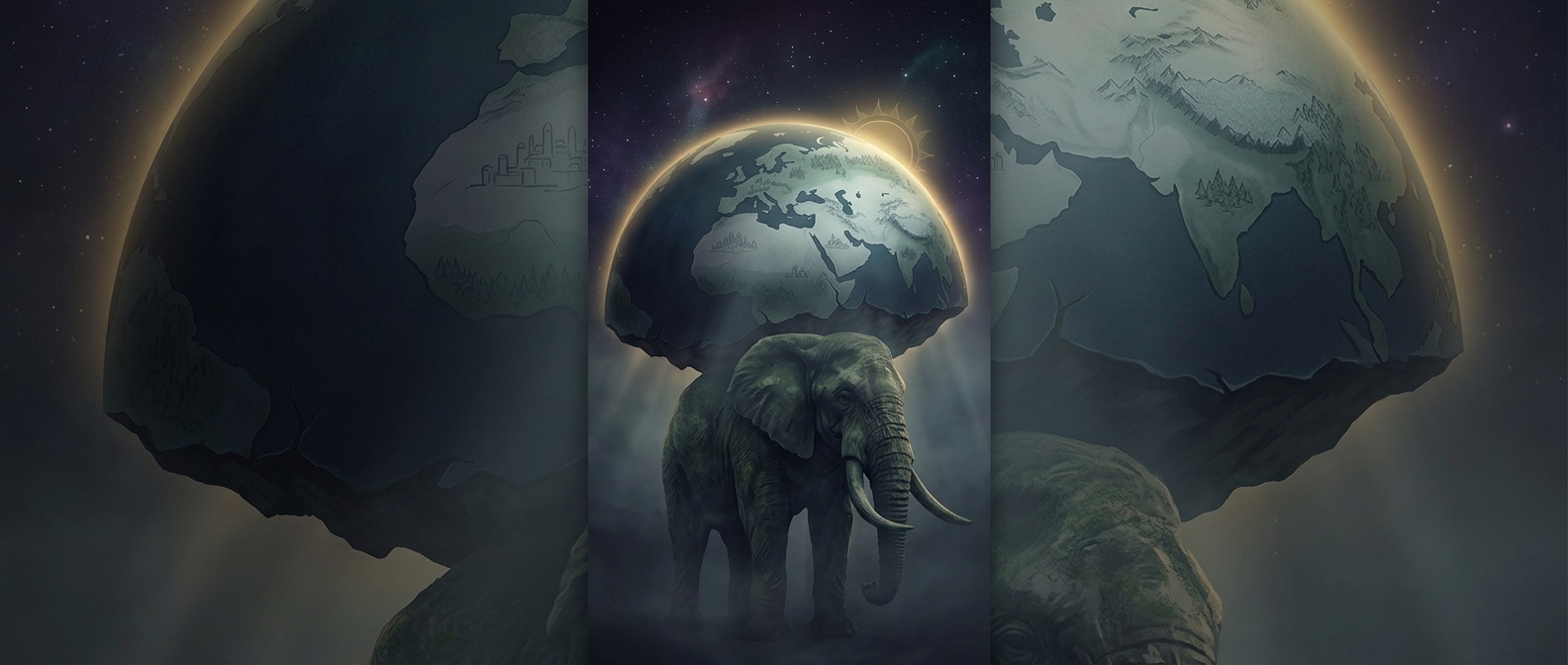
Axis mundi is Latin for “axis of the world.” In many religious traditions, it names an imagined center where different levels of existence meet: the human world, realms above it, and realms below. The image is not necessarily a map of physical space. It is a way to picture an ordered universe and humanity’s place within it.
A pillar gives that idea a clear shape: it stands upright and joins what would otherwise seem separate. A mountain can serve the same purpose, rising from ordinary ground toward the sky. Other traditions have used trees or built structures as images of this connection. These forms make an abstract relationship visible and memorable.
Why the center belongs somewhere
The cosmic center is often placed in a culture’s own landscape. That makes the universe’s imagined order feel close at hand: a particular mountain, sanctuary, or other sacred place becomes more than a landmark. It can serve as a point from which the surrounding world is understood and oriented.
This does not mean every tradition describes the axis in the same way, or that a sacred place must be claimed as a literal passage between worlds. The recurring idea is the connection itself. A local place can become the symbolic hinge of an entire cosmos, giving people a shared way to locate the sacred in the world they inhabit.