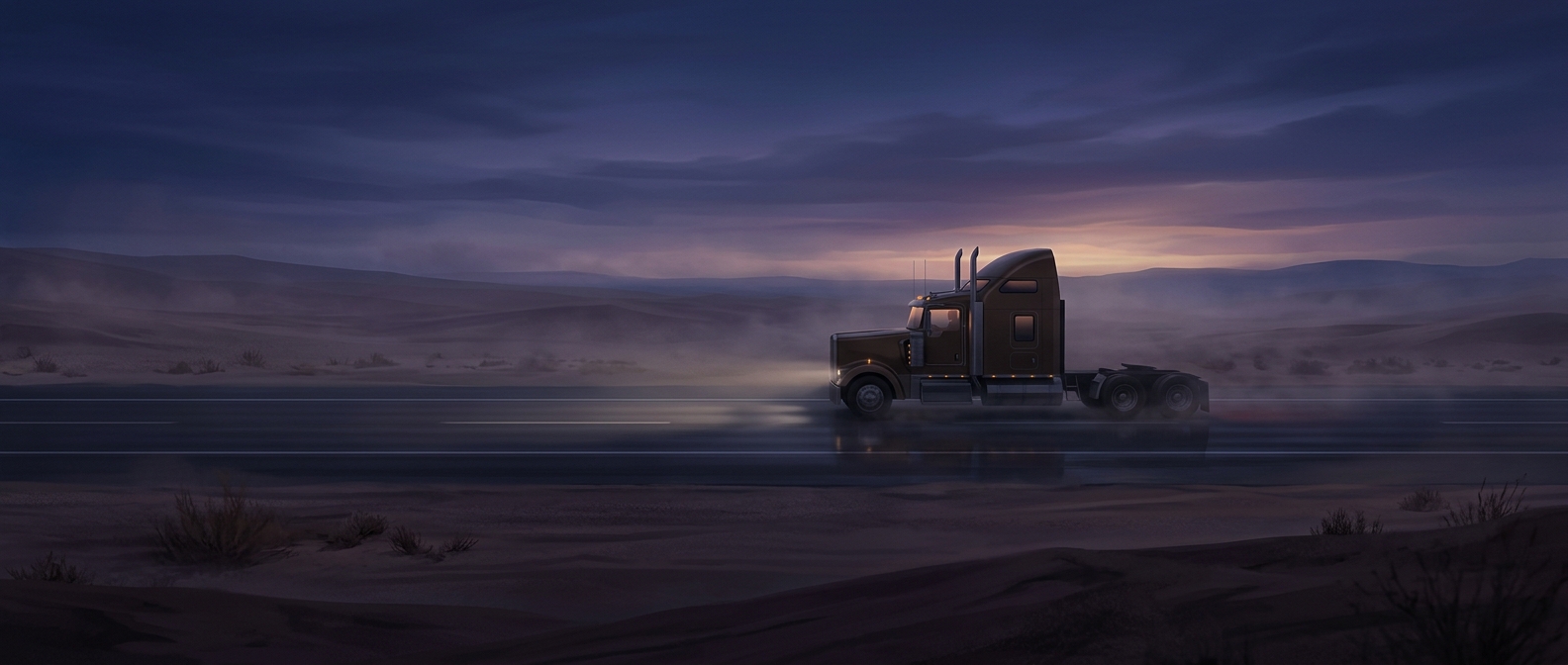
The road is the activity
An empty highway can make a driving game feel less like a race and more like a task you settle into. With fewer cars demanding split-second reactions, attention shifts to small, repeated decisions: holding a steady lane, watching the speed limit, and judging when to slow down. The routine gives the player something to do without constantly interrupting the drive.
Rules make the quiet feel consequential
A speed limit or weigh station turns an otherwise open stretch into a series of modest obligations. The player can follow the rules, risk ignoring them, or simply take satisfaction in handling the trip carefully. Because the consequences are virtual, these choices can create tension without the danger of real driving. Avoiding a ticket is a small success, but it gives the long journey a purpose beyond covering distance.
Space for the player to settle in
The sparse desert scenery also changes the pace. Rather than competing with dense traffic or a crowded city, the landscape lets the road itself set a steady rhythm. That can make driving feel absorbing precisely because little happens: players have room to focus, listen, and let the miles pass.
The appeal is not that the highway is secretly full of action. Its calm routine is the design feature—a low-pressure activity where even a careful approach to an ordinary drive can feel rewarding.