Why the New Moon Became a Moment for Beginnings
A New Moon occurs when the Moon is between Earth and the Sun, leaving the side lit by the Sun turned mostly away from us. It can be difficult to see in the night sky, so the phase has long offered a natural image of a blank slate: one cycle has ended, and another is starting. In modern spiritual practice, some people use that symbolism to pause, name what they want, and set intentions for the weeks ahead.
An intention is not a prediction or a supernatural guarantee. It is a chosen direction—such as making more time for a friendship or applying for a new job. The lunar timing gives the practice a recurring cue, much like a birthday or the start of a week can prompt someone to take stock.
From a Wish to a Plan
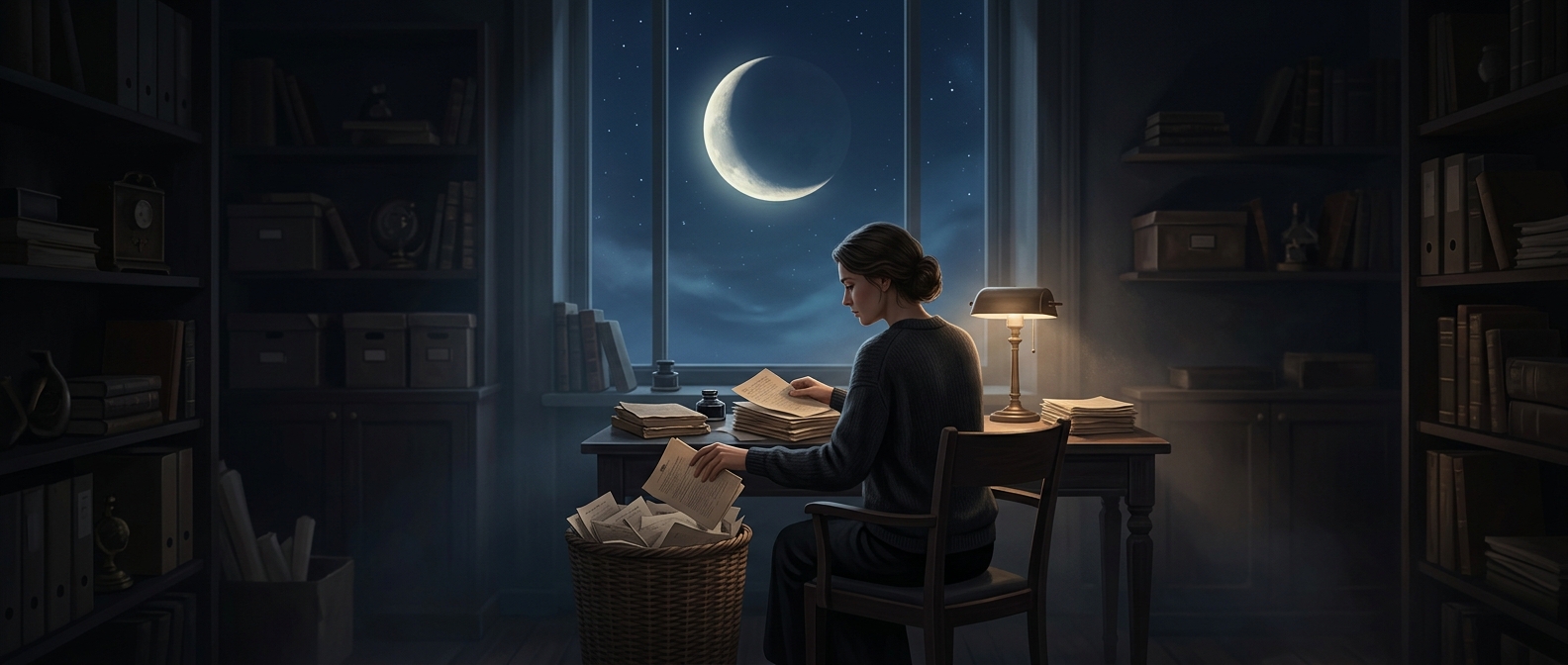
Writing an intention down can make a vague desire easier to examine. “Be healthier,” for example, leaves the next step unclear; “take a walk after lunch on Monday and Wednesday” describes an action that can actually be attempted. The useful part is not the Moon causing an outcome, but the process of turning a hope into a specific choice and returning to it later.
That distinction matters because a written wish cannot control other people, remove practical obstacles, or ensure success. A goal may need resources, repeated effort, and adjustment—and some outcomes remain outside anyone’s control. Treating an intention as a promise from the universe can make ordinary setbacks feel like personal or spiritual failure.
A Ritual, Not a Guarantee
For believers, the New Moon can make goal-setting feel meaningful and connected to a larger cycle. For others, it can simply be a memorable monthly reminder. Either way, its value depends on what follows: a concrete next step, a realistic check-in, or a decision to revise the goal. The dark sky may mark the beginning of a ritual; the work of pursuing the intention happens on Earth.