A Flame as a Sign of Occupancy
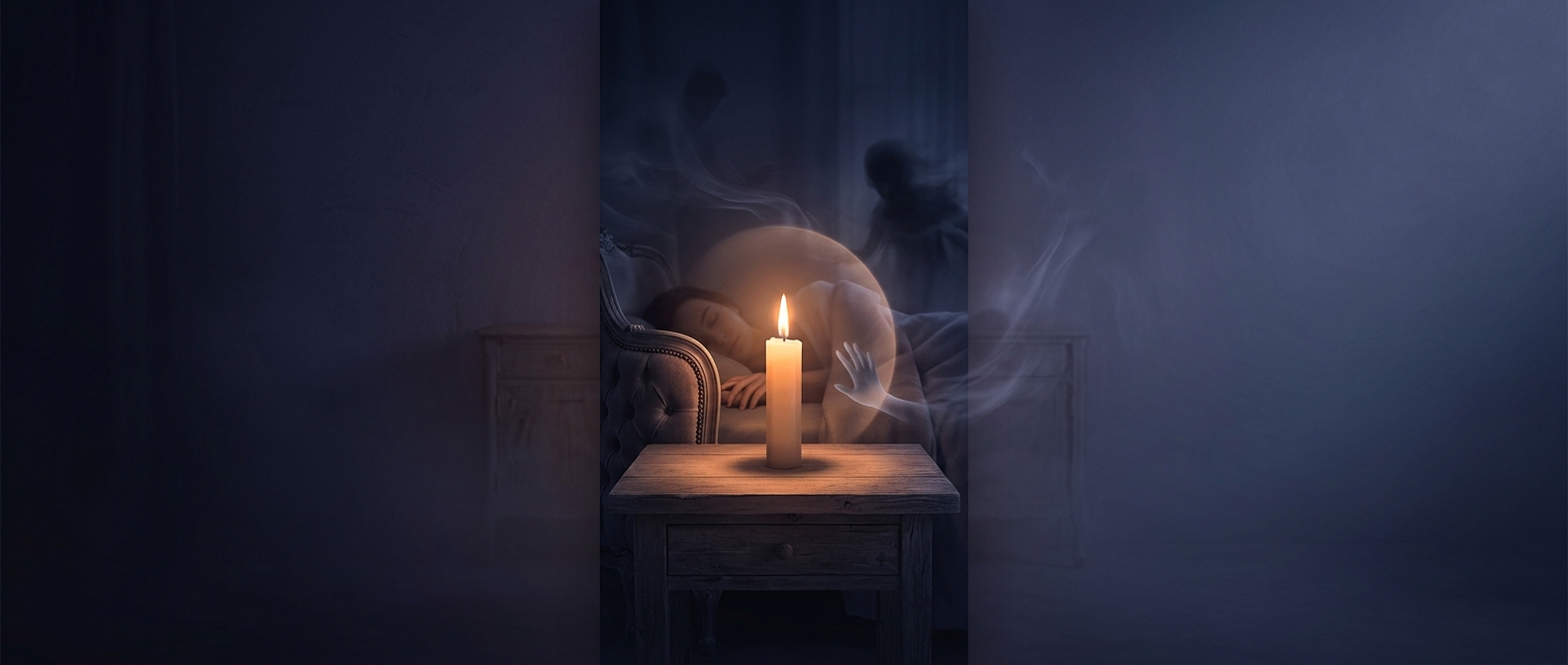
In the folk belief described here, an overnight candle did more than illuminate a room: its steady glow made the home appear occupied. Wandering spirits were thought to be less likely to settle near sleepers if the space seemed already claimed by the living.
The idea turns an ordinary household signal into a kind of symbolic boundary. A lit room is not empty or abandoned; someone is present, even if everyone inside is asleep. The candle’s purpose, then, was not necessarily to reveal a spirit or drive it away by force, but to discourage it from choosing a resting place close to the household.
Keeping the Living and the Dead Apart
Such practices belong to particular local traditions, not a universal rule about spirits. Their underlying concern is more intimate than a dramatic haunting: the unseen might come too close during the vulnerable quiet of sleep. By leaving a flame burning, people could make the home feel inhabited through the night—and mark the sleepers’ space as already occupied.