Why an Empty Attic Can Sound Occupied
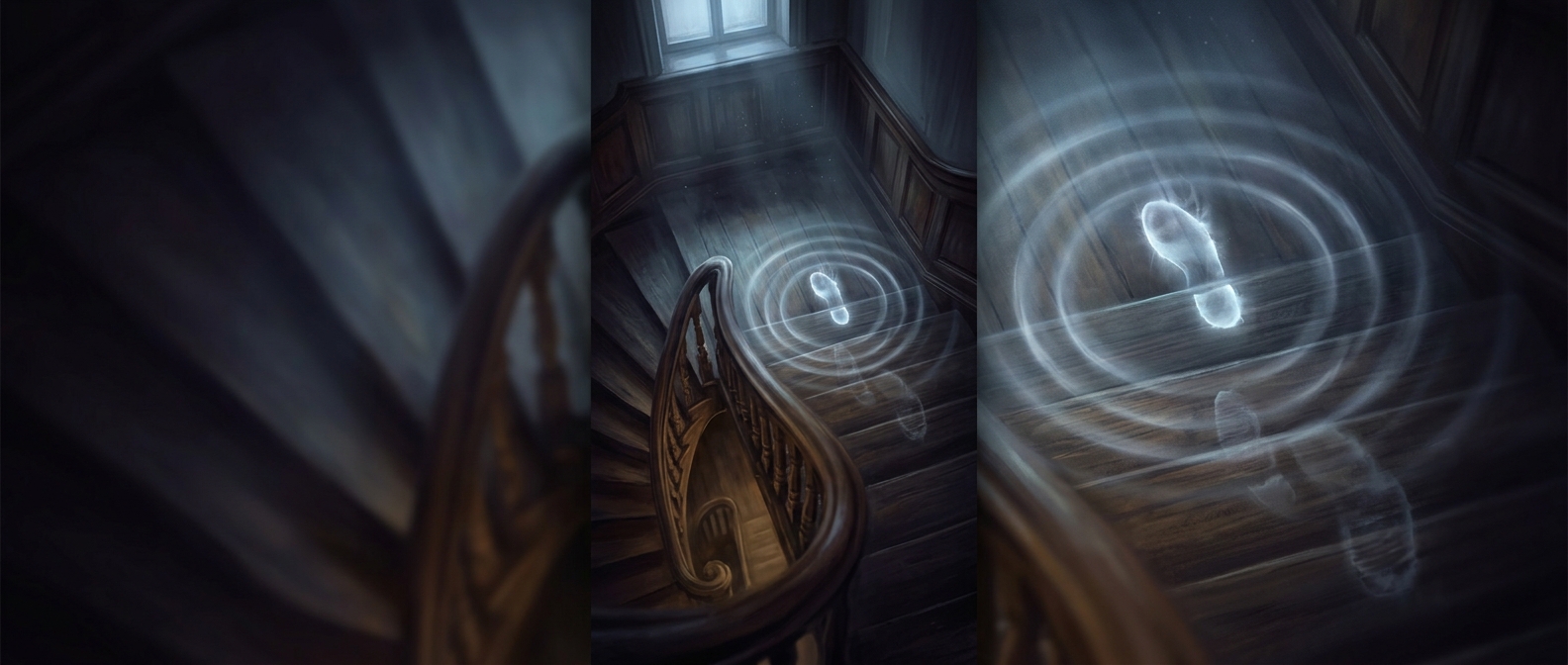
A report of bootsteps overhead is unsettling partly because a house can carry sound away from its source. Floorboards, stair stringers, and ceiling joists act like connected pathways for vibration: a creak or impact elsewhere may travel through the structure and seem to come from the attic stairs.
That vibration can change character along the way. A light knock may emerge as a deeper thud after passing through wood and plaster, while separate settling sounds can arrive in a rhythm that resembles someone walking. Roof timbers and other building materials also shift as temperatures change, producing occasional creaks and pops.
Why the Sound Seems So Specific
People identify footsteps by pattern as much as by tone: repeated impacts, a pause, then more impacts suggest someone crossing a floor. In a quiet house, with little competing noise, those clues stand out. But a listener may have few clues about the sound’s actual direction, especially when it reaches them through walls or floors rather than open air.
That gap between a vivid impression and an unseen source is fertile ground for stories of phantom footsteps. The experience can feel concrete—the weight, pace, and location seem unmistakable—while the building itself supplies sounds that are difficult to trace. The attic stairway becomes not just a place where a noise is heard, but the apparent route an unseen walker took.