Clothing became evidence, not just appearance
At Joan of Arc’s 1431 trial, men’s clothing was treated as more than a practical choice. Church authorities questioned her about wearing it and framed the decision as defiance of religious and social rules about gender. The charge mattered because the court was judging whether she had obeyed its demands—not simply whether her clothes looked unusual.
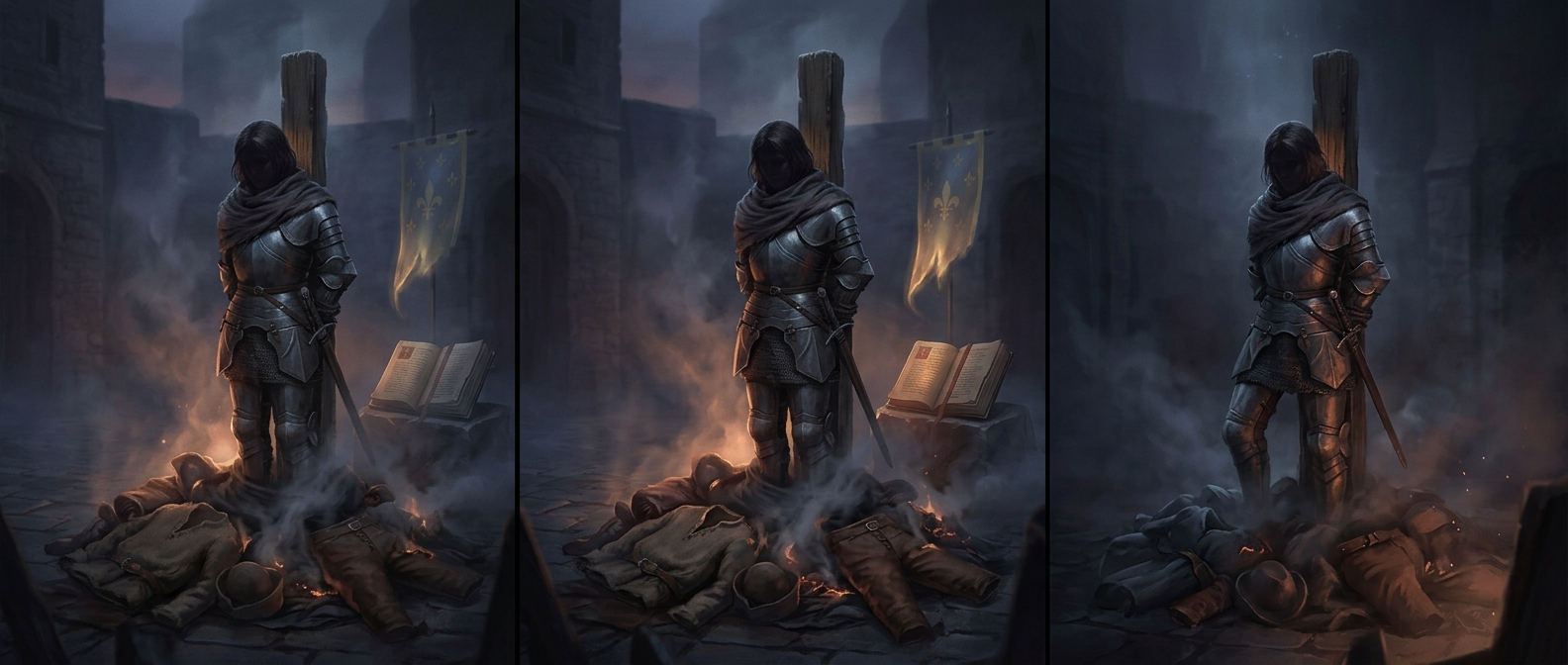
Joan had worn male clothing while traveling to the French court and serving with the army. She maintained that it was appropriate to her circumstances and helped preserve her chastity. In a war zone, clothing could also affect mobility and protection, though the trial’s officials focused on its religious meaning.
Why the issue carried legal weight
The court’s case centered on her claims of divine guidance and whether those claims were legitimate. Her attire became one way judges tested her obedience and credibility. After she signed an abjuration—a formal renunciation of the conduct and claims the court condemned—she later resumed wearing men’s clothes. The court treated that as a relapse into heresy, making the clothing a direct part of the proceedings that led to her condemnation.
That does not mean her wardrobe alone explains the sentence. It became potent evidence within a trial already focused on her visions, authority, and submission to the court. A change of clothes could be read as a change in allegiance: in Joan’s case, what she wore helped officials argue that she had broken her promise to recant.