What a Broken Bowl Was Meant to Teach
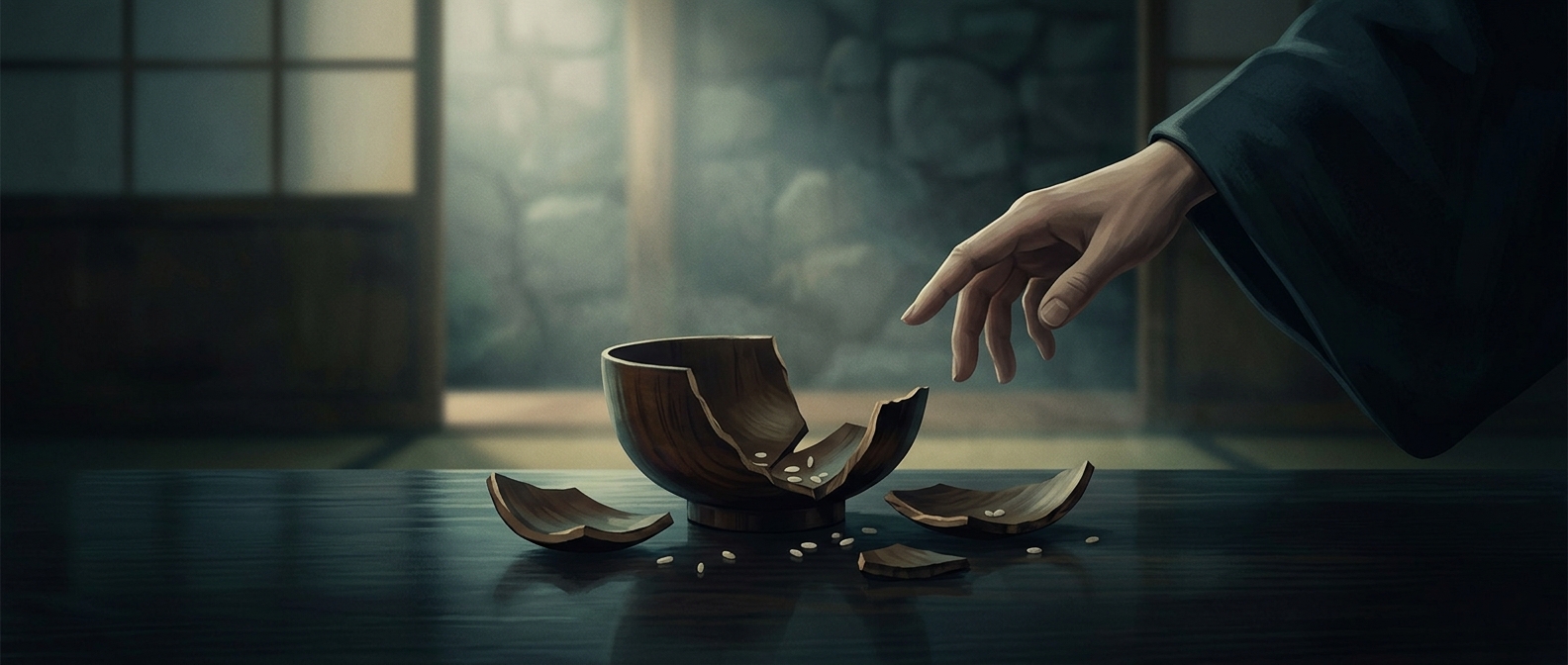
In the story, Dōgen does not explain nonattachment with an abstract argument. He makes the lesson visible: a bowl that seemed useful and worth keeping becomes irreparable in an instant. The students must confront their response to its loss.
The point is not necessarily that possessions are bad or that people should destroy useful things. In Buddhist teaching, nonattachment means loosening the grip of clinging—the belief that a thing must remain ours, unchanged, for us to be at ease. A bowl can be used and valued; the trouble begins when its loss feels unbearable because our peace depends on keeping it.
Why Use an Ordinary Object?
A wooden rice bowl belongs to daily life, not to some distant philosophical puzzle. Its usefulness makes the lesson immediate: students can picture eating from it, relying on it, and then seeing it gone. The break turns an idea about impermanence—the fact that things change and do not last—into a concrete event.
That makes the story memorable, but also deliberately stark. The bowl is sacrificed to expose how attachment works, not to offer a rule for how students should treat their belongings. Its force lies in the contrast between an ordinary object and the intensity of the response it can provoke.
The story leaves the students with a practical question: can they use what they have without mistaking possession for permanence? The broken bowl cannot be restored, but the lesson can be carried into the next meal.