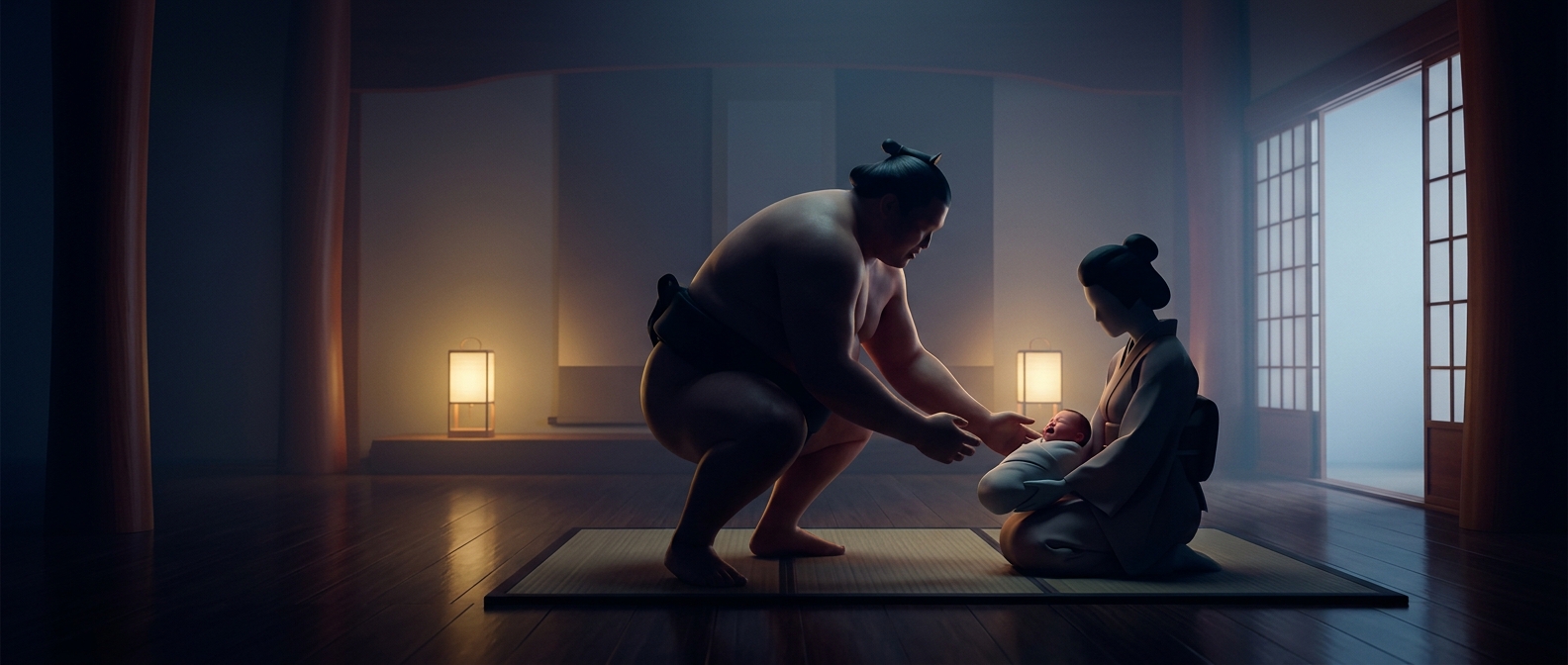
A sumo match with an unusual goal
At Nakizumo, the wrestlers’ task is not to throw an opponent. Each holds a baby and tries to coax a cry, using expressive faces, loud calls, or the imposing sight of a large wrestler up close. At many events, the baby who cries first—or loudest—wins, though the rules can differ from one local celebration to another.
The scene turns a familiar sport into a playful contest between adult performance and infant reaction. The wrestlers supply the spectacle; the babies, who have no idea they are competing, set the pace.
Why crying counts as a good sign
The custom draws on a traditional association between a baby’s cry and vitality. A strong cry can be read as evidence that the child is vigorous, so provoking one becomes a symbolic way to wish the baby well. It is a ritual hope, not a medical claim that crying determines a child’s health or lifespan.
Nakizumo is staged at shrines and temples as part of local religious and community life. Families bring infants to take part in a public blessing, while spectators watch a comic, affectionate contest. The point is not to upset a baby for its own sake, but to turn a loud, ordinary sign of life into a communal good omen.