Why a neighbor’s story feels useful
A rumor about someone nearby is not just a tale about a stranger. It may help a listener decide whether to lend a tool, share a concern, or be cautious in a future interaction. Because neighbors can keep crossing paths, information about how they behave can seem relevant to everyday choices.
That relevance gives the story a place in memory. People tend to pay attention to information that might help them anticipate another person’s actions. A claim about a local resident can therefore stick not because it is verified, but because it appears to offer a shortcut: What should I expect from this person?
How a claim becomes a reputation
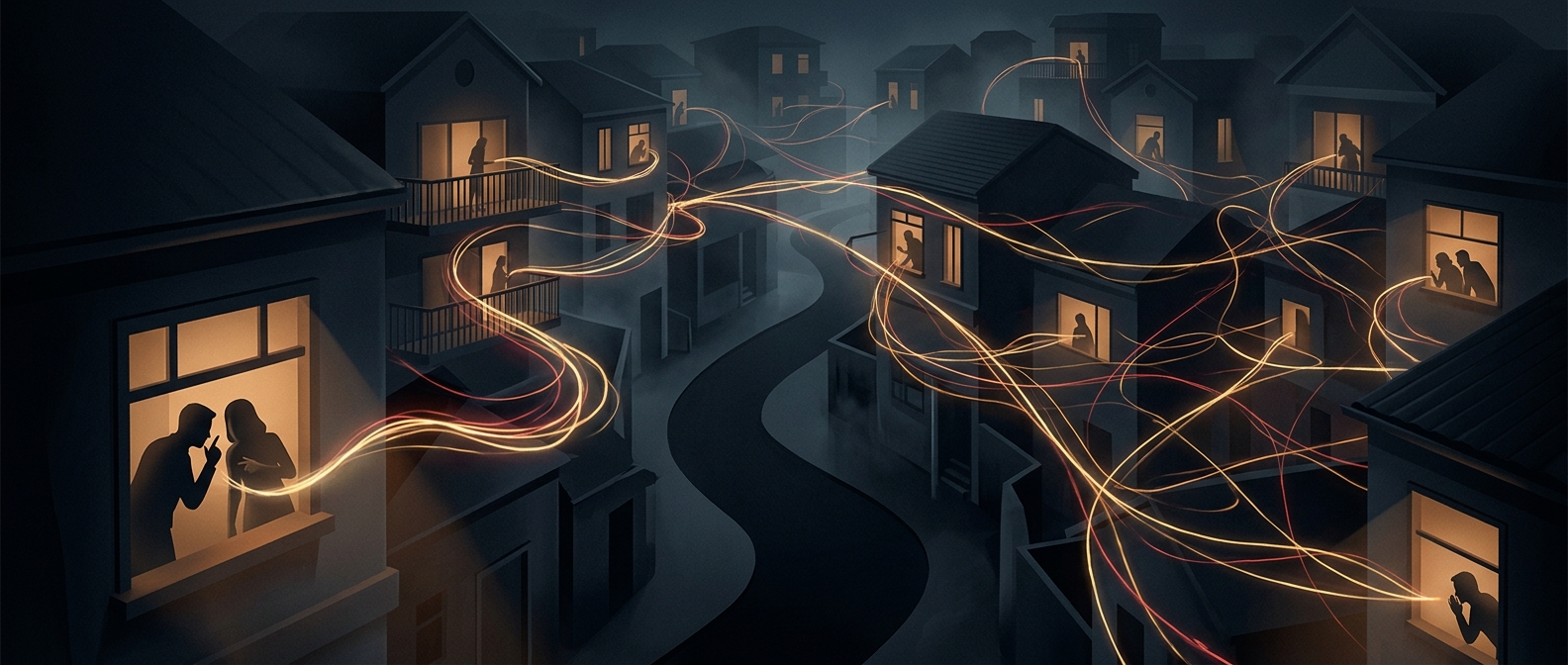
Gossip often passes through several people, and each retelling can detach a claim from its original context. A suspicion may be repeated as a possibility, then remembered as something someone “heard.” Listeners may also pass it along to warn others, entertain them, or make sense of an ambiguous event. None of those motives proves the claim is true.
Still, repetition can make a story feel familiar, and familiarity can be mistaken for credibility. If several people have heard the same account, it may sound like independent confirmation even when they all trace back to one source. The story can then shape how neighbors interpret later behavior: an ordinary mistake may look like evidence that the rumor was right.
The cost of local circulation
The person being discussed may have little chance to correct the story with everyone who has heard it. In a close-knit community, the consequences can surface in small interactions—less trust, fewer invitations, or reluctance to cooperate. Those reactions can persist even after the original claim is forgotten.
That is why neighborhood gossip can matter beyond the moment of conversation. It turns uncertain talk into a practical judgment about someone people may encounter tomorrow.