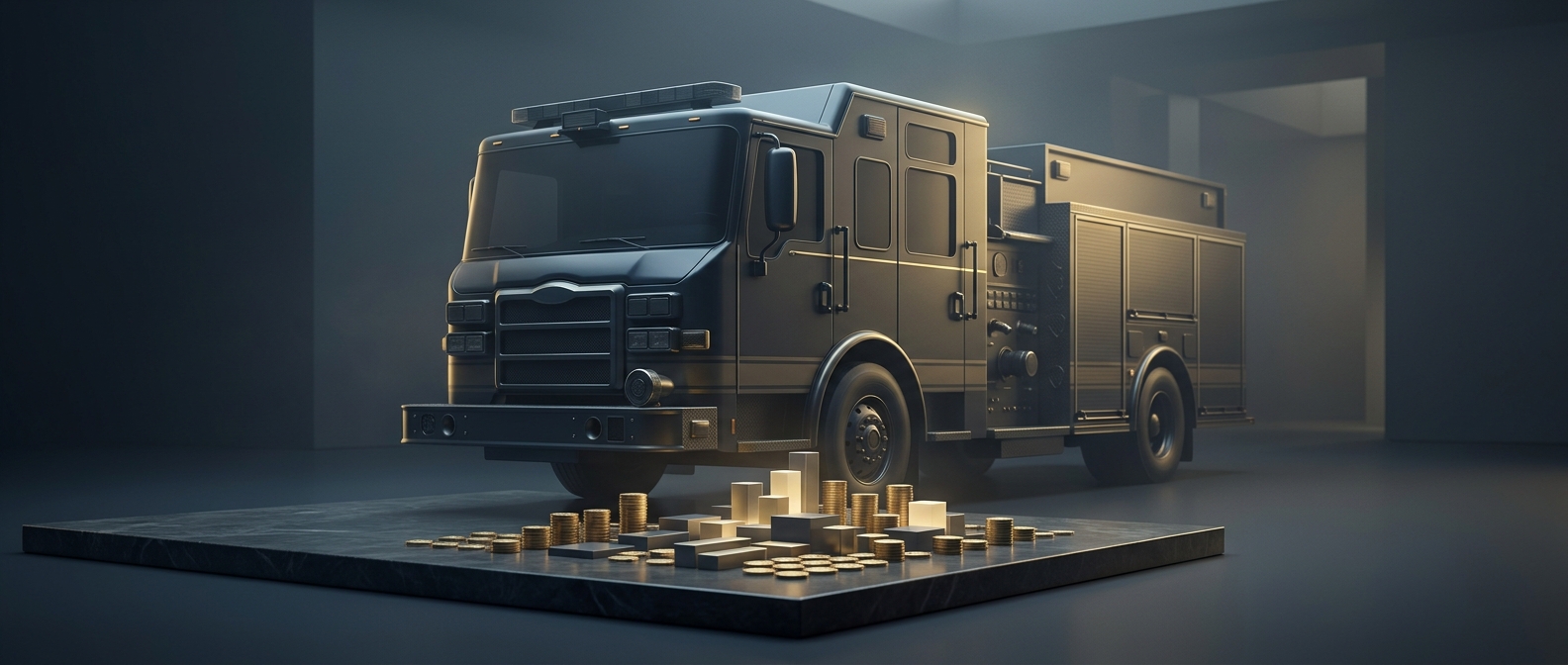
A fire engine is a coordinated system, not a truck with equipment added
A standard truck is designed to carry cargo. A fire apparatus must carry water, move it at high pressure, power tools, and—on some vehicles—raise a long ladder while remaining stable. Those jobs shape the vehicle from the start: its frame, axles, engine, brakes, and suspension must all handle the weight and forces of the equipment.
That is why adding a ladder later is not a simple upgrade. Aerial ladders need substantial supports and stabilizing legs, called outriggers, that spread the load when the ladder is extended. Their placement affects the vehicle’s balance and the space available for pumps, hoses, and crew compartments. The design has to work as one package.
Custom work multiplies the cost
The pump is connected to tanks, pipes, valves, controls, and hose outlets; crews need to reach those controls quickly, often while wearing bulky protective gear. Compartments must fit a department’s tools and be accessible without blocking other equipment. Wiring and lighting must also be integrated into the body rather than improvised around it.
Departments often specify different layouts because their buildings, streets, staffing, and response needs differ. Manufacturers therefore build relatively specialized vehicles in small numbers, rather than producing a single mass-market design. Engineering, fabrication, and testing are spread across fewer vehicles, contributing to the price alongside the materials and equipment themselves.
The tradeoff is readiness versus simplicity
A department could choose a less complex vehicle, but it might then lack the reach, water-delivery capacity, or tool storage needed for local emergencies. Conversely, loading every possible capability onto one truck adds weight, cost, and maintenance demands. A purchase is therefore a choice about which jobs the vehicle must perform—and which equipment can be assigned to other vehicles.
The millions are not just the price of a large truck. They reflect the effort to make a heavy, tightly packed machine steer, stop, pump, and remain stable under demanding conditions.