A song could act like a shared work signal
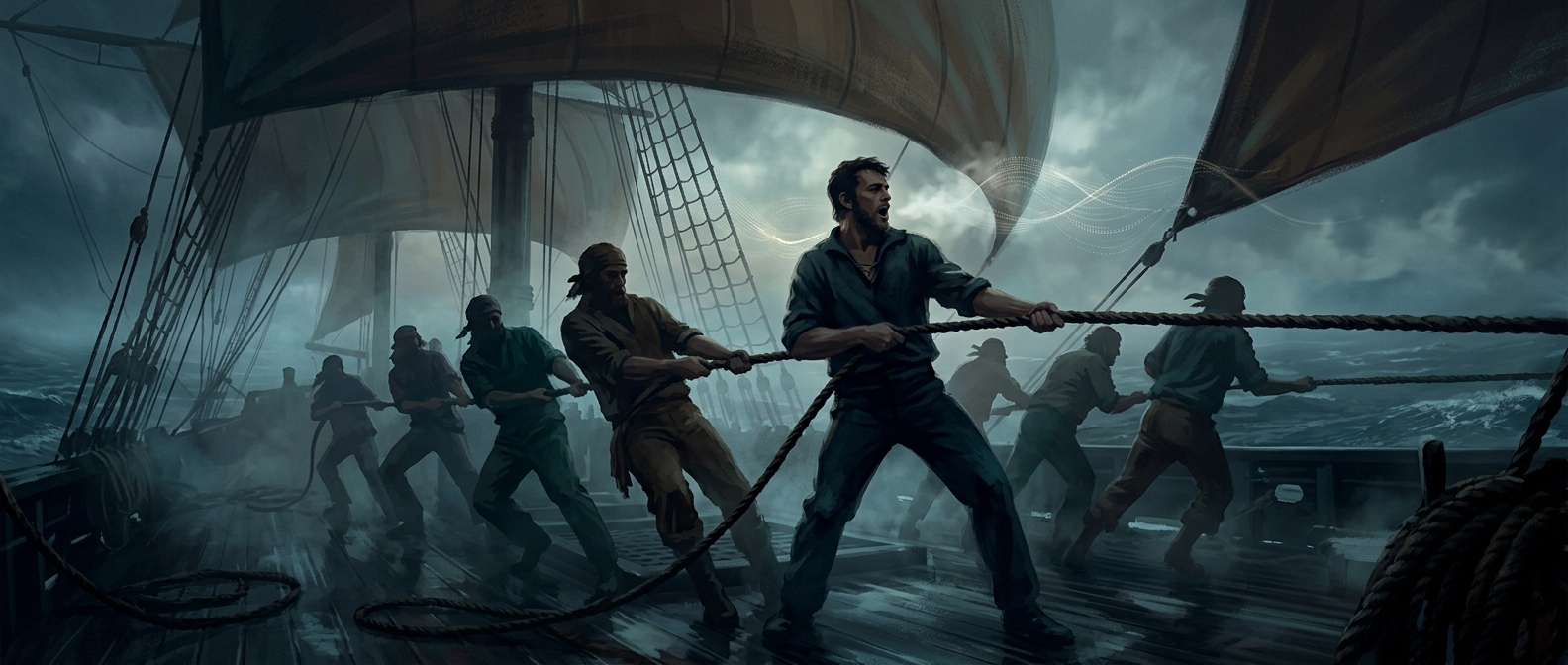
On a sailing ship, a rope team’s strength depended not just on how hard each person pulled, but on whether they pulled together. If sailors leaned back at different moments, their effort was wasted and the line could jerk unpredictably. A shanty gave the crew a common beat to act on.
The rhythm organized the pull
Typically, one sailor sang a line while the rest answered with a refrain. That pattern made the singers’ response a predictable cue: the crew could time a heave to the beat instead of relying on shouted instructions that might be lost in wind and noise. The rhythm also helped sustain repeated effort, marking one pull after another as a job continued.
Different tasks called for different patterns. A job involving repeated, measured pulls could use a steadier pace; work requiring short bursts of effort benefited from a rhythm that emphasized those moments. The song was therefore practical as well as entertaining: its form could fit the movement the crew needed to make.
A flexible tool for a hard day
The lead singer could improvise verses, while the crew kept the refrain—and the work—moving. That made a shanty adaptable without requiring everyone to memorize a long song. In the middle of a strenuous task, the music turned a scattered group into a team that could hear, anticipate, and repeat the same action.