How electricity pulled sodium out of lye
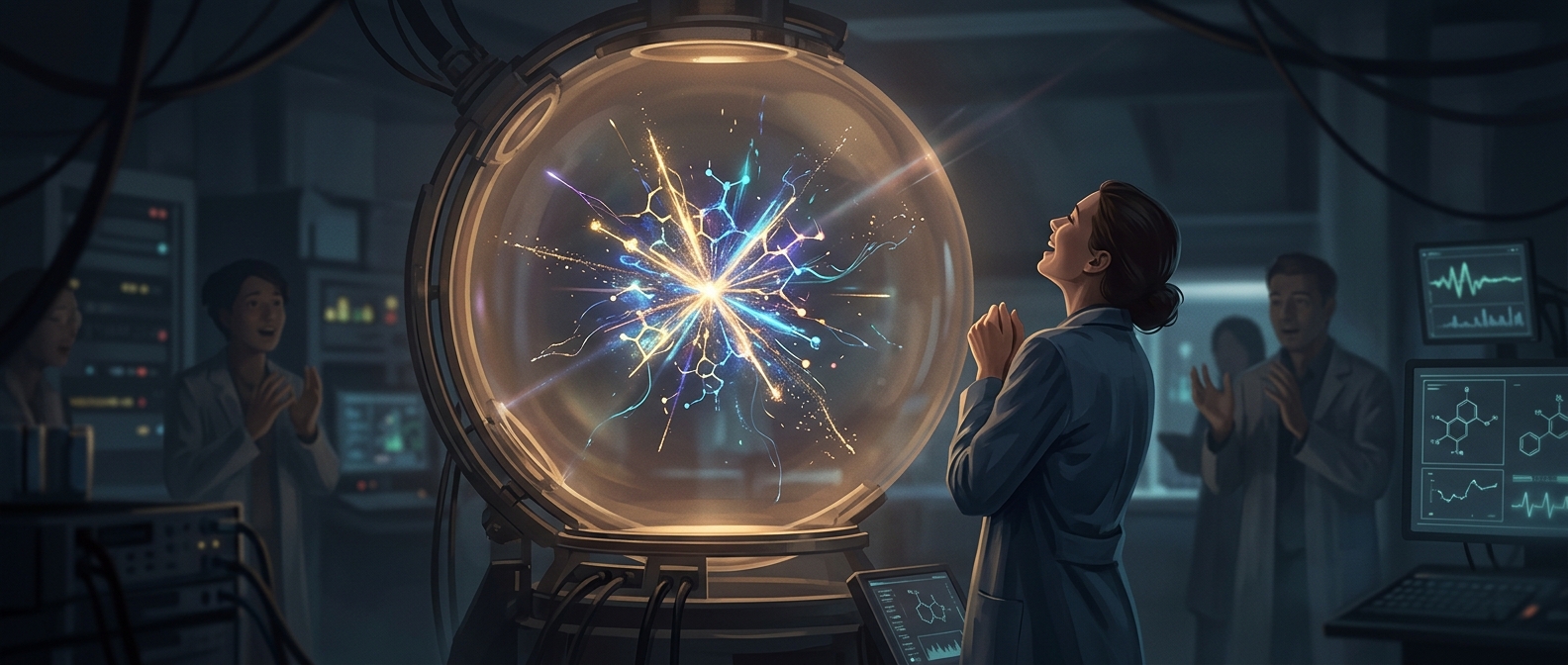
In 1807, British chemist Humphry Davy used electricity to isolate sodium from molten sodium hydroxide—the caustic substance found in lye. The key was to melt the compound first. In the liquid, its charged particles can move freely; in solid form, they are locked in place and cannot carry the current in the same way.
Sodium hydroxide contains positively charged sodium particles and negatively charged hydroxide particles. When current passed through the melt, sodium particles traveled toward the negatively charged electrode and gained electrons. That change turned them into neutral sodium atoms—the metal itself. At the other electrode, hydroxide particles lost electrons, contributing to the other products of the reaction.
Why the metal appeared—and then flared
The current did not create sodium from nothing. It supplied the energy to split a stable compound and separate its elements. Tiny beads formed where sodium metal collected, making the result visible almost at once.
But sodium metal is very different from sodium bound inside a compound. In air, a fresh bead can react rapidly with oxygen and moisture, releasing heat. A small droplet may become hot enough to ignite. The flash was evidence of sodium’s reactivity, not part of the electrical separation itself.
A new way to isolate elements
Davy’s experiment showed that electricity could serve as a chemical tool: by driving charged particles in opposite directions, it could separate substances that ordinary chemical methods had not yielded as isolated metals. The same general process, called electrolysis, remains important in extracting and refining materials. In this case, its result was strikingly tangible—a bead of metal that existed only briefly before the surrounding air began changing it again.