A ladder becomes a listening room
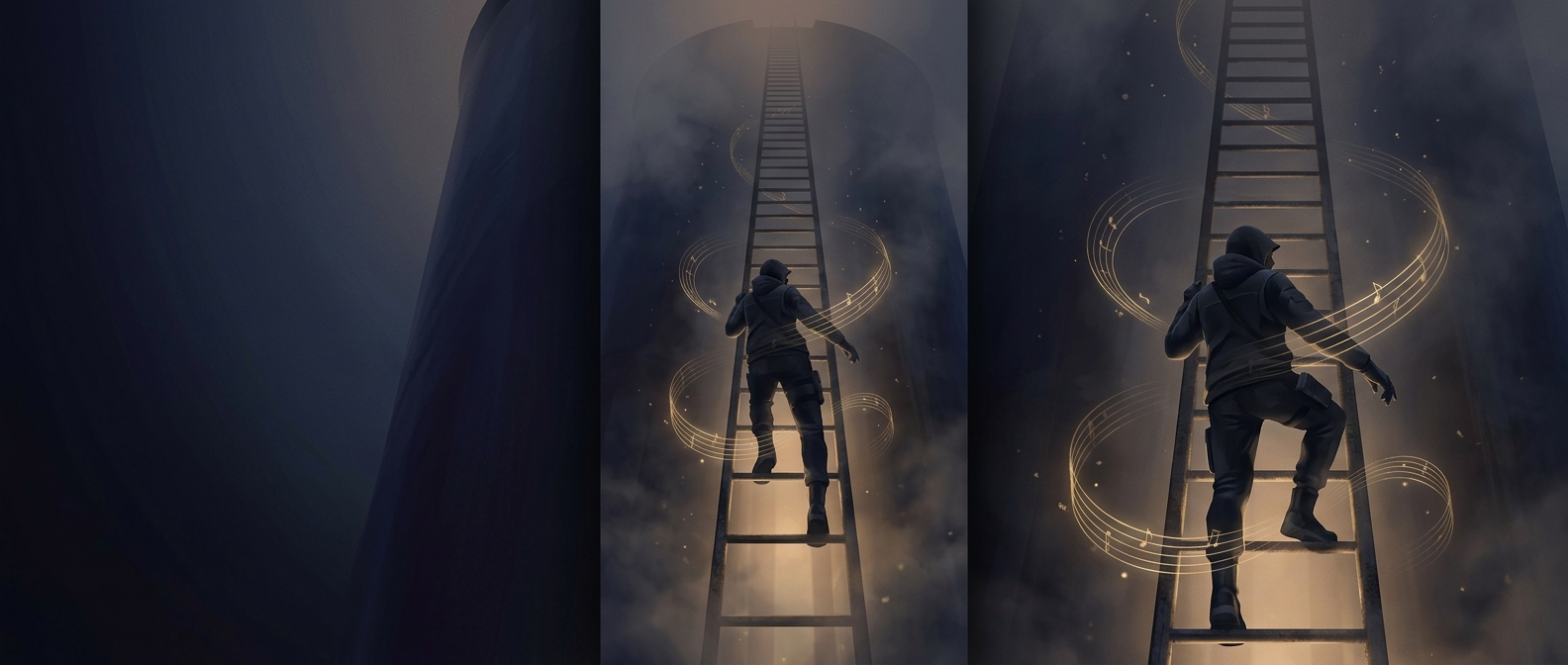
In Metal Gear Solid 3: Snake Eater, the climb arrives after a long stretch of stealth and danger. Snake has to ascend rung by rung, and the player’s main job is to keep the stick pointed upward. The game temporarily trades its usual demands—watching enemies, managing weapons, choosing a route—for a simple, sustained input.
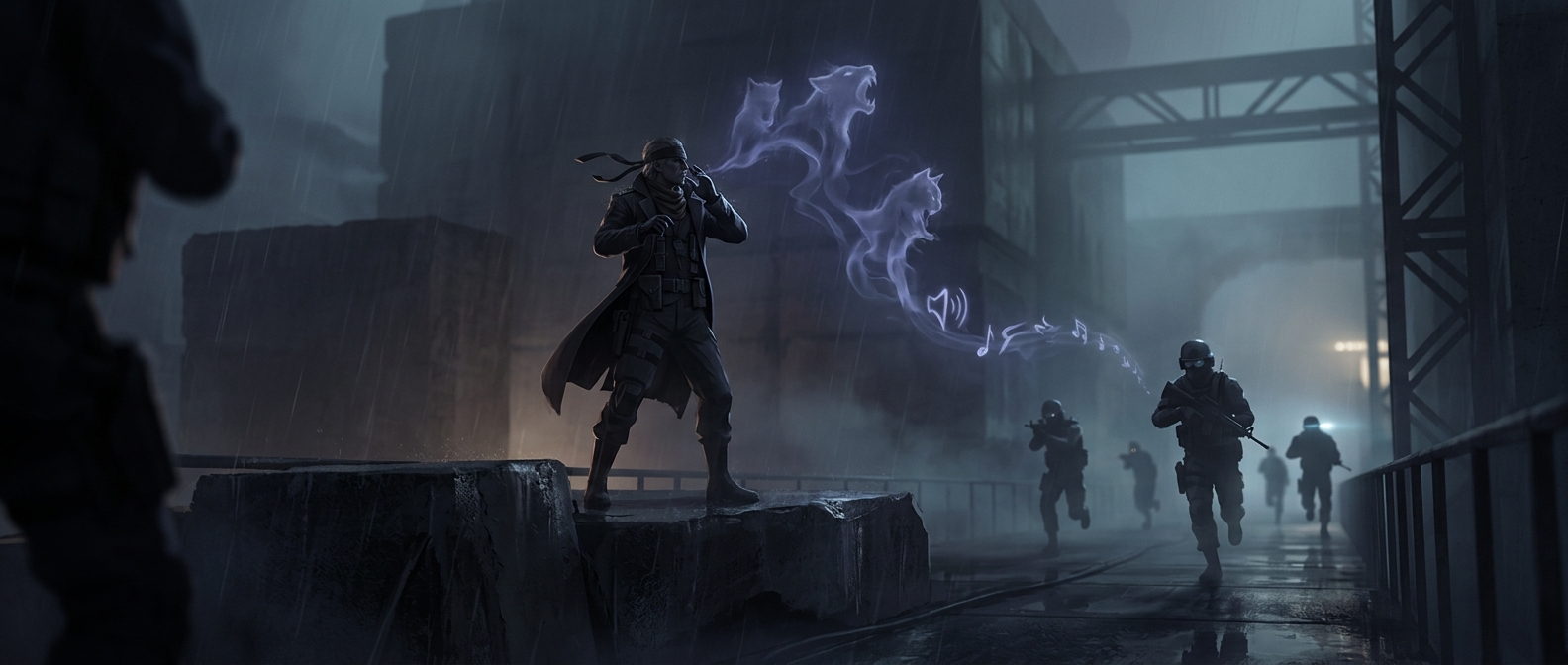
As Snake climbs, an a cappella version of “Snake Eater,” the game’s theme, unfolds over the scene. With no action to interrupt it and no skip button to reach for, the song sets the pace. The ladder is not just scenery connecting two areas: it turns movement through the game world into time spent with its music.
Why the wait sticks
The contrast is the point the sequence makes in play. A stealth game trains you to treat stillness as risky and every stretch of exposed movement as a problem to solve. Here, the climb is extended and unusually safe-feeling, but the player still has to remain involved by holding the control. You are neither watching a conventional cutscene nor making a complicated tactical choice; you are waiting while actively helping Snake get there.
That small demand makes the moment memorable. The song’s performance and the slow animation share the same duration, so the player experiences the climb rather than merely seeing that Snake has climbed. When the ladder finally ends, the game can return to its usual pressures—but the ascent has briefly made a basic traversal action feel like a musical set piece.