The game moves before the network catches up
In a traditional delay-based setup, a game waits for an opponent’s input to arrive before showing the next action. That keeps both players’ screens in sync, but even a modest network delay can make every button press feel sluggish: the game is effectively asking you to play a fraction of a second in the past.
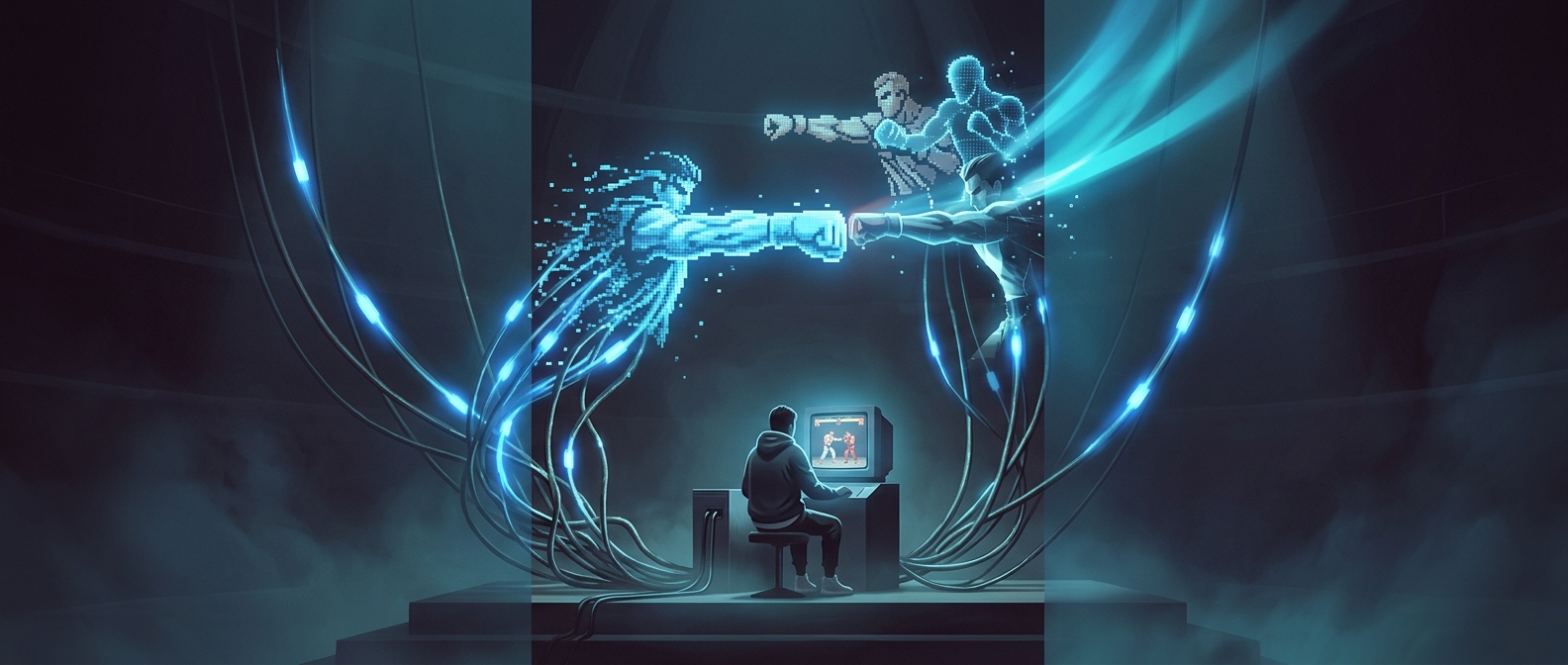
Rollback netcode takes a different bet. When an opponent’s next move has not arrived yet, the game briefly predicts that they will do nothing and keeps going. If the real input arrives and matches the prediction, play continues without a visible interruption. If it differs, the game rewinds to the last point both players agree on, applies the missing input, and quickly simulates the intervening frames again. This happens behind the scenes, often too quickly for a player to notice.
Why fighting games benefit
Fighting games are built around precise timing. A player may need to block, jump, or interrupt an attack within a narrow window, so waiting for delayed inputs can change the feel of a move. Rollback lets a player’s own actions appear promptly instead of holding them back until the connection confirms what the opponent did.
The method does not eliminate network delay. A wrong prediction can produce a brief visual correction, and a poor connection can make those corrections more noticeable. The aim is to trade a constant sense of sluggishness for occasional, short-lived adjustments.
What it changes for older games
An older fighting game may have been designed for two machines in the same room, where inputs arrive immediately. Adding rollback means adapting how the game handles timing and how its state can be restored and replayed—not simply switching on a network setting. When that work succeeds, players can compete remotely with a response closer to local play, making it easier for a community to organize matches and tournaments without gathering everyone around the same cabinet or console.