What a 14-hour practice day can contain
A professional esports day is not necessarily 14 straight hours of playing ranked matches. Practice can combine team scrimmages—organized matches against another team—with reviewing recordings, studying opponents, testing strategies and taking part in individual drills. Each activity targets a different part of performance: scrimmages build coordination under pressure, while replay review helps players identify why a decision worked or failed.
The goal is not simply to click faster. In a fast game, players must notice useful information, predict what an opponent may do and choose a response while coordinating with teammates. Repeated play can make familiar situations easier to recognize, freeing attention for the next decision. But long sessions do not automatically make that learning more effective; once concentration slips, extra games may bring diminishing returns.
The hidden cost of extra hours
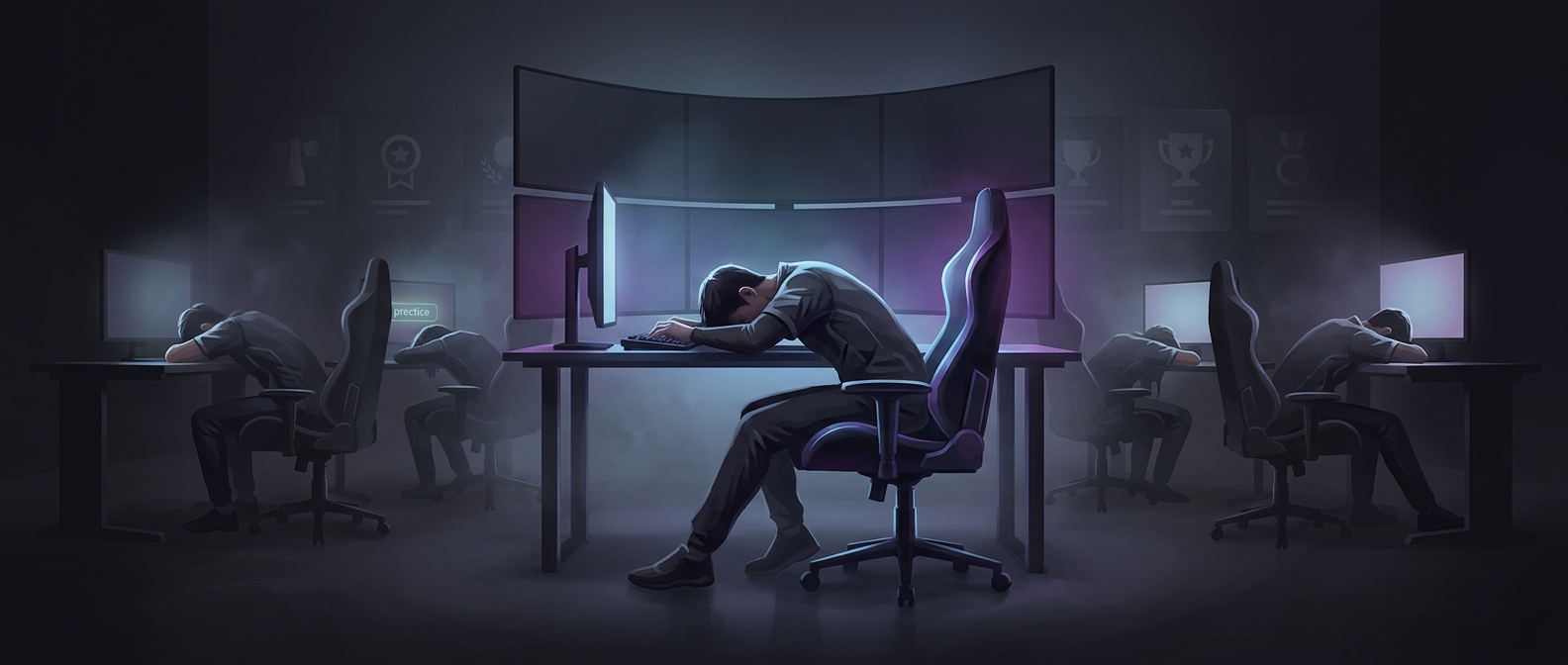
Practice also competes with the conditions that help learning stick. Sleep supports memory and attention, while time away from the screen gives players a chance to recover physically and mentally. If a team adds hours by cutting into either, players may arrive at the next session less able to focus—the very skill those sessions are meant to sharpen.
That creates a practical tension for teams: more practice can expose players to more situations, but the value of those hours depends on whether they can still think clearly and learn from them. The demanding part is not just sustaining play; it is keeping practice useful across a long day.