A payment card became part of the receipt-making machine
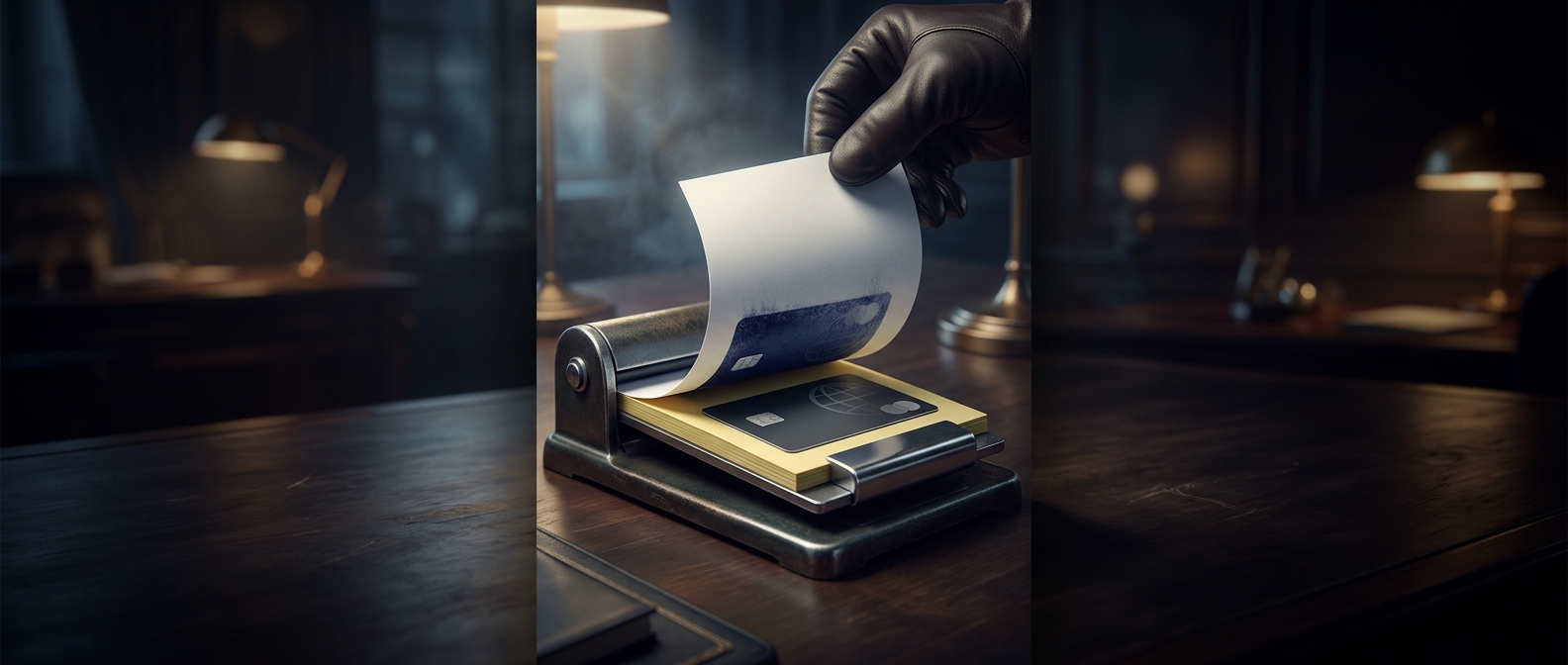
Before electronic terminals, a merchant could record a sale by placing an embossed card over a paper sales slip. A hand-operated roller pressed the raised letters and numbers through carbon paper, leaving an imprint on the copies beneath. The card’s width and height therefore had to work with the slip and the imprinter—not just with someone’s wallet.
That practical fit helped establish the familiar card shape. The raised characters mattered, too: they made it possible to transfer account details by pressure alone, without a screen or a powered reader.
Why the dimensions survived the machines
A size that works across many businesses quickly becomes useful beyond its original purpose. Once banks and merchants share a standard card format, equipment can be designed around it: readers, cash machines, card slots, and wallets all have reason to accommodate the same dimensions. Changing the card would mean changing more than the piece of plastic; it could force changes throughout that network.
The result is a small example of how everyday standards endure. The carbon imprinter is largely obsolete, but the format it helped make practical remains convenient for the systems built around it. A card’s familiar shape is not just a design choice—it is a trace of an older checkout process that modern payment technology inherited.