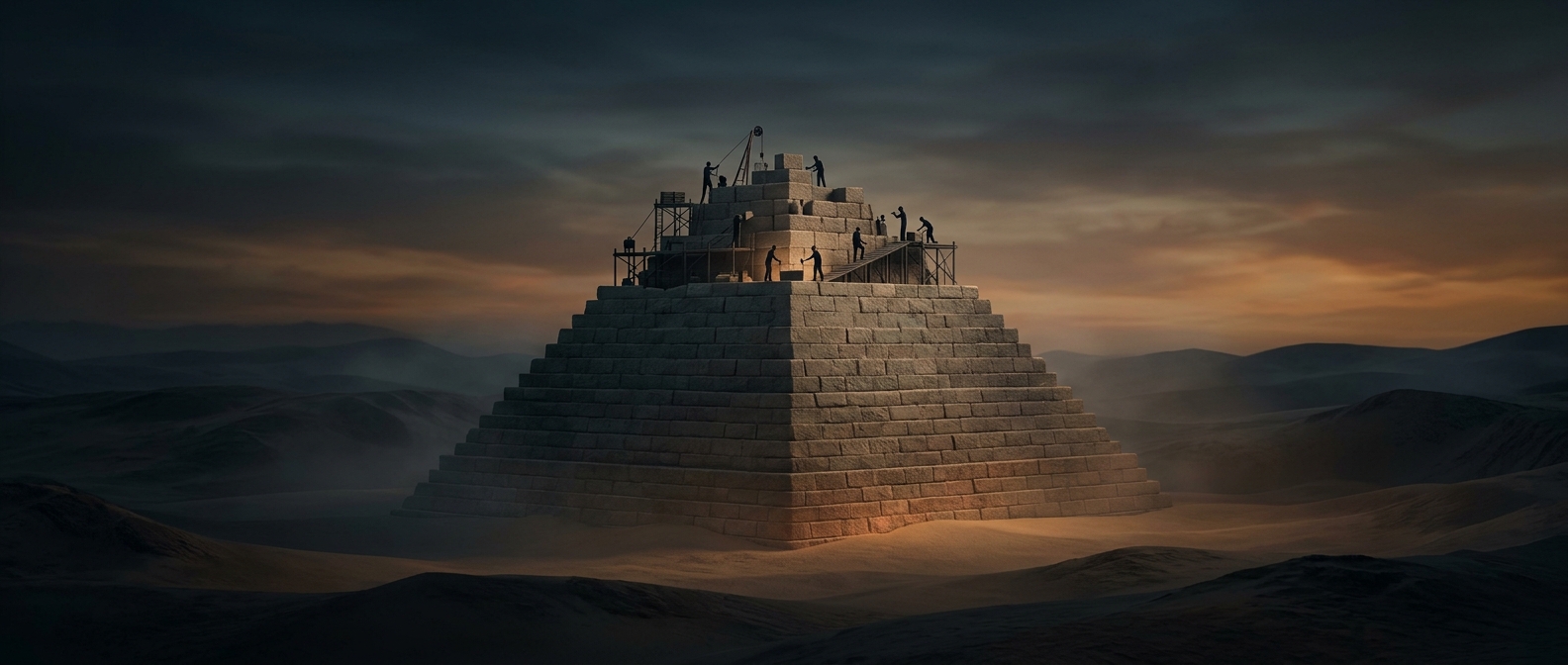
A national emblem, not a picture of a completed monument
The pyramid on the back of the one-dollar bill comes from the Great Seal of the United States, a design finalized in 1782. The seal was made to authenticate official acts of the new federal government. Its symbols were meant to communicate endurance and national identity—not to depict a particular building or announce an economic plan.
The pyramid’s thirteen courses refer to the original states. At its base is the date 1776, written in Roman numerals. Above it, the Eye of Providence—a traditional symbol of watchful care—appears over the structure. Together, these elements frame the country as a political project with a founding date and a foundation in the original states.
Why leave the top open?
A finished capstone would make the pyramid look like a completed structure. Instead, its open top suggests a union whose work is ongoing: the country has a foundation, but its future is still being shaped. The Latin motto above it, Annuit Coeptis, is commonly translated as “He has favored our undertakings.” Below, Novus Ordo Seclorum means “a new order of the ages,” referring to the beginning of a new era in 1776.
The emblem became familiar to a much wider audience when the Great Seal’s reverse appeared on the one-dollar bill in 1935. Printed on everyday money, a symbol once used on government documents became a repeated reminder of the nation’s founding and its unfinished political project. The pyramid’s missing top is not a flaw in the illustration; it is the point that keeps the image looking forward.