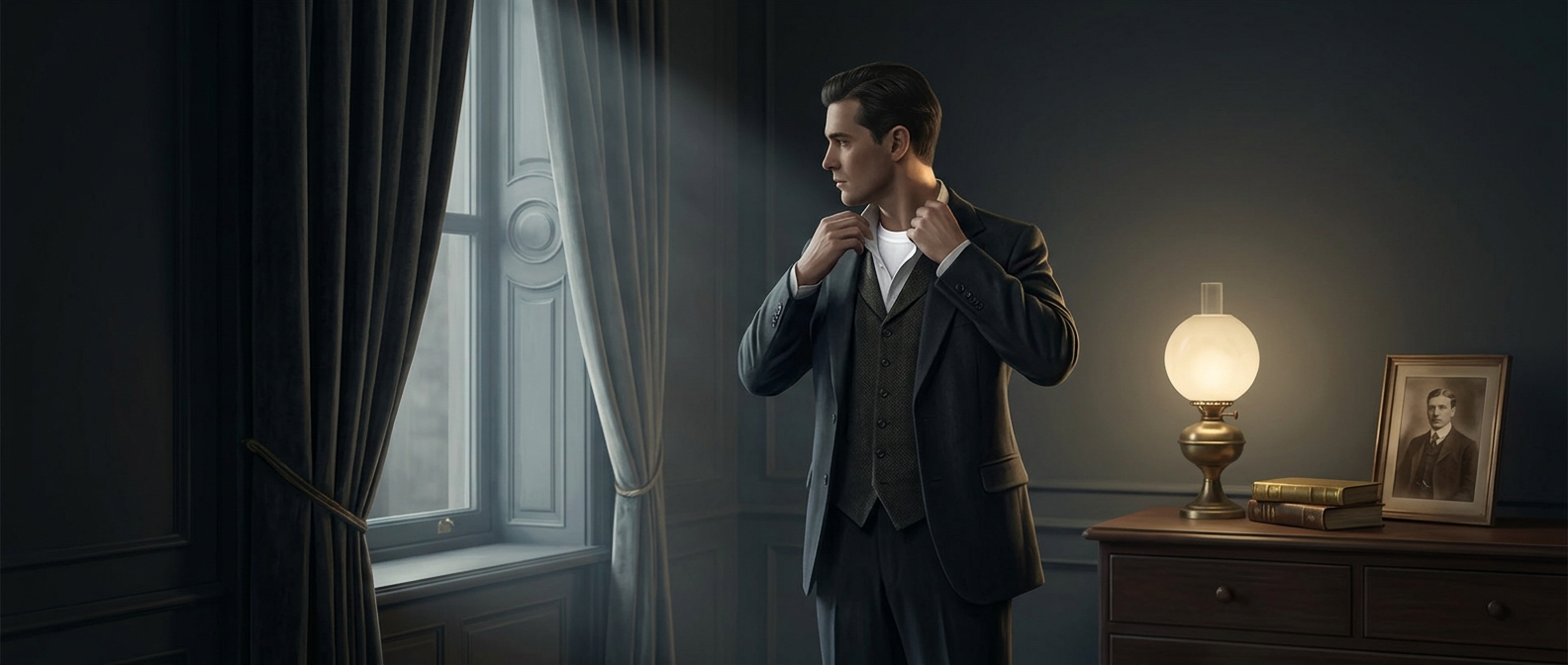
How the undershirt became an outfit
A white T-shirt began as a layer meant to be hidden. Its plain knit fabric made it easy to wear against the skin, while the shirt absorbed perspiration before it reached a more expensive or harder-to-wash outer garment. In that role, showing it in public could signal that someone was insufficiently dressed: the equivalent of stepping outside in a layer meant for the bedroom or beneath a proper outfit.
The screen changed what it signaled
The shift was not simply about a new garment. It was about a new image. In postwar films, actors including Marlon Brando and James Dean wore fitted white T-shirts as visible clothing. Onscreen, the exposed undershirt could suggest physical ease, youthful defiance, or working-class toughness rather than bad manners. Audiences encountered the garment not as laundry protection, but as part of a character’s identity.
Once that association took hold, the same plainness that had made the shirt look incomplete became its appeal: it was inexpensive, uncomplicated, and easy to wear. The T-shirt’s rise from underwear to everyday clothing shows how quickly a garment’s meaning can change when public images teach people to see it differently.