How volcanic rock can float
Pumice begins as gas-rich molten rock. As an eruption throws it into the air, the material cools quickly and hardens around countless bubbles, leaving a stone full of empty spaces. Those bubbles make pumice unusually light; many pieces are buoyant enough to float instead of sinking.
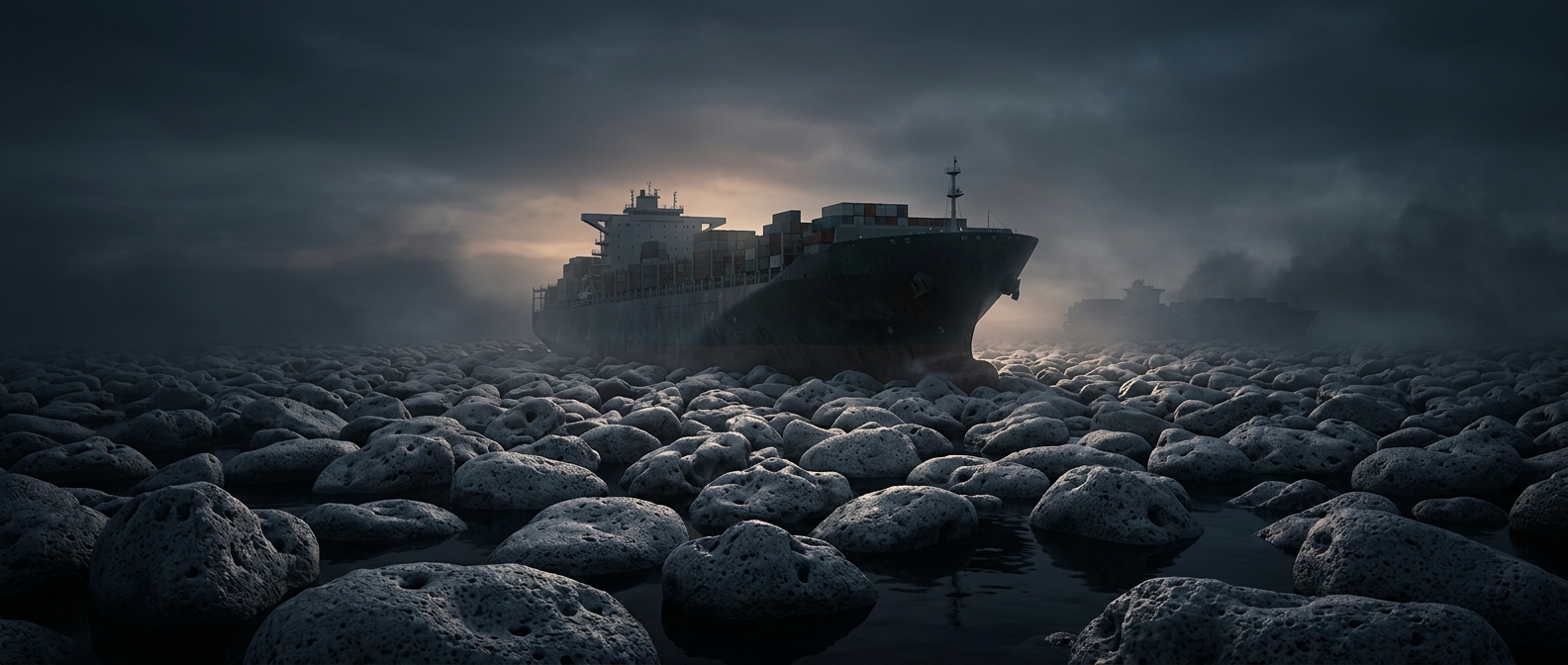
A violent eruption can eject so much pumice that the pieces gather into broad rafts. Waves and currents push them together, while fresh debris adds to the mass. The result is not a continuous slab: it is a shifting mat of stones, with water between and beneath them. Where the pumice packed densely, people could stand or walk across it, though the surface was nothing like stable land.
A sea that became an obstacle
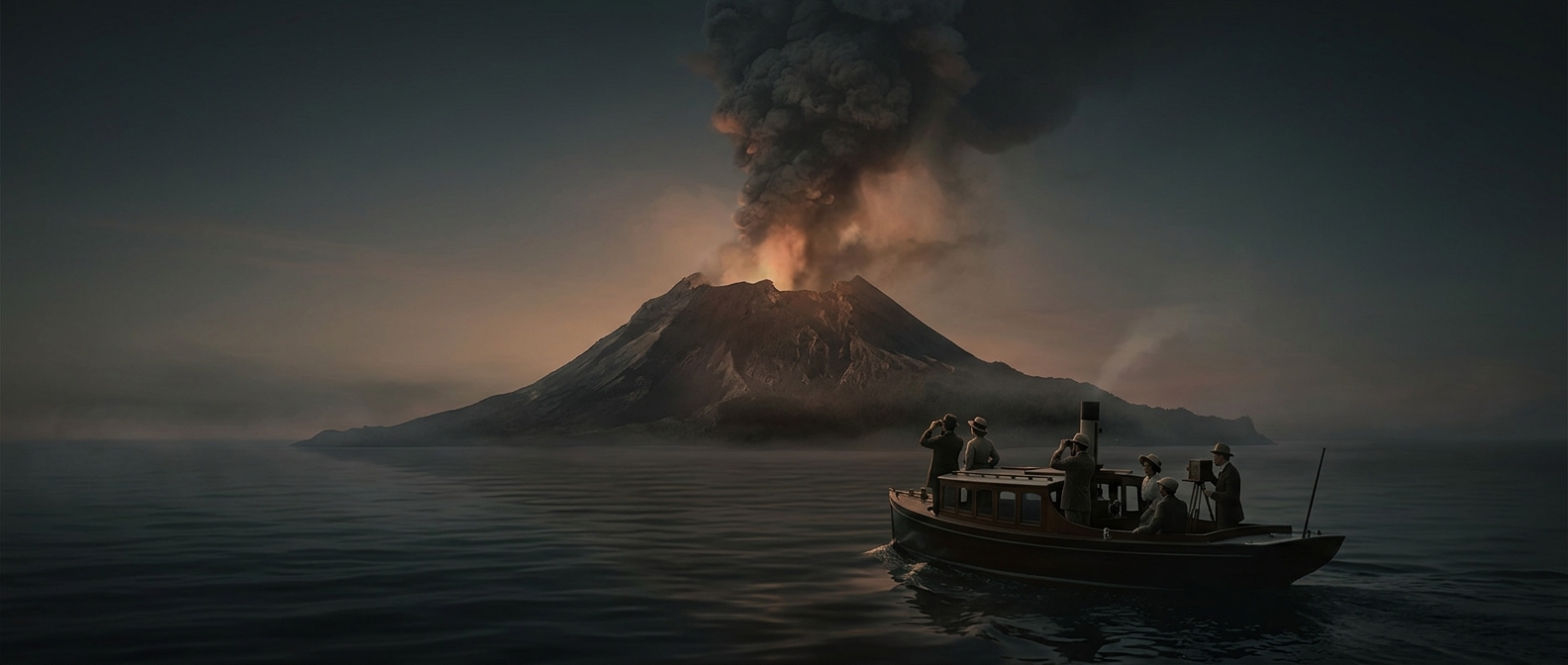
Around Krakatoa, the floating debris spread through the Sunda Strait, a busy passage between islands. Thick rafts could impede vessels by surrounding them with loose rock and making forward movement difficult. Ships caught in the pumice were reportedly trapped for months, turning an eruption’s debris into a prolonged maritime hazard.
The striking image of sailors walking across the sea is therefore literal in one sense, but misleading in another: they were crossing a floating accumulation, not a new stretch of seabed. The same buoyancy that kept the pumice afloat allowed volcanic debris to travel far from its source—and, in dense rafts, to make an important waterway temporarily resemble rough, unstable ground.