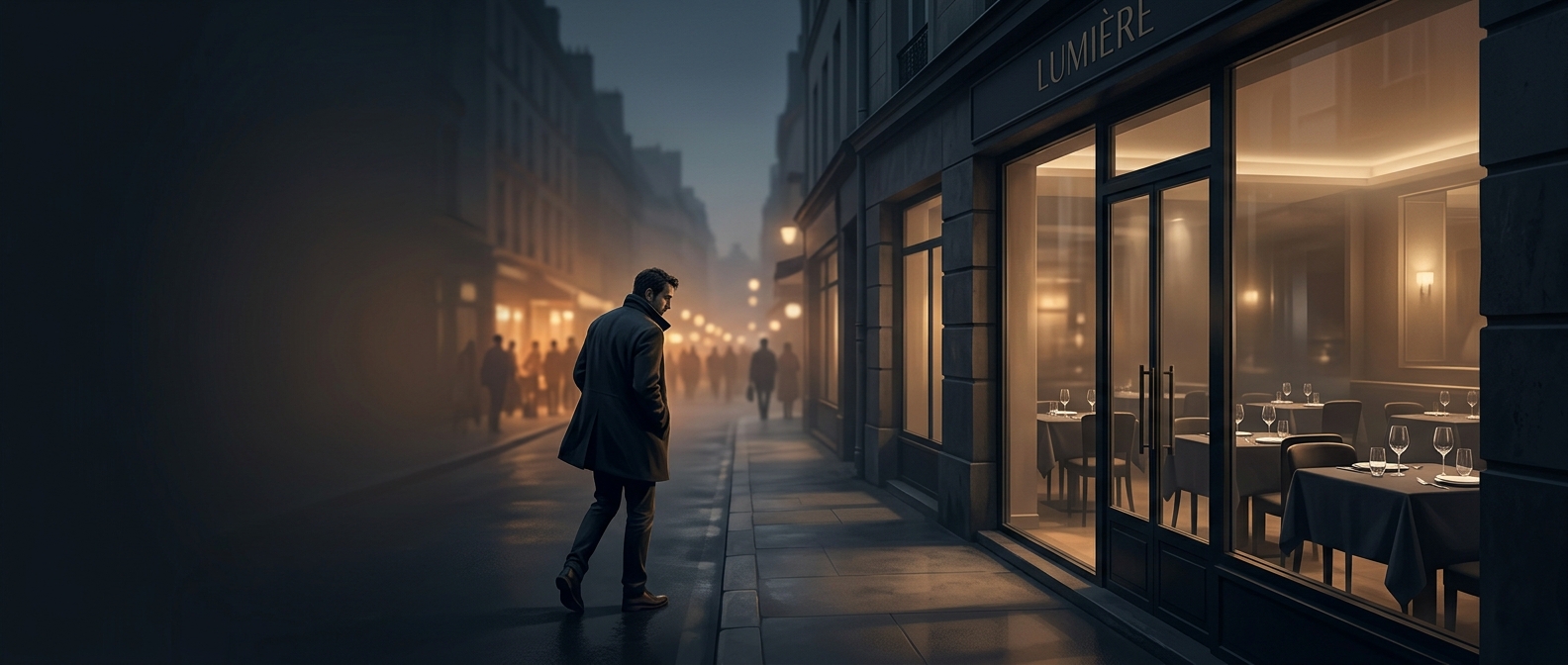
An empty dining room becomes a signal
Choosing a restaurant is a decision under uncertainty: a passerby can see the room but usually cannot know the food’s quality, service, or value without spending time and money to find out. Other diners offer a quick clue. A busy room can suggest that people have tried the place and found it worth returning to; an empty one can prompt the opposite inference.
That inference is not proof. A restaurant may be quiet because of the hour, the season, or simple chance. But when people have little information, visible behavior can stand in for information they lack. Economists call this social proof: people use others’ choices as evidence when judging what to do themselves.
How the signal can feed on itself
The first few decisions matter because diners’ choices affect what later passersby see. If several people walk past, the room stays empty, reinforcing the impression that something is wrong. If a few come in, their presence can make the restaurant look more appealing to the next person. The initial impression may be weak or mistaken, yet the resulting pattern can strengthen it.
This creates a difficult tradeoff for a new or temporarily quiet restaurant. It needs customers to build visible activity, but customers may want to see activity before they enter. The room’s appearance therefore becomes part of the product’s public image—not because an empty table reveals the food, but because it changes how much risk a stranger thinks they are taking.
A diner who chooses a quieter place may discover a good meal; a crowded room may disappoint. Still, before anyone has a personal experience to rely on, the restaurant’s visible crowd can shape who gets the chance to have one.