A fastener had to earn travelers’ trust
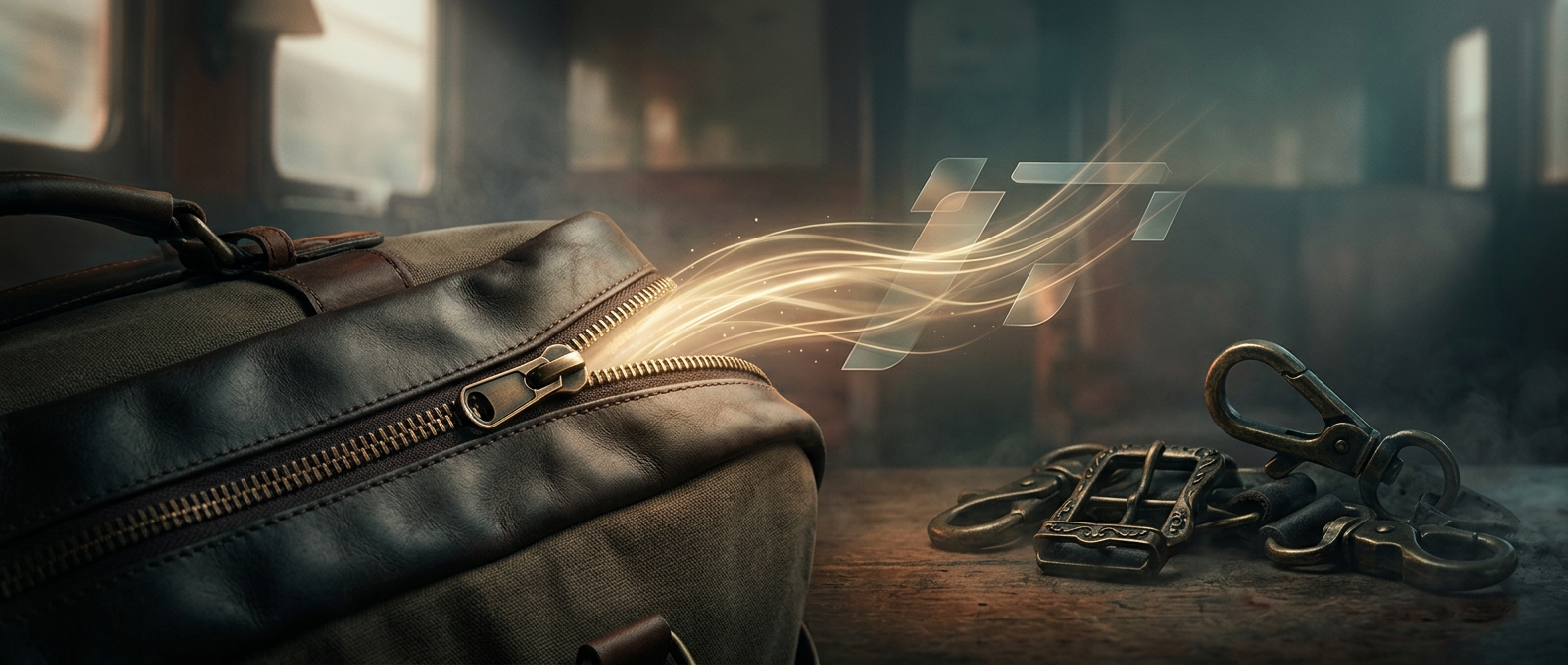
A leather strap and brass buckle were familiar, visible, and easy to understand: pull the strap tight, fasten the buckle, and the bag stays shut. An interlocking zipper worked differently. Its small teeth had to meet in the right order as a slider drew them together. If the teeth missed, the slider jammed, or the closure came apart under strain, the whole fastening could seem less dependable than a simple buckle.
That mattered on luggage, which was tugged, packed tightly, and handled roughly. A traveler could see whether a buckle was latched and often fix a loose strap on the spot. The new mechanism asked makers and customers to trust a line of closely fitted parts instead.
Precision was the price of convenience
Unlike a strap, a zipper depended on consistent manufacture: the teeth had to match, attach securely, and engage smoothly along the length of the opening. Making that work reliably took more than adding metal teeth to a bag. Until the mechanism and its production were dependable, makers had good reason to favor hardware they already knew how to build and repair.
The hesitation was therefore practical, not simply resistance to novelty. A zipper promised quicker opening and closing, but a failure could leave a bag difficult to secure. For travelers, convenience mattered only if the fastener could survive the trip.