Why the menu has to do more with less
A train dining car is not a restaurant kitchen that happens to be moving. Space is scarce, equipment and storage are limited, and supplies must be loaded before the journey. Once the train is underway, replacing a missing ingredient or adding another workstation is rarely an option. That favors dishes built from a manageable set of ingredients and steps.
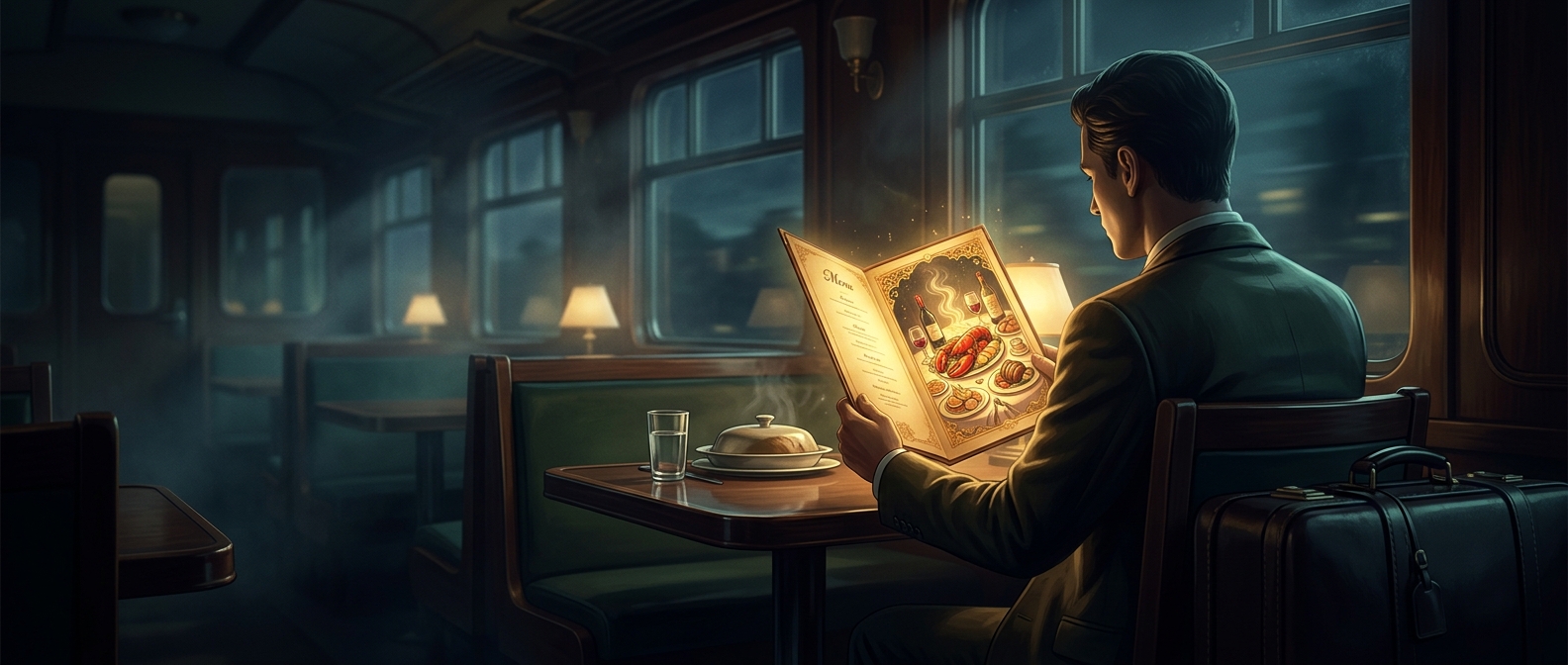
The menu still has to make those practical choices feel like a meal worth anticipating. Descriptive wording can give a familiar preparation a more distinctive identity without requiring another ingredient, tool, or cooking station. The language adds variety where the kitchen may have little room to offer it physically.
The promise meets the railway
A dish name also sets expectations before passengers see the portion. On a train, motion and limited space can make cooking and serving more complicated than in a stationary restaurant, so a menu tends to depend on food that can be prepared and handled reliably. A flourish in the description helps signal care and character even when the underlying dish is straightforward.
That creates a small but real balancing act: the wording can elevate the experience, but it cannot change what the kitchen can produce. The menu’s grandest adjectives are doing their best work when they make a modest, practical meal sound intentional—not when they promise a feast the dining car cannot deliver.